Alexa App Cant Find Your Echo During Setup Fixes That Work
Quick Answer
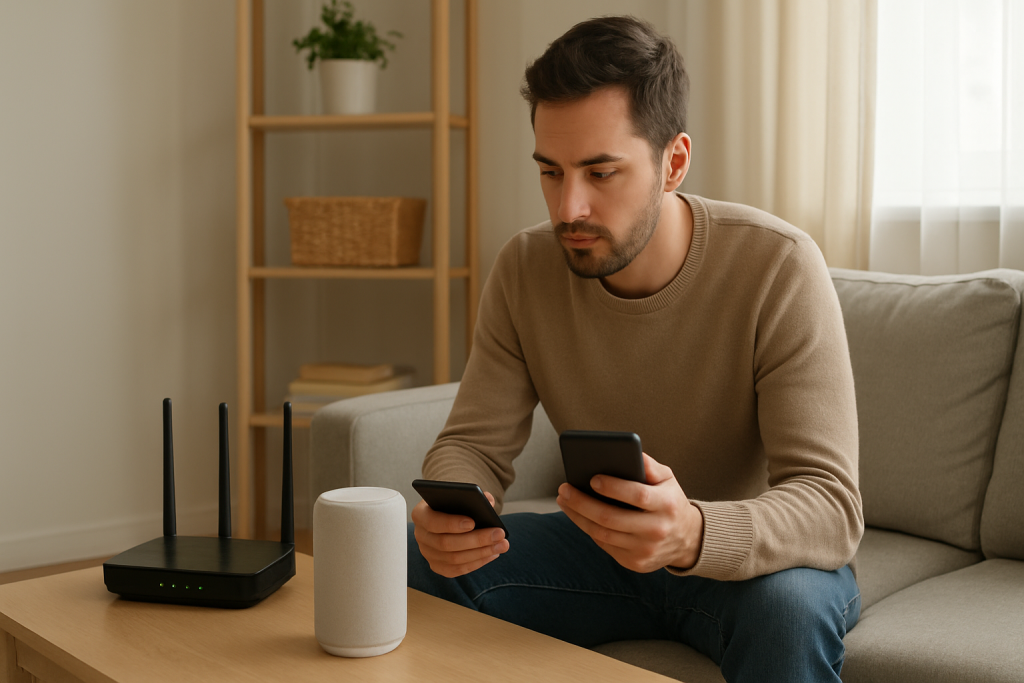
When the Alexa app says it can’t find your Echo during setup, the most common cause is local discovery failing. The phone and Echo aren’t “seeing” each other reliably for the handoff step, even if your Wi-Fi password is correct. This usually comes down to the phone being on the wrong network, router isolation settings, VPN/private relay features, or Bluetooth/local network permissions being blocked.
Start by confirming your phone is on the same Wi-Fi network you want the Echo to use, then temporarily disable VPN/Private Relay, and make sure the Alexa app has Bluetooth and Local Network permission. If discovery still fails, force the Echo into setup mode again and try a different setup path (hotspot test or manual Wi-Fi selection) to prove whether the issue is your home network or the phone/app.
Why This Happens
Echo setup relies on a short-range “handoff” between your phone and the Echo. Depending on the model and setup stage, that handoff can use Bluetooth, a temporary Echo setup Wi-Fi signal, and local network discovery (mDNS/SSDP-style broadcasts). If anything blocks local discovery, the app can’t confirm the Echo is nearby, even though both devices are powered on and your internet is working.
Common, tightly related causes include:
1) Phone is on a different network than you think (for example, cellular data is being used, or the phone is connected to a guest Wi-Fi). Discovery works only when the phone is on the same local network path the Echo is trying to join.
2) Client isolation / guest mode / “AP isolation” on the router. These features intentionally block devices from seeing each other on the local network. The internet still works, but discovery fails.
3) VPN, iCloud Private Relay, or “private DNS” features interfering. These can change how local traffic is routed or how the app resolves local services, causing the app to miss the Echo during the scan.
4) Bluetooth or Local Network permission is denied. On many phones, the Alexa app needs Bluetooth permission and (on iPhone especially) Local Network permission to find devices during setup. If you tapped “Don’t Allow” earlier, discovery can silently fail.
5) Mesh Wi-Fi band steering or multiple access points causing split paths. Your phone may connect to one node while the Echo is trying to connect through another, and discovery packets don’t pass cleanly between segments. This is especially common in apartments with mesh systems and “smart connect” enabled.
6) Overlooked technical cause: multiple routers (double NAT) or extender “NAT mode”. If you have a second router or a Wi-Fi extender creating its own network, your phone and Echo can end up on two separate local networks that cannot discover each other.
Real-world scenario: after a power outage, a router reboots with guest Wi-Fi enabled or a mesh node comes back online with a different backhaul path. Your phone reconnects to a saved guest network automatically, and the Echo setup scan never finds the speaker even though the internet works on the phone.
Common user mistake: starting setup while the phone is on cellular data (Wi-Fi off) or while “Auto-Join” connects the phone to a guest network with a similar name. The app can’t discover an Echo on a network the phone isn’t actually on.
Step-by-Step Fix
Confirm the phone is on the correct Wi-Fi (and pause cellular data for the test).
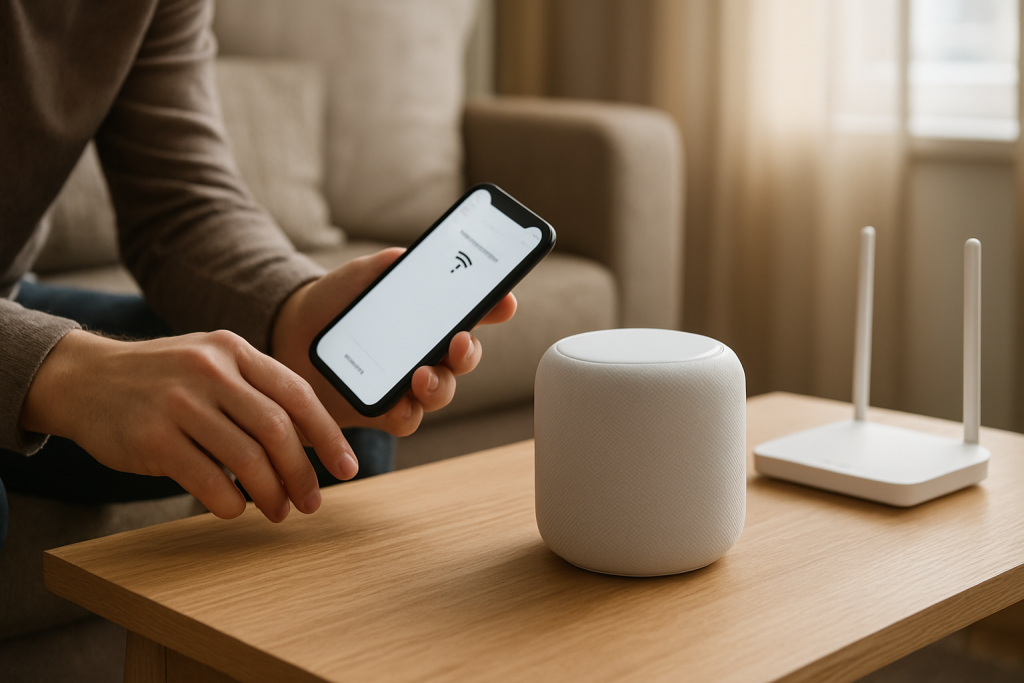
What to do: On your phone, open Wi-Fi settings and verify you are connected to your main home Wi-Fi (not a guest network). Then temporarily turn off cellular data (or enable Airplane Mode and re-enable Wi-Fi). Keep Bluetooth turned on.
What the result means: If the Echo is found after this, the issue was the phone using the wrong path (cellular/guest) during discovery.
If it fails, try next: Proceed to permissions and VPN checks. Discovery often fails even on the right Wi-Fi if the app is blocked from local scanning.
Check Alexa app permissions (Bluetooth and Local Network) and disable VPN/Private Relay.
What to do: Open your phone’s app permissions for Alexa. Ensure Bluetooth is allowed. On iPhone, also ensure “Local Network” is allowed. Then disable any VPN. If you use iCloud Private Relay, temporarily turn it off for the setup attempt.
What the result means: If the Echo appears immediately after enabling these, the app was prevented from discovering devices on your local network.
If it fails, try next: Force the Echo back into setup mode and try again with the phone close to the Echo.
Put the Echo back into Setup Mode (don’t assume it still is).
What to do: For most Echo speakers, press and hold the Action button until the light indicates setup mode (often an orange ring). For Echo displays, use the on-screen settings to enter setup. Keep the phone within a few feet.
What the result means: If the Echo wasn’t truly in setup mode, the app scan can run forever without finding it. Seeing the correct setup light/screen confirms the Echo is advertising itself for pairing.
If it fails, try next: Use the “manual” path in the Alexa app (select the exact Echo model) and look for an option to connect to the Echo’s temporary setup Wi-Fi.
Use the practical “hotspot test” to separate phone/app problems from home network problems.
What to do: Create a mobile hotspot on a second phone (or temporarily use your phone’s hotspot if you have another device to run the Alexa app). Connect the setup phone to that hotspot. Then try setting up the Echo to join the hotspot network.
What the result means: If setup works on the hotspot, your Echo and Alexa app are fine. The failure is specific to your home network’s local discovery (isolation, mesh segmentation, or router settings).
If it fails, try next: The issue is more likely the phone/app permissions, the Echo not staying in setup mode, or an account/app state problem. Continue with the next steps.
Check for guest Wi-Fi or client isolation and turn it off for the setup attempt.
What to do: Log into your router’s settings and confirm you are not using guest Wi-Fi for the phone during setup. Look for settings like “AP Isolation,” “Client Isolation,” “Wireless Isolation,” or “Guest network: block local access.” Disable isolation at least temporarily.
What the result means: If the Echo is discovered after disabling isolation, the router was blocking the local broadcast traffic the app uses to find the device.
If it fails, try next: Check whether you have multiple routers/extenders creating separate networks.
Confirm you don’t have two separate networks with similar names (double router or extender NAT mode).
What to do: In Wi-Fi settings, compare your connected network name to the router label and any extender/mesh names. If you have a second router or an extender that creates its own network, ensure the phone is on the same network you intend the Echo to use. If possible, temporarily power off the extender/extra router and try setup near the main router.
What the result means: If setup works when the extra device is off, the Echo and phone were being split across two local networks that cannot discover each other.
If it fails, try next: Check the router’s connected client list to see whether the Echo is joining but not being “seen” by the app.
Check the router’s connected devices list during setup.
What to do: While attempting setup, open the router’s client list and look for a new device (often named “Amazon,” “Echo,” or a generic device name). Also check the Alexa app’s Devices tab to see if it appears as “Offline” or “Unresponsive.”
What the result means: If the router shows the Echo connected but the app can’t find it, discovery is blocked between phone and Echo (isolation, VPN, or segmented mesh). If the router never shows it, the Echo isn’t joining the Wi-Fi at all (wrong password, incompatible band, or setup mode not completing).
If it fails, try next: Try setup on a simpler Wi-Fi configuration (temporarily use 2.4 GHz only or move closer to the router) to reduce band steering complications.
Temporarily simplify Wi-Fi during setup (reduce band steering/mesh complexity).
What to do: If your router/mesh allows it, temporarily disable band steering or “smart connect,” or temporarily create a separate 2.4 GHz network name and connect the phone to it for setup. Keep the Echo close to the main router or main mesh node.
What the result means: If setup works only when simplified, the original failure was due to the phone and Echo landing on different bands/nodes where discovery doesn’t pass reliably.
If it fails, try next: Move to advanced troubleshooting for account/app state and software issues.
Advanced Troubleshooting
Account and cloud state issues (when discovery looks fine but setup won’t complete)
If the app can see the Echo briefly but setup fails at the final step, it often points to an account or registration problem rather than Wi-Fi. Confirm you’re signed into the correct Amazon account in the Alexa app (the same one you intend to use for the Echo). If you recently changed your Amazon password, enabled extra sign-in verification, or removed devices from your account, sign out of the Alexa app and sign back in. This refreshes device registration and can clear a stuck setup session.
App state and cached setup sessions
The Alexa app can get “stuck” holding onto an old device session. Force close the Alexa app, reopen it, and start setup again from Devices > Add Device. If you have multiple phones/tablets with the Alexa app, use only one for setup to avoid two devices competing to claim the Echo during registration.
Network-related issue tied to discovery: multicast/broadcast filtering
Some routers have security features that filter local multicast/broadcast traffic. This can break discovery while leaving normal browsing untouched. If you see settings related to “multicast filtering,” “IGMP snooping,” “mDNS,” or “block LAN to WLAN,” try disabling the blocking feature temporarily. The goal is to allow local device discovery during setup. After successful setup, you can re-enable features one by one if needed.
Firmware/software mismatch
If the Echo has been offline for a long time, it may need time to update after it connects. During setup, leave it powered on near the router for 15–30 minutes and try again. On the phone side, update the Alexa app and your phone’s operating system. Discovery and Bluetooth handoff are sensitive to OS-level permission handling, and updates often fix those edge cases.
Configuration conflicts: profiles, permissions, and household features
If you’re using Amazon Household, child profiles, or a restricted profile on the phone, setup can fail because the app can’t access Bluetooth or Local Network features. Also check phone-level permissions like “Precise Location” (some Android versions tie Bluetooth scanning to location permission). If setup works on another adult account phone but not yours, it’s usually a permissions/profile restriction rather than the Echo itself.
When to Reset or Replace the Device
Try a soft restart first when the Echo is acting inconsistent (light stuck, won’t enter setup mode, or disappears mid-setup). Unplug the Echo for 30 seconds, plug it back in, and wait until it finishes booting before trying setup again. This clears temporary network and Bluetooth states without wiping your device registration.
Factory reset when: the Echo will not stay in setup mode, the app never discovers it on any network (including a hotspot test), or the device shows up under your account but cannot be re-registered after repeated attempts. Factory reset removes the device from its current configuration, including saved Wi-Fi credentials, device name, room/group assignments, and some local preferences. You will need to add it again in the Alexa app and reassign it to groups and routines.
Replace or seek service if you notice overheating, a burning smell, crackling from the power adapter, swelling, or the device repeatedly reboots even on a known-good outlet. Unplug it and stop troubleshooting in that case. Hardware safety issues are not something to “work around” in software.
How to Prevent This in the Future
Keep your setup environment predictable. When adding or re-adding an Echo, connect your phone to your main home Wi-Fi (not guest), turn off VPN/Private Relay for the setup window, and keep Bluetooth enabled. This avoids most discovery failures.
If you use mesh Wi-Fi, try to keep a stable network name and avoid frequent changes to band steering settings. For homes with multiple nodes, doing setup near the primary node reduces the chance that the phone and Echo end up on different segments during the handoff.
Avoid stacking network devices that create separate networks unless you intend to manage them. If you use an extender, configure it so your devices remain on the same local network whenever possible. Discovery problems are much less common when everything truly shares one LAN.
For account stability, keep the Alexa app signed into the account you actually use for the home. If you change your Amazon password or enable new sign-in security, expect to re-authenticate the Alexa app before adding devices. Also, limit how many phones/tablets run setup at the same time; one “owner” device during setup reduces registration conflicts.
Finally, keep the Alexa app updated. Many “can’t find device” reports come down to permission prompts and background scanning rules that change with phone OS updates. Staying current reduces those surprises.
FAQ
Why does the Alexa app find my Echo sometimes, then lose it during setup?
That pattern usually means discovery is unstable, not that the Echo is broken. The phone may switch between Wi-Fi and cellular, hop between mesh nodes, or a VPN/private relay may re-route traffic mid-setup. Lock the phone to Wi-Fi (temporarily disable cellular), disable VPN/Private Relay, and do setup close to the main router or main mesh node.
Do I need to connect to the Echo’s temporary Wi-Fi network manually?
Not always. Some setups handle the handoff automatically through Bluetooth and local discovery. But if automatic discovery fails, manually connecting to the Echo’s temporary setup Wi-Fi (when the app offers it) can bypass the part that’s failing and let you complete setup.
Misconception: “If my internet works, discovery should work too.” Why isn’t that true?
Internet access and local discovery are different. You can browse the web while your router blocks device-to-device traffic (guest mode or client isolation), or while your phone’s permissions block local scanning. Discovery depends on local network communication, not just internet connectivity.
Will a factory reset fix “can’t find your Echo” every time?
No. A reset helps if the Echo is stuck in a bad state or won’t enter setup mode correctly. But if the real problem is router isolation, VPN interference, or missing app permissions, the reset won’t change that. Use the hotspot test first to confirm whether the issue follows your home network.
Why does setup work on one phone but not another?
That almost always points to phone-side differences: Bluetooth/Local Network permissions, VPN/private DNS settings, or a restricted profile. Compare permissions and temporarily remove VPN/private relay features on the phone that fails, then try setup again.
After all the noise, the real shift is how ordinary everything feels again. Not dramatic, not loud—just less friction in the places that used to grind.
There’s a quiet relief in moving forward without re-litigating the same ground. The next steps can finally be about living, not managing the mess.