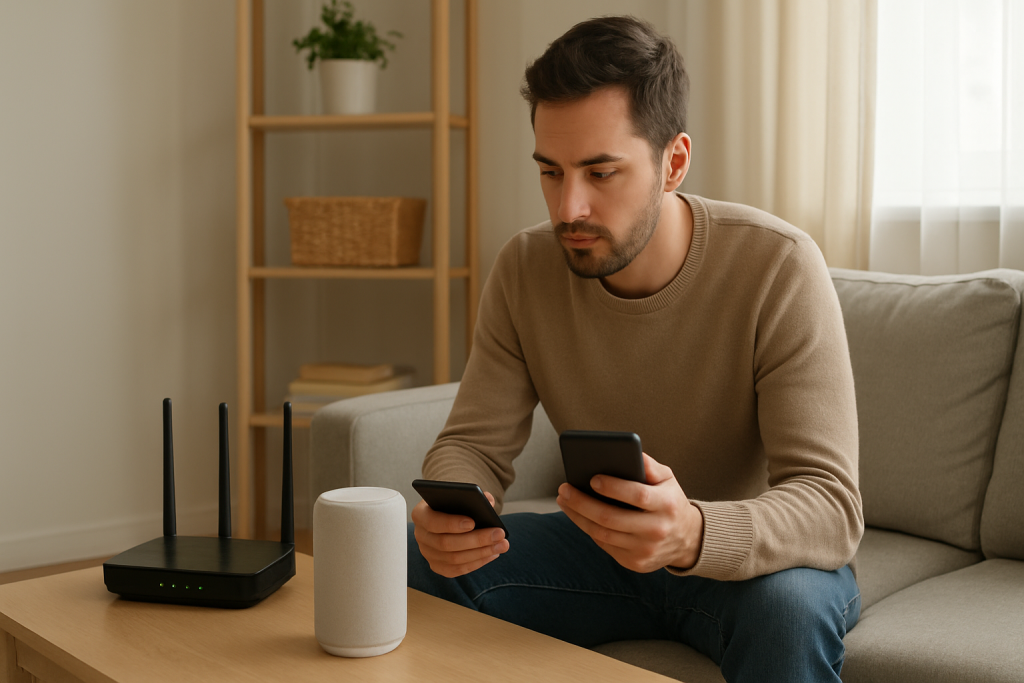
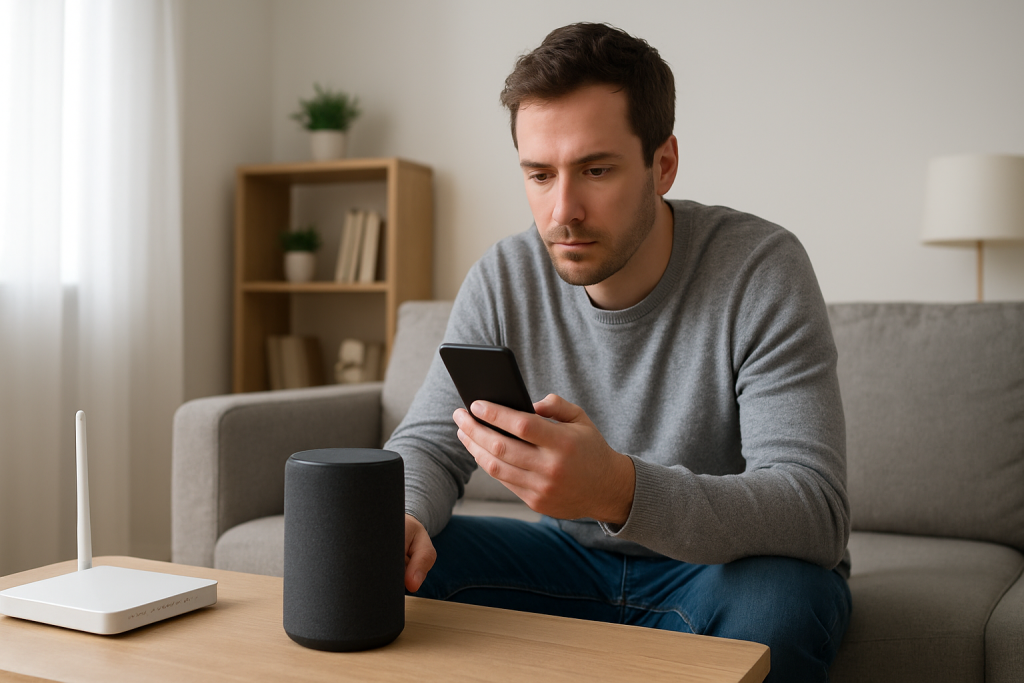
Alexa Keeps Dropping Connection on Mesh WiFi: How to Stabilize It
Quick Answer
Most Alexa “offline” or “can’t connect right now” problems on mesh WiFi aren’t caused by weak signal. They happen because the mesh system is steering the Echo between nodes or bands (2.4 GHz and 5 GHz) too aggressively, and the speaker doesn’t recover cleanly from frequent handoffs.
The fastest high-impact fixes are: keep the Echo “anchored” to one node (by placement and mesh settings), reduce band/node steering for that device if your mesh allows it, and confirm the Echo is truly staying on the same access point in your router/mesh client list. If the Echo stays connected to one node, dropouts usually stop.
Why This Happens
Mesh WiFi is designed to move devices between nodes so you always use the “best” connection as you walk around. That works well for phones and laptops, but some smart speakers handle roaming poorly. An Echo may briefly lose its session to the WiFi and then fail to re-establish it quickly, which looks like random disconnects even though the network is fine.
Here are the most common mesh-roaming causes that specifically trigger Alexa dropouts:
1) Frequent node handoffs (roaming) caused by similar signal levels. If an Echo sits between two mesh nodes with comparable signal strength, the mesh may keep nudging it back and forth. Each handoff is a moment where Alexa can miss cloud connectivity and show as “offline.”
2) Band steering between 2.4 GHz and 5 GHz. Many mesh systems try to push devices to 5 GHz for speed, then fall back to 2.4 GHz for range. If your Echo is on the edge of 5 GHz coverage, it may bounce between bands. Alexa doesn’t need high speed; it needs stability.
3) “Fast roaming” features that assume enterprise-style clients. Some mesh systems enable roaming-assist features meant for modern phones. A speaker may not support them well, leading to disconnects during transitions.
4) Node backhaul changes. If your mesh nodes use wireless backhaul and the backhaul quality varies (microwave use, neighbors’ WiFi, thick walls), the mesh may re-route traffic or change which node is best. That can trigger steering events for clients like an Echo.
5) DHCP/lease renewal timing lining up with a roam event (overlooked cause). Even if DHCP is working, a lease renewal or brief IP change happening at the same time as a node/band handoff can make the Echo look “offline” longer than it should. This is easy to miss because other devices recover quickly.
6) Power or ISP blips that cause the mesh to re-form. After a brief outage, mesh systems can reorder node roles or re-optimize. Your Echo may reconnect to a different node than before and then get steered again shortly after.
Real-world scenario: In an apartment, you place one mesh node in the living room and another in a hallway. Your Echo Show sits on a kitchen counter between them. During the day, neighbor WiFi congestion changes, so the mesh keeps deciding the “best” node is different. The Echo gets pushed back and forth, and you hear “Sorry, I’m having trouble connecting” even though your phone stays online.
Common user mistake: moving the Echo closer to the “middle” of the home thinking it will help. In a mesh system, the middle is often where two nodes look equally good, which increases roaming. For Alexa, you usually want it clearly closer to one node.
Step-by-Step Fix
Confirm it’s a roaming/steering problem (not a full internet outage).
What to do: When Alexa drops, check whether other devices on the same WiFi (phone/TV) still stream or browse. Then open the Alexa app and check the device status (it may show “Device is unresponsive” or “Offline”).
What the result means: If everything else stays online while Alexa drops, the issue is usually client steering/roaming behavior, not your ISP.
If it fails: If multiple devices also drop, focus on your modem/ISP stability first (brief outages will trigger mesh re-optimization and make Alexa look worse). Once the internet is stable, continue with the steps below.
Check which mesh node the Echo is connected to, and whether it keeps changing.
What to do: In your mesh app or router interface, find the client/device list and select the Echo. Look for “Connected node,” “Access point,” or similar. Watch it for a few minutes, especially after a dropout.
What the result means: If the connected node flips between two nodes (or between 2.4/5 GHz), that’s your smoking gun: steering is destabilizing the Echo.
If it fails: If you can’t see node/band info in your app, move to the next step anyway and use behavior-based testing (stability after placement changes is still a strong indicator).
Anchor the Echo to one node with placement (fastest real-world fix).
What to do: Move the Echo 6–10 feet closer to a single mesh node, and farther from the “border” area between nodes. Avoid placing it in a hallway between nodes. Keep it away from large metal objects, behind TVs, or directly next to a microwave.
What the result means: If dropouts stop, the Echo was being pushed between nodes/bands. You didn’t “improve speed”; you reduced handoffs.
If it fails: If it still drops, continue—this may be band steering or a mesh feature forcing roaming even with good placement.
Temporarily disable band steering or roaming assist (test for steering sensitivity).
What to do: In your mesh settings, look for options like band steering, smart connect, client steering, roaming assist, fast roaming, or “prefer 5 GHz.” Turn off the steering feature temporarily, or split the SSIDs into separate 2.4 GHz and 5 GHz names if your system allows it. Then reconnect the Echo to the more stable option (often 2.4 GHz for range and consistency).
What the result means: If Alexa becomes stable with steering reduced, the mesh was making “helpful” decisions too often for this device.
If it fails: If your mesh doesn’t offer these controls, skip to the next step. If it offers controls but stability doesn’t improve, the issue may be node selection/backhaul changes rather than band steering.
Force a clean network session (controlled restart sequence).
What to do: Restart in this order: modem (if you have one) → primary router/mesh gateway → mesh nodes → Echo. Wait until the mesh is fully online before plugging the Echo back in or powering it on.
What the result means: This reduces the chance the Echo grabs a “half-ready” network, then later gets steered when nodes finish optimizing.
If it fails: If dropouts return after a few hours or days, that points back to ongoing roaming/steering decisions, not a one-time glitch.
Run a hotspot test to separate “Echo problem” from “mesh steering problem.”
What to do: Create a temporary hotspot on your phone (use a simple name/password). Connect the Echo to the hotspot and test for 10–15 minutes with a few voice requests and music playback.
What the result means: If the Echo is stable on the hotspot, the speaker is generally fine and your mesh behavior is the likely cause.
If it fails: If it also drops on the hotspot, look for account/app issues, firmware issues, or a failing WiFi radio in the device (covered below).
Reduce node competition (adjust node placement rather than adding more nodes).
What to do: If two nodes are very close together, the Echo may see both as strong options and get steered. Increase the distance between nodes slightly, or reposition so one node clearly serves the Echo’s room.
What the result means: A mesh works best when nodes have clear coverage zones. Overlapping too much can increase handoffs.
If it fails: If you can’t change placement, consider keeping the Echo on a more stable band (often 2.4 GHz) or using any per-device “stay on this node” option your mesh provides.
Advanced Troubleshooting
If the steps above helped but didn’t fully solve it, you’re likely dealing with a secondary trigger that makes roaming events more disruptive.
Account/cloud issues that look like WiFi drops
Multiple Amazon accounts in the household: If the Echo is registered to one account but the Alexa app on your phone is signed into another (or household profiles were changed), the device can appear “offline” or unresponsive even while it’s connected to WiFi. In the Alexa app, confirm you’re signed into the account that owns the device, and check the device’s registration under its settings.
Time/date and region mismatches: After power events, some networks or devices take a moment to sync time. If Alexa can’t validate cloud sessions briefly, it may report connection trouble. If you see repeated issues right after outages, stabilize the network first (restart sequence) and avoid moving the Echo between nodes during recovery.
Network issues that amplify roaming problems
DHCP lease duration too short: If your router is configured with very short DHCP leases, renewals happen frequently. Combine that with roaming and you get more opportunities for the Echo to lose its session. If your router allows it, use a normal lease time (often 24 hours) and consider reserving an IP for the Echo. The goal is fewer moving parts during handoffs.
DNS instability during node changes: Some mesh systems provide DNS forwarding per node. If the Echo roams and briefly hits a node with delayed DNS, Alexa may fail cloud lookups and act offline. If your mesh allows setting DNS globally, keep it consistent across the system.
Firmware/software causes
Mesh firmware updates and “optimization” periods: After updates, a mesh may re-run channel selection and steering rules. If your dropouts started “out of nowhere,” check whether the mesh updated recently. If so, re-check steering settings and the Echo’s connected node. Sometimes a firmware change makes steering more aggressive by default.
Echo software updates and partial reconnects: An Echo that updates overnight may reconnect to a different node in the morning and then start roaming. If the timing matches, treat it like a fresh install: anchor placement, verify node association, and reduce steering.
Configuration conflicts inside Alexa
Routines or skills that hammer the connection: A routine that triggers multiple actions at once (music + smart home + announcements) can expose brief roaming interruptions. If dropouts happen at specific times, temporarily disable that routine and test. If stability returns, rebuild the routine with fewer simultaneous actions or add short delays between steps.
Voice profiles and permissions changes: If a family member changed permissions (communications, calling, or household settings), you may see failures that resemble connectivity issues. If Alexa responds but can’t complete certain actions, review device communication settings and household/profile configuration in the Alexa app.
When to Reset or Replace the Device
Try a soft restart first when the Echo shows offline but your mesh is stable and the device is warm-but-normal. A restart is appropriate after you change mesh settings, move nodes, or split SSIDs, because it forces the Echo to negotiate a fresh connection under the new rules.
Factory reset if all of the following are true: the Echo drops even on a phone hotspot, it repeatedly fails setup, or it shows as connected to WiFi but remains unresponsive in the Alexa app after you’ve confirmed the correct Amazon account. Factory reset removes WiFi credentials, device-specific settings, and any local preferences tied to that device. You will need to set it up again in the Alexa app and re-assign it to rooms/groups.
Replace (or at least stop using) the device if you notice overheating, a burning smell, crackling power adapter sounds, or the device randomly powers off. Unplug it and do not continue troubleshooting power-related symptoms. Those are hardware safety issues, not network issues.
How to Prevent This in the Future
Give Alexa a “home node.” Place the Echo where one mesh node is clearly the best option. Avoid the in-between zones where two nodes are equally strong. This one habit prevents most roaming-triggered dropouts.
Prefer stability over speed. Alexa voice and music do not need maximum throughput. If your mesh allows it, keep the Echo on the band that stays consistent in that room (often 2.4 GHz). The goal is fewer band changes and fewer node changes.
Keep mesh steering features conservative. If your system offers per-device controls, exclude the Echo from aggressive client steering or fast roaming features. Let phones roam aggressively; keep smart speakers steady.
After outages or updates, wait before judging. Mesh systems may take several minutes to settle after power returns. If you start moving devices or power-cycling speakers while the mesh is still optimizing, you can accidentally create a pattern where the Echo keeps landing on the “wrong” node.
Review routines when symptoms have a schedule. If dropouts happen at the same time daily, look for routines, scheduled music, or announcements that coincide. Spreading actions out by a few seconds can make the system more tolerant of brief network transitions.
Keep account ownership clean. Make sure the Echo is registered to the household’s primary Amazon account (or at least that you know which one), and that the Alexa app you use for troubleshooting is signed into that same account. Account confusion can mimic connectivity problems and wastes time.
FAQ
Does “offline” always mean my internet is down?
No. With mesh WiFi, “offline” often means the Echo lost its session during a node or band handoff and didn’t recover quickly. If your phone stays online while Alexa drops, it’s usually steering/roaming behavior rather than an ISP outage.
Should I add another mesh node to fix Alexa dropouts?
Usually not. Adding nodes can increase overlap and make roaming more frequent, which is the opposite of what an Echo needs. A better approach is placement that clearly favors one node, or reducing steering so the Echo stays put.
Is 5 GHz always better for Alexa?
No. 5 GHz can be faster, but it has shorter range and is more likely to fluctuate through walls. If 5 GHz coverage is borderline where the Echo sits, band steering can cause repeated 5 GHz/2.4 GHz switching. A stable 2.4 GHz connection is often better for reliability.
My Echo is close to a node and still drops. What does that suggest?
It often suggests the mesh is still steering it (for example, trying to move it to another node or band), or the node’s backhaul is unstable and the mesh keeps re-optimizing. Check the client list to see whether the Echo’s connected node changes, and temporarily reduce steering features to confirm.
Common misconception: “If I split the WiFi names, I’ll break the mesh.” Is that true?
Not necessarily. Some mesh systems allow separate 2.4 GHz and 5 GHz SSIDs while still operating as a mesh for coverage. The point of splitting is to stop band steering from bouncing the Echo. If your system supports it, it can be a practical way to keep Alexa stable without changing anything else.
By the time you reach here, the shape of the problem stops feeling mysterious and starts feeling familiar—in the best way. The words aren’t trying to prove anything to you; they’re just getting out of the way.
What’s left is the simple, slightly unglamorous part: letting your attention land where it belongs. No fireworks, no drama—just a steadier rhythm moving forward.