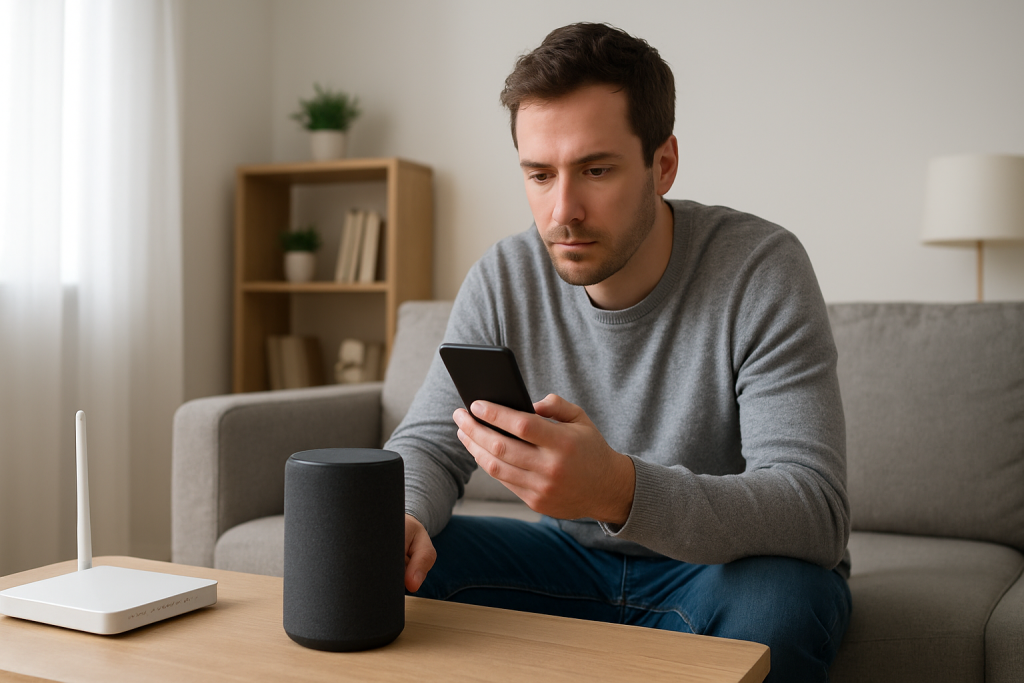
Google Home Not Responding to Voice Commands: What to Check
Quick Answer
The most common real-world cause is a broken command path between your Google Home/Nest microphone, your Wi‑Fi/internet connection, and Google’s cloud account services. The device may still light up or “hear” you, but it can’t complete the request if it can’t reach the cloud or if the signed-in account/authentication is out of sync.
Do these three checks first:
1) Watch the device when you speak: if it shows listening lights but no reply (or says it can’t reach the internet), the break is usually connectivity or DNS/internet access.
2) Open the Google Home app and check the device status: if it shows “Offline” or “Not responding,” the device-to-network link is failing even if your phone is online.
3) Confirm you’re using the correct Google account and Home in the app: if the device is tied to a different account/home, voice commands can be heard but not executed as expected.
Affected devices include Google Home, Home Mini, Nest Mini, Nest Audio, Nest Hub/Hub Max, and Google Assistant-enabled speakers/displays from partner brands.
Why This Happens
Voice commands are not processed entirely on the speaker. Most requests follow a chain: the microphone picks up your voice, the device sends audio to Google’s servers, Google processes the request under the signed-in account, then the result is sent back to the device to speak or act. If any link in that chain breaks, you’ll see symptoms like “Sorry, something went wrong,” silence after listening, “There was a glitch,” or the device responding to some commands but not others.
Common causes tightly tied to that command path include:
1) The device is connected to Wi‑Fi but has no usable internet route (ISP outage, DNS failure, captive portal, or router misrouting). Listening still works, cloud processing does not.
2) The device is on the wrong Wi‑Fi network (guest network, old SSID, or a mesh node with isolation). Your phone may be on a different network, so the app and speaker don’t agree.
3) Account or authorization issues (Google account password changed, security alerts, or Home app permissions). The device may be “present” but cloud actions fail or are limited.
4) Voice Match or language mismatch. The device hears you, but it can’t match the voice profile or the language setting, so personal results or some actions fail.
5) Home structure conflicts (device assigned to the wrong Home/room, duplicate homes, or multiple household members with overlapping settings). Commands that depend on location (lights, routines) fail more often.
Real-world scenario: your internet provider briefly drops overnight. In the morning, your phone switches to cellular data and works fine, but the Google speaker stays on Wi‑Fi with no working internet route. You ask for the weather; the speaker listens, then times out or says it can’t reach the internet.
Common user mistake: changing the Wi‑Fi name/password (or replacing the router) and assuming the speaker will “figure it out.” It won’t. The device keeps trying the old network until you update it in the Google Home app.
Overlooked technical cause: DNS or filtering features on the router (including “family” filters, ad-blocking DNS, or security filtering) can block the domains Google Assistant uses. The device stays connected to Wi‑Fi, but cloud requests fail intermittently or only for certain services.
Most Likely Causes in Real Homes
1) Internet/DNS path is broken even though Wi‑Fi looks connected (timeouts, “glitch,” or “something went wrong”).
2) Device is offline in the Google Home app due to Wi‑Fi association problems or wrong network.
3) Google account/auth is out of sync (password change, security prompt, or wrong account/home selected).
4) Voice Match/language mismatch causing partial failures (especially personal results, calls, calendars, or routines).
5) Router features interfering (client isolation, band steering issues, filtering, or mesh node handoff problems).
Step-by-Step Fix
Confirm what “not responding” means by testing two different command types.
What to do: Try one cloud command (“Hey Google, what’s the weather?”) and one local device command if you have smart lights (“Hey Google, turn on the living room lights”) or a basic device command (“Hey Google, set volume to 3”).
What the result means: If volume changes but weather fails, the mic and speaker are fine and the break is likely internet/cloud/auth. If nothing works and it doesn’t even show listening lights, the issue is mic/mute or power.
What next if it fails: If it doesn’t react at all, jump to Step 4 (mic/mute and device state). If it reacts but cloud commands fail, continue to Step 2.
Check device status in the Google Home app and verify you’re in the correct Home and account.
What to do: Open the Google Home app. At the top, verify the correct Google account is selected. Then verify the correct “Home” is selected (many people have more than one). Tap the device tile and look for “Offline,” “Not responding,” or Wi‑Fi details.
What the result means: If the device shows offline, the device-to-Wi‑Fi link is failing or it’s on a different network than your phone. If it shows online but voice commands fail, focus on cloud/auth, language, or network filtering.
What next if it fails: If offline, go to Step 3. If online, go to Step 5.
Prove whether the problem is your home internet by doing a hotspot test (best diagnostic for the command path).
What to do: Create a personal hotspot on your phone (use a simple name and password). Then in the Google Home app, update the speaker’s Wi‑Fi to join the hotspot network. After it connects, try “Hey Google, what’s the weather?”
What the result means: If it works on the hotspot, the speaker and account are fine. The break is in your home network/ISP path (router DNS, ISP outage, filtering, or Wi‑Fi isolation). If it still fails on the hotspot, the issue is more likely account/auth, device software, or configuration.
What next if it fails: If hotspot works, go to Step 6 (home network focus). If hotspot fails, go to Step 7 (account and Assistant settings).
Check the microphone mute and “listening” behavior.
What to do: Inspect the physical mic mute switch (varies by model). When you say “Hey Google,” watch for listening lights. If the device indicates the mic is off, turn it on and retry.
What the result means: If the mic was muted, voice commands will never start the command path. If it listens but then fails, the mic is fine and the break is later in the chain (network/cloud/auth).
What next if it fails: If the mic is on and it still doesn’t show listening lights, move to Step 10 (software/firmware and reset criteria). If it listens but fails, continue to Step 5.
Check language and Voice Match alignment (common cause of “it hears me but doesn’t do the right thing”).
What to do: In the Google Home app, open Assistant settings. Confirm the Assistant language matches what you speak most often. Then check Voice Match: ensure your voice model is enabled for that device. If multiple household members use it, confirm each person is correctly added to the Home and has Voice Match set up.
What the result means: If changing language or enabling Voice Match fixes it, the break was at the “who is speaking” or “what language is this” step, not Wi‑Fi. If only personal requests fail (calendar, reminders), it’s often Voice Match or permissions.
What next if it fails: If it still fails after confirming settings, continue to Step 6 for network path checks or Step 7 for account/auth checks depending on your earlier hotspot result.
If the hotspot test worked: isolate the home network issue by checking router client list, DNS, and Wi‑Fi band behavior.
What to do: Log into your router app/interface and find the connected client list. Confirm the Google device is connected and note whether it’s on 2.4 GHz or 5 GHz (if shown). Then check if your router has features like “AP isolation,” “guest network isolation,” “family filter,” “DNS filtering,” or “ad blocking.” If you recently enabled any of these, temporarily disable them and retest voice commands.
What the result means: If the device appears/disappears from the client list or frequently changes bands/nodes, the Wi‑Fi link is unstable and the command path breaks before cloud processing completes. If disabling filtering fixes it, the cloud connection was being blocked even though Wi‑Fi looked fine.
What next if it fails: If the device is stable on the router but still fails, move to Step 8 (reboot order with a purpose). If it’s unstable, move the device closer to the router/mesh node and retest, then proceed to Step 9 for placement and mesh behavior.
If the hotspot test failed: check Google account status, permissions, and Home membership.
What to do: On your phone, open a browser and sign into the same Google account used in the Home app. Look for security prompts (password change, suspicious sign-in, or “verify it’s you”). In the Google Home app, confirm the device is in the correct Home and that you are listed as an owner or manager, not just a guest. If you recently changed your Google password, remove and re-add the device to the Home if it won’t re-authenticate cleanly.
What the result means: If resolving a security prompt restores responses, the command path was blocked at the authorization step in the cloud. If the device was in a different Home, voice commands may have been routed to the wrong configuration.
What next if it fails: Continue to Step 8 for controlled power cycling and then Step 10 if symptoms persist.
Power cycle in the correct order to rebuild the command path (not just “reboot everything”).
What to do: Unplug the Google device. Power off the modem (and router/mesh) for 60 seconds. Power on the modem first and wait until it is fully online. Then power on the router/mesh and wait until Wi‑Fi is stable. Finally, plug the Google device back in and wait a few minutes before testing a cloud command.
What the result means: This order matters because the speaker needs a working IP address, DNS, and a clean route to the internet when it boots. If it comes up before the router/modem are stable, it can get “stuck” with poor connectivity and fail intermittently.
What next if it fails: If it still fails, go to Step 9 for placement/mesh checks and Step 10 for software and reset criteria.
Check placement and mesh behavior that can interrupt cloud requests mid-command.
What to do: Temporarily move the device closer to the router or primary mesh node. Avoid placing it behind TVs, inside cabinets, near microwaves, or next to cordless phone bases. If you use mesh Wi‑Fi, try placing the speaker where it consistently connects to one nearby node rather than bouncing between nodes.
What the result means: If it works reliably when closer, the mic was never the problem; the command path was dropping during upload to the cloud. This often shows up as “listens, then nothing,” or repeated “glitch” messages.
What next if it fails: If placement changes don’t help, proceed to Step 10.
Update apps and re-check device software state, then decide whether a reset is justified.
What to do: Update the Google Home app and Google app on your phone. In the Home app, open the device settings and look for software/firmware information and any warnings. Confirm the device time zone and location are correct in Home settings (wrong location can break routines and some results).
What the result means: If updates fix it, the command path was failing due to app-to-cloud coordination or outdated components. If the device remains online but fails across networks (including hotspot) and accounts look healthy, the device configuration may be corrupted.
What next if it fails: Move to the Advanced Troubleshooting section, then consider factory reset only after you’ve confirmed it’s not a network or account issue.
Advanced Troubleshooting
This section is only needed if the basic fixes above don’t restore reliable voice responses.
Account or cloud-side issues to rule out
If multiple Google devices fail at the same time on the same account, suspect an account-level problem rather than a single speaker. Check whether Google Assistant works on your phone using the same account and Wi‑Fi. If Assistant on the phone also fails, the break is likely account authorization, a temporary service issue, or a permissions problem. Review the Home app for household membership changes, and confirm you didn’t remove your own account from the Home or switch the device to a different Home by accident.
Network issues that specifically break the voice command path
Some networks allow basic connectivity but block the specific traffic Assistant needs. If hotspot works but home Wi‑Fi fails, focus on router settings that interfere with cloud access: DNS filtering, “secure DNS,” parental controls, VPN features on the router, or guest network isolation. Also check whether the speaker is on a guest network while your phone is on the main network; this can cause the app to show odd status and can prevent smooth device management even if voice sometimes works.
If your router combines 2.4 GHz and 5 GHz under one name, band steering can occasionally push a device to a weaker band or node. If your router supports it, consider temporarily separating the bands during troubleshooting so the speaker stays on a stable connection. If separating bands is not practical, keep the speaker within strong range of the preferred node.
Firmware/software causes
If the device is stuck mid-update or has a software fault, it may listen but fail to complete requests. Signs include repeated “glitch” messages, delayed responses, or the device showing online but behaving inconsistently. Leave the device powered on and connected for at least 30 minutes to allow background updates to finish, then retest. If only one device misbehaves while others are fine on the same network, suspect a device-specific software state rather than the router.
Configuration conflicts inside the Home setup
Duplicate device names, devices assigned to the wrong room, or multiple “Homes” can cause commands to appear ignored. If “Turn on the lights” fails but “Turn on living room lights” works, the issue is often naming/room assignment rather than connectivity. Also check routines: if a routine triggers but individual commands don’t, the routine may be using a different device or home context than you expect.
When to Reset or Replace
A soft restart (power cycle) is appropriate when the device is responsive but inconsistent, especially after internet outages or router changes. A factory reset is appropriate when the device stays online yet fails across known-good networks (including a hotspot), or when it can’t be managed correctly in the Google Home app despite correct account selection.
What a factory reset removes: Wi‑Fi credentials, device pairing to your Home, room assignment, Voice Match device association, and local device settings. You will need to set it up again in the Google Home app.
Before you reset: Confirm you know the Google account and password used for the Home, and confirm your phone is on the Wi‑Fi you intend to use for setup.
Hardware safety warning: Use only the manufacturer’s reset method (usually a button press/hold sequence). Do not open the device, do not pry the casing, and do not attempt internal repairs. If the unit shows physical damage, overheating, or a swollen power adapter, stop using it and address the power issue safely before further troubleshooting.
Replacement is only worth considering if the device cannot stay powered reliably, cannot connect to any Wi‑Fi network after a factory reset, or fails to respond even with the microphone confirmed on and the device otherwise functioning.
How to Prevent This
Keep the command path stable: Your Google device needs consistent Wi‑Fi plus consistent internet and DNS. If you change your router, Wi‑Fi name, or password, plan to update the speaker immediately in the Google Home app so it doesn’t cling to an old network.
Reduce account surprises: Avoid frequently switching Google accounts in the Home app. If you change your Google password or enable new security options, check that household devices still show online and respond the same day, not weeks later when it becomes confusing.
Placement matters for cloud reliability: Put speakers where they have steady Wi‑Fi and clean voice pickup: out in the open, away from high-interference spots, and not buried behind electronics. A device that “usually works” but fails at busy times often has a borderline connection that breaks during the upload portion of a command.
Mesh/Wi‑Fi planning: If you use mesh, aim for fewer forced handoffs. Place nodes so the speaker strongly prefers one nearby node. If your system has options for client steering or band steering, use them cautiously; if problems start right after enabling such features, disable them and retest.
Routine management: Keep device names and room assignments clear and unique. When you add new devices or rename rooms, test a few voice commands right away. This prevents “it stopped responding” situations that are actually configuration conflicts.
FAQ
My Google Home lights up when I talk, but it doesn’t answer. What does that mean?
That usually means the microphone is working and the device is hearing the wake word, but the command can’t complete the trip to Google’s servers and back. The most likely causes are internet/DNS problems, router filtering, or an account authorization issue. A hotspot test is the fastest way to separate “home network problem” from “device/account problem.”
Why does it work for volume changes but not for weather, music, or questions?
Volume and some basic behaviors are local. Weather, questions, music requests, and most smart home actions rely on cloud processing. If local commands work but cloud commands fail, focus on internet access, DNS/filtering, and account sync rather than the microphone.
Is this just weak Wi‑Fi?
Not always. Weak Wi‑Fi can break the command path, but many “not responding” cases happen with strong Wi‑Fi and a broken internet route (ISP issues, DNS failures, or router filtering). If the device shows connected yet says there was a glitch or times out, treat it as a cloud reachability problem first, not a signal-strength problem.
It responds to my partner but not to me. What should I check?
That points to Voice Match or account membership. Make sure you’re added to the same Home in the Google Home app, then enable Voice Match for the device and confirm the Assistant language matches what you speak. If only your personal requests fail (calendar, reminders), it’s even more likely to be Voice Match or permissions.
Do I need to factory reset every time it stops responding?
No. Factory reset is a last step after you confirm the command path is failing in a way that isn’t explained by Wi‑Fi/internet/DNS or account prompts. If the device works on a hotspot, a reset usually won’t help because the device is fine; the home network is the part that needs attention.
There’s relief in letting the noise fade and keeping your attention where it belongs. The work is already done in the reader’s hands; the rest is just the world catching up.
What follows feels less like a battle and more like a breath you didn’t realize you’d been holding. Simple, steady, and—unfortunately for drama—pretty satisfying.