Google Home Keeps Disconnecting Bluetooth: Fixes That Help
Quick Answer
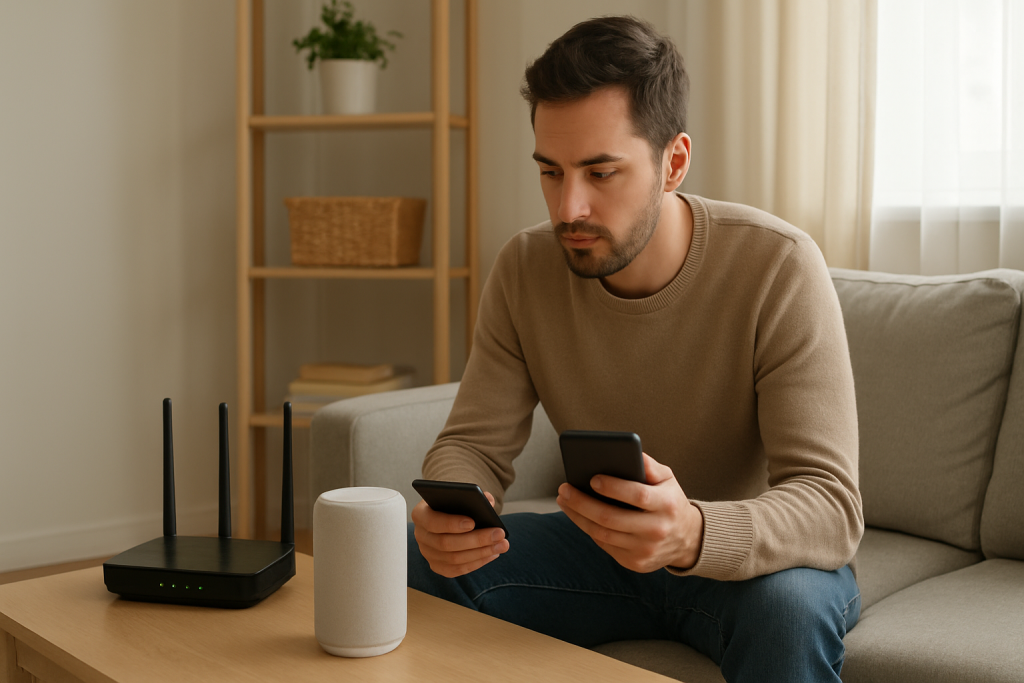
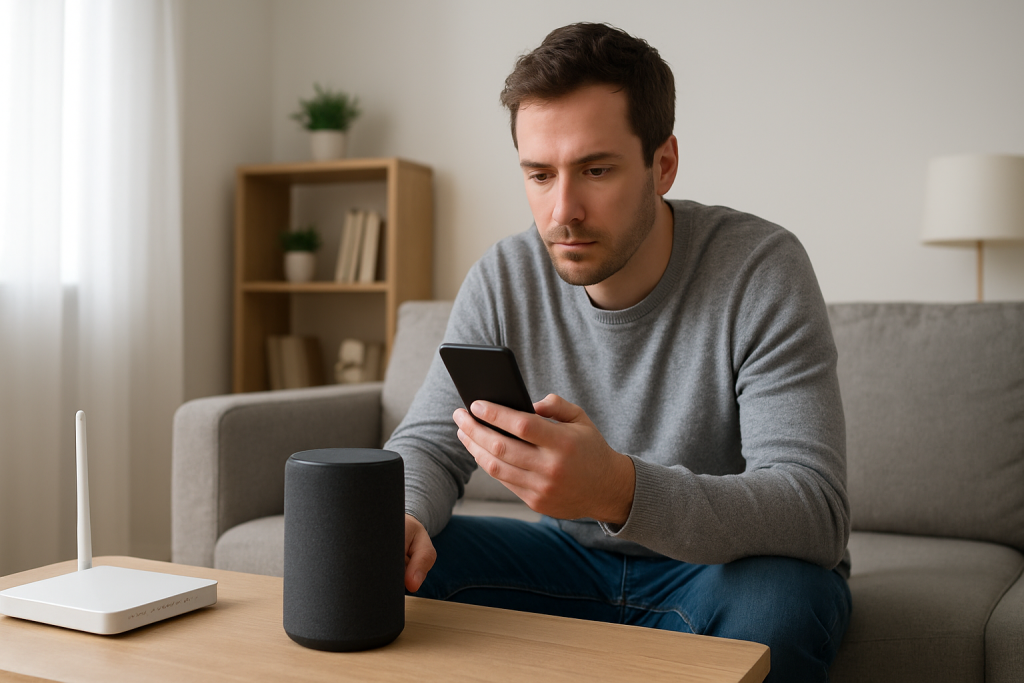
The most common real-world cause is an output loop: your Google Home (or Nest speaker/display) keeps trying to reconnect Bluetooth while another device (usually your phone, tablet, TV, or a soundbar) is also trying to reclaim audio output. Add normal Bluetooth interference and you get a repeating connect-disconnect cycle.
Three quick diagnostic checks:
1) Check who is trying to be the audio output: on your phone, open Bluetooth settings and see if the Google Home/Nest device shows Connected for calls and audio. If it flips between Connected and Saved/Not connected every few seconds, you likely have a reconnection loop.
2) Check for competing connections: turn Bluetooth off on every nearby phone/tablet for one minute except the one you are using. If the disconnecting stops, another device was repeatedly grabbing the connection.
3) Move the speaker and the phone closer (same room, within 6–10 feet) and try again. If it becomes stable only at close range, interference or weak signal is amplifying the loop.
Affected device types: Google Home Mini/Nest Mini, Google Home, Nest Audio, Nest Hub/Nest Hub Max, and other Google Assistant speakers/displays that support Bluetooth pairing.
Why This Happens
Bluetooth audio is designed around one active audio route at a time. When Google Home is paired as a Bluetooth speaker, your phone decides where audio should go. At the same time, the Google Home device may try to reconnect automatically to the last paired phone, especially after a brief drop. If the phone also has rules that prefer a different output (like a car system, earbuds, a TV, or a soundbar), both sides keep “correcting” the route. That creates a loop: connect, switch output, disconnect, reconnect, repeat.
Tightly related causes that feed the loop:
1) Auto-reconnect behavior on both ends: the speaker remembers the last phone, and the phone remembers the last speaker. If either briefly loses signal, both try to re-establish control.
2) Competing Bluetooth endpoints: earbuds, watches, car kits, TVs, and soundbars can steal the phone’s audio profile. The phone flips outputs, and the Google Home interprets it as a drop.
3) Interference and weak signal: Bluetooth shares crowded 2.4 GHz airspace with common household devices. Even if Wi‑Fi is fine, Bluetooth can be unstable, which triggers auto-reconnect and restarts the loop.
4) Multi-user household behavior: multiple phones in the home may have previously paired to the same speaker. When more than one is nearby, the speaker may attempt to reconnect to the last one it saw, while your current phone is trying to connect now.
5) Software state mismatch: the Google Home app, Google account sync, or Voice Match state can be out of date. That can cause the speaker to behave as if it should accept a different controlling device, especially after updates or account changes.
Real-world scenario: a phone is paired to a Nest Audio in the kitchen, but the same phone also connects to a living room soundbar when it wakes up. As you walk between rooms, the phone keeps switching audio routes. Each switch briefly interrupts Bluetooth audio, which triggers the Nest Audio to auto-reconnect. The result looks like the speaker is “dropping Bluetooth,” but it is actually a tug-of-war between outputs.
Common user mistake: pairing the same Google Home speaker to multiple phones and leaving Bluetooth enabled on all of them. The speaker is not “smart switching” between people; it is simply reconnecting to whichever device it sees first or last, which can change minute to minute.
Overlooked technical cause: some phones enable separate Bluetooth profiles (media audio vs calls). If media audio toggles off for the speaker while calls stay on, the phone may show a partial connection. That partial state often triggers repeated reconnect attempts and audio route changes.
Most Likely Causes in Real Homes
1) Another nearby phone/tablet is reconnecting to the speaker and taking over (most common in multi-person homes).
2) The phone is switching audio output to another Bluetooth device (earbuds, watch, car kit, TV/soundbar) and back, creating a loop.
3) Interference or weak Bluetooth signal (distance, walls, 2.4 GHz congestion) causes brief drops that trigger auto-reconnect.
4) Stale pairing records on the phone or on the speaker cause repeated negotiation failures (connects but cannot stay stable).
5) Account/app state mismatch after updates (Google Home app permissions, device status sync, or Voice Match confusion) contributes to unstable control behavior.
Step-by-Step Fix
Confirm the symptom is an output loop, not a one-time drop.
What to do: Start Bluetooth playback to the Google Home/Nest device. Watch your phone’s Bluetooth device list for 30–60 seconds.
What the result means: If it repeatedly flips between Connected and Not connected (or audio jumps back to phone speaker), that is a loop between outputs rather than a single disconnect.
If it fails: If it disconnects once and stays disconnected, skip ahead to the pairing cleanup steps (Step 4 and Step 5).
Remove competing devices from the equation (quick isolation test).
What to do: Turn Bluetooth off on every other nearby phone/tablet for one minute. Also power off or move away any earbuds you recently used. Then connect again from only one phone.
What the result means: If the connection becomes stable, another device was competing and triggering reconnections.
If it fails: If it still disconnects with only one phone active, continue to Step 3 to check signal and interference.
Do a close-range interference check (distance and 2.4 GHz congestion).
What to do: Place the phone within 6–10 feet of the speaker/display, same room, with clear line of sight if possible. Pause and resume playback a few times.
What the result means: If it stabilizes up close but fails at normal distances, interference or weak Bluetooth signal is amplifying the reconnect loop.
If it fails: If it still loops even up close, continue to Step 4 to clear pairing records.
Forget the speaker on the phone (clean the phone-side pairing record).
What to do: On the phone, go to Bluetooth settings, select the Google Home/Nest device, and choose Forget/Unpair. Then turn Bluetooth off and back on.
What the result means: This removes a corrupted or partial pairing record that can cause repeated reconnect attempts.
If it fails: If you cannot forget it (or it instantly reappears as connected), proceed to Step 5 and clear the speaker-side pairing list.
Clear the speaker’s Bluetooth paired devices list (clean the speaker-side record).
What to do: Open the Google Home app, select the speaker/display, then find Bluetooth settings and remove paired devices (wording varies by model/app version). If you see multiple old phones, remove them.
What the result means: If the loop was caused by the speaker trying to reconnect to an old phone, clearing the list stops the speaker from chasing the wrong device.
If it fails: If the app cannot change Bluetooth settings or the device list does not update, continue to Step 6 to verify app permissions and device status.
Verify the device is fully reachable in the Google Home app (app status and permissions test).
What to do: In the Google Home app, tap the device and confirm it shows online and responds to basic controls (volume, playing status, or settings pages). On your phone, ensure the Google Home app has Bluetooth permission and Nearby devices permission (Android) or Bluetooth permission (iOS).
What the result means: If the app cannot reliably see the device, settings changes may not “stick,” and Bluetooth behavior can look random because the device state is not syncing.
If it fails: If the device appears offline or controls lag, continue to Step 7 to rule out a network-side sync problem that can indirectly affect reconnection behavior.
Run a hotspot test to separate Bluetooth issues from home network sync issues.
What to do: Temporarily connect your phone to a personal hotspot (or create one with another phone), then connect the Google Home/Nest device to that same hotspot network in the Google Home app. After it is online there, try Bluetooth pairing again.
What the result means: If Bluetooth becomes stable on the hotspot setup, your home network is likely contributing to device state problems (even though the symptom is Bluetooth). This often shows up as repeated reconnect attempts after the speaker briefly loses cloud/app sync.
If it fails: If it still loops on the hotspot, the issue is more likely local Bluetooth competition or interference. Continue to Step 8.
Check for band steering or crowded 2.4 GHz conditions (router-side sanity check).
What to do: If you can, log into your router and look for band steering or a single combined network name for 2.4 GHz and 5 GHz. Also check the client list to confirm the speaker is staying connected and not frequently dropping.
What the result means: Heavy 2.4 GHz congestion can coincide with Bluetooth instability because both share the same general spectrum. Band steering itself does not “break Bluetooth,” but unstable 2.4 GHz conditions can increase background interference and device state churn.
If it fails: If you cannot access router settings, continue to Step 9 and focus on placement and competing Bluetooth endpoints.
Fix placement and competing endpoints (reduce the triggers for the loop).
What to do: Move the speaker at least a few feet away from a Wi‑Fi router, mesh node, TV, soundbar, microwave, or cordless phone base. On your phone, temporarily disable automatic connection to other Bluetooth devices (or forget them if they keep grabbing audio).
What the result means: If stability improves, the reconnect loop was being triggered by brief dropouts and rapid output switching.
If it fails: If you still see repeated connect/disconnect, continue to Step 10 to check account and Voice Match consistency.
Confirm the correct Google account, home structure, and Voice Match state (account sync test).
What to do: In the Google Home app, confirm you are using the same Google account that owns the home and the device. Verify the device is in the correct Home and Room. If Voice Match is enabled, ensure your phone’s Google Assistant is set to the same account and that Voice Match is not partially set up for multiple accounts on one device.
What the result means: If the device is tied to a different home/account than expected, it can behave inconsistently with control and reconnection, especially after updates or household changes.
If it fails: If you find mismatches, correct them and then repeat pairing. If everything matches and the loop persists, continue to Step 11 for a controlled reboot order that resets radio and network state cleanly.
Do a controlled reboot order (only after you have isolated the cause).
What to do: Power cycle in this order: modem (if separate) off for 30 seconds, then on; router on and wait until fully online; then unplug the Google Home/Nest device for 30 seconds and plug back in; finally restart the phone. Then pair Bluetooth again.
What the result means: This clears stuck network sessions and device state that can cause the speaker to repeatedly re-advertise Bluetooth or chase an old connection.
If it fails: If the loop continues after clean pairing and isolation tests, move to Advanced Troubleshooting.
Advanced Troubleshooting
Use this section only if the basic fixes fail and you still see repeated connect-disconnect behavior.
Account or cloud sync issue
If the Google Home app shows the device intermittently offline, settings not saving, or delayed responses, the speaker may be repeatedly re-syncing its state. That can cause it to drop and re-advertise Bluetooth, which looks like a Bluetooth failure. Confirm the device is assigned to the correct home, remove and re-add the device to the home if necessary, and ensure only one primary account is managing device setup.
Network issue that indirectly triggers Bluetooth looping
Even though Bluetooth is local, Google Home devices maintain ongoing network connections. If the device is frequently changing access points in a mesh system, or if the router is aggressively steering between bands, the speaker can become busy re-establishing services. If your hotspot test was stable but home network was not, focus on stabilizing where the speaker connects (consistent access point, strong signal, minimal roaming). If your router has an option to reduce roaming aggressiveness for stationary devices, apply it to the speaker.
Firmware or app version mismatch
If the disconnecting began right after an update, allow the device to sit powered on for an hour so it can complete background updates. Update the Google Home app itself. If multiple family members manage the home, make sure everyone updates the app; mixed versions can cause confusing device state and repeated reconnection attempts.
Configuration conflict: multiple paired phones and automatic audio routing
Some phones prioritize “last used” audio device, while some Bluetooth accessories aggressively reconnect when they wake. If your phone connects to earbuds when you open their case, that can force the phone to drop the Google Home audio profile. The fix is behavioral and configuration-based: keep only one “primary” phone paired to the speaker, and disable auto-connect for other accessories when you are using the speaker for Bluetooth audio.
When to Reset or Replace
Choose a soft restart when you have a clear reason to refresh state (for example, the speaker is stuck in a partial connection and the app shows it online). A soft restart is simply unplugging the speaker for 30 seconds and plugging it back in. It does not remove your home, account, or settings.
Choose a factory reset when pairing records are clearly corrupted, the device keeps reconnecting to phones you already removed, or the Google Home app cannot reliably manage the device. A factory reset removes the device from your Google Home setup, clears saved Wi‑Fi details, clears Bluetooth pairings, and requires full setup again in the Google Home app.
Hardware safety warning: only use the normal reset procedure for your model (usually a button or touch sequence). Do not open the device, do not attempt internal repairs, and do not use liquids or sprays in ports. If the power cable is damaged or the device overheats, stop using it and address the power issue before further troubleshooting.
Replacement is rarely needed for this symptom. Consider it only if the device cannot hold any Bluetooth connection even at close range after a factory reset, across multiple phones, with other Bluetooth devices turned off. That pattern points to a failing Bluetooth radio.
How to Prevent This
Keep Bluetooth ownership simple: pair the speaker to one primary phone for Bluetooth audio. If other household members need to use it, have them pair only when needed and then forget the device afterward to prevent background reconnections.
Reduce output switching: when you want to use Google Home as a Bluetooth speaker, temporarily disconnect or turn off other Bluetooth audio devices that commonly auto-connect (earbuds, watches, car kits). The fewer competing endpoints, the less likely the loop returns.
Improve placement: keep the speaker away from dense electronics clusters. A few feet of separation from routers, TVs, and soundbars can reduce local interference and make brief drops less likely.
Plan mesh and Wi‑Fi behavior for stationary devices: if you use mesh Wi‑Fi, place nodes so the speaker has one clearly strongest node. Avoid placing the speaker in a “tie zone” between two nodes where it might roam. Even when the symptom is Bluetooth, stable device state reduces reconnection behavior that can amplify looping.
Maintain account stability: avoid moving devices between multiple homes or frequently changing the managing account. If you do reorganize your Google Home structure, verify each device’s Home and Room assignment afterward so control and sync remain consistent.
Routine management: after major phone OS updates, re-check Bluetooth permissions for the Google Home app and confirm the speaker’s paired device list is still what you expect. Small permission changes can cause confusing partial connections that look like random drops.
FAQ
Is this a Wi‑Fi problem or a Bluetooth problem?
Most of the time it is a Bluetooth output loop: the phone and another device keep fighting over where audio should play, and the speaker keeps trying to reconnect after each brief drop. Wi‑Fi can contribute indirectly if the speaker is repeatedly re-syncing its state, which is why the hotspot test is useful.
Why does it disconnect only when I leave the room?
Distance and walls weaken Bluetooth quickly. A weak signal causes brief dropouts, and those dropouts trigger auto-reconnect. If your phone is also reconnecting to another Bluetooth device as you move (like a watch or earbuds), the output loop becomes much more likely.
Can multiple phones be connected to the same Google Home speaker over Bluetooth at once?
No. The speaker can remember multiple paired phones, but it typically maintains one active Bluetooth audio connection at a time. A common misconception is that it will smoothly “share” between phones; in practice, multiple paired phones nearby often causes reconnect attempts and switching.
Why does it say Connected but audio plays from my phone speaker?
That usually means the phone is connected but the media audio route is not actually set to the speaker, or it switched back to another output. Check the phone’s audio output selector while media is playing and ensure media audio is enabled for the speaker in Bluetooth device details.
If I factory reset, what will I lose?
You will remove the device from your Google Home setup, erase saved Wi‑Fi credentials, clear Bluetooth pairings, and need to set it up again in the Google Home app. It does not delete your Google account, but it does remove the device’s local configuration and associations.
Relief has a way of showing up in the smallest corners—when the noise fades, when the waiting stops feeling endless, when you can finally put the whole thing down without feeling like it’s just resting for later.
What’s left is quieter, almost ordinary. That’s the best part: no grand drama, just a clear line back to normal life and the sense that, for once, everything actually moves in the right direction.