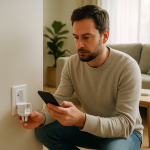
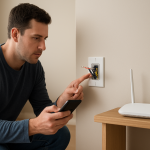
Smart Plug Stopped Working After App Update? What to Do
Quick Answer
When a smart plug or smart switch stops responding right after an app update, the most common cause is an app-to-device compatibility or sync break: the app version changes how it authenticates, how it talks to the cloud, or how it discovers devices on your home network. The device may still have power and even work manually, but the app can’t reliably “see” it or send commands.
This usually shows up as “Offline,” missing devices, stuck loading, or controls that toggle in the app but don’t happen in real life. In mixed ecosystems (Alexa, Google Home, Apple Home, SmartThings, Matter controllers, Zigbee hubs, and brand apps like TP-Link/Kasa/Tapo, Meross, Hue bridges), one app update can also break the link between systems, so voice control and routines fail even if the plug still works in its own app.
Do these 3 quick checks first: (1) Confirm you’re signed into the correct account and “Home” in the updated app. (2) Force close the app, reopen it, and pull-to-refresh the device list (or refresh/discover devices). (3) Toggle your phone off Wi-Fi and back on to ensure it’s on the same network as the plug/hub, then try one on/off command again.
Why This Happens
An app update can change the “contract” between the app, the cloud service, and your device or hub. If your plug/switch firmware, cloud session, or home assignment doesn’t match what the new app expects, you can lose control even though nothing “physically” changed in your home.
Common app-update-related triggers include:
(1) Account session changes: the updated app may require a fresh login, new permissions, or re-accepting terms, and until that happens your devices can appear offline or missing.
(2) Device list migration: some updates reorganize homes/rooms, merge brands, or change how devices are grouped, which can make it look like devices vanished when they’re simply in a different “Home,” “Location,” or “Controller.”
(3) Cloud-to-local control behavior changes: after an update, the app may rely more on cloud commands or more on local LAN discovery. If your phone is on a different Wi-Fi band, a guest network, or a VPN, the app may not find devices locally.
(4) Integration token expiration: Alexa/Google Home/SmartThings/HomeKit/Matter links can silently expire or lose permission after a brand app update, so voice assistants stop controlling devices while the plug still works elsewhere.
(5) A real-world scenario: your router rebooted overnight after a provider update, then your smart plug reconnected with a new IP address. The updated app caches the old device state and shows “Offline” until it refreshes its local discovery or cloud registration.
(6) A common user mistake: updating the app while signed into a different email/Apple ID/Google account than the one used for the smart home, then assuming the devices are “gone.”
(7) An overlooked technical cause: band steering or mesh roaming can move your phone to 5 GHz while the plug is 2.4 GHz-only, and the updated app’s local discovery can be less tolerant of network isolation than before.
Most Likely Causes in Real Homes
(1) App logged into the wrong account or wrong Home/Location after the update. Devices aren’t actually offline; you’re looking at an empty home profile.
(2) Cloud/session mismatch after update (needs re-authentication). If the app shows “Please sign in,” “Something went wrong,” or repeatedly spins, it often means the cloud token is invalid.
(3) Integration link broken (Alexa/Google Home/SmartThings/HomeKit/Matter controller). If the device works in the brand app but not via voice assistant or routines, the link is the likely failure point.
(4) Local network discovery blocked by Wi-Fi changes (guest network, VPN, new mesh node behavior). If the updated app now uses local discovery more heavily, it may not find the plug even though internet control sometimes works.
(5) Firmware/app version mismatch or partially applied update. A plug may need a firmware update, or the app update may have changed the minimum firmware it supports.
Step-by-Step Fix
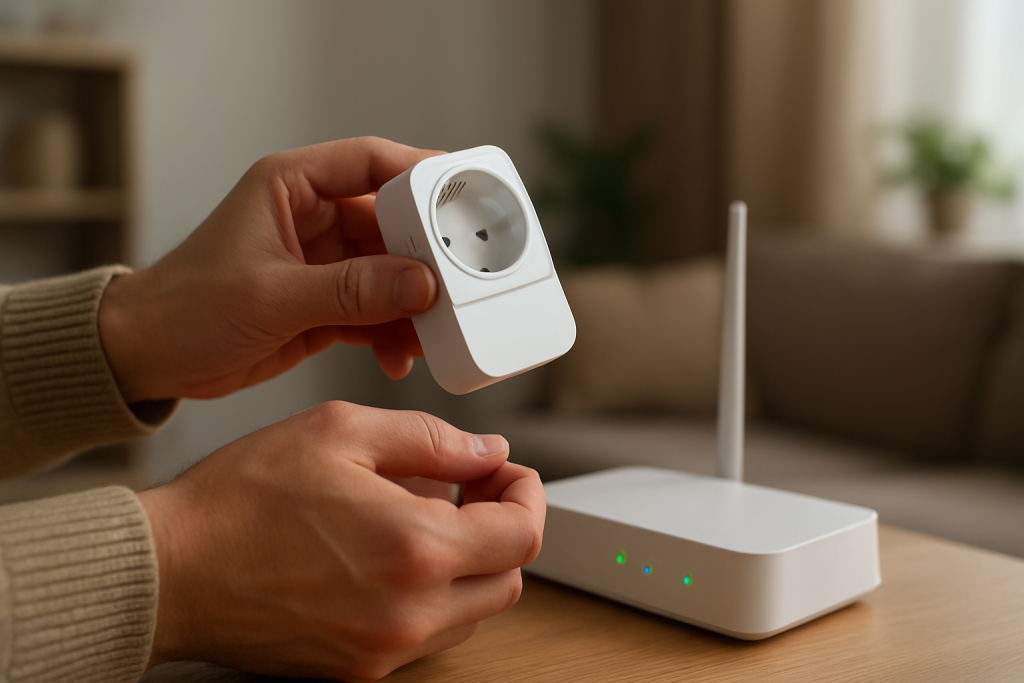
Confirm power and basic device behavior (without changing wiring). Turn the plug’s connected device on/off using the plug’s physical button (or the switch’s paddle) if it has one, and check for normal indicator light behavior.
What it means: If manual control works, the device likely has power and the problem is control/sync rather than an electrical failure.
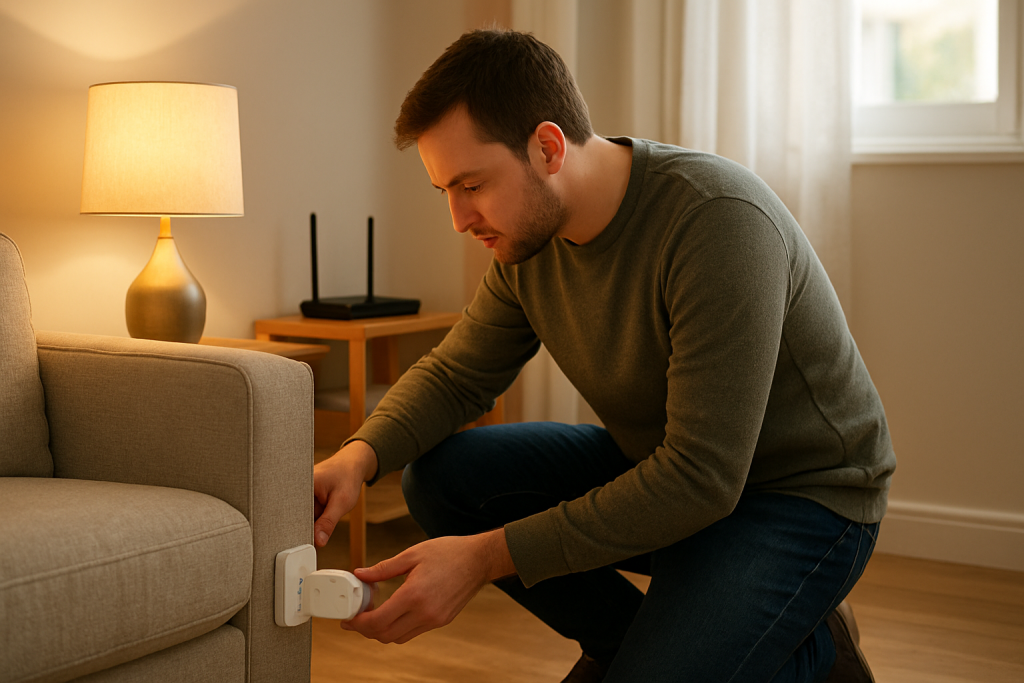
If it fails: Try a different outlet for a smart plug (same room is fine). If there’s any overheating smell, discoloration, or crackling, stop using it and skip to “When to Reset or Replace.”
Verify you’re in the correct account and the correct “Home/Location.” In the updated app, open the profile/account area and confirm the email/phone login, then check the selected Home/Location/House. In Apple Home, confirm you’re in the right “Home.” In Google Home, confirm the right “Home” at the top. In Alexa, confirm the correct profile/household if used.
What it means: If devices reappear after switching Home/Location or accounts, the update likely defaulted you to a different profile.
If it fails: Move to the next step to clear stale app data and refresh device discovery.
Force close the app, reopen, and refresh the device list (then re-login if prompted). Fully close the app (not just minimize), reopen it, and pull-to-refresh. If the app asks for permissions (Local Network on iPhone, Bluetooth, or location), allow them—many apps need these for discovery and nearby setup.
What it means: If the device status updates from Offline to Online, the update likely left the app in a stale session or cached device state.
If it fails: Continue to a targeted network test that isolates app update discovery issues from true device disconnects.
Do a “same network” test: phone Wi-Fi and no VPN. Ensure your phone is on your main home Wi-Fi (not guest). Temporarily disable any VPN/iCloud Private Relay-style features that can interfere with local discovery. Then try control again while standing near the plug/switch.
What it means: If it works only when VPN is off or only on the main network, the update may have shifted to local discovery and your network path is blocking it.
If it fails: Proceed to isolate whether the problem is the plug/hub connection or the app/cloud link.
Check whether control works in a different path (brand app vs ecosystem app). Try controlling the device in its primary app (for Wi-Fi plugs: the manufacturer app; for Zigbee: the hub’s app; for Hue-connected outlets: Hue app; for Matter: the controller app you paired it to). Then test Alexa/Google Home/Apple Home/SmartThings.
What it means: If it works in the primary app but not in Alexa/Google/HomeKit/SmartThings, the integration link or sync is the issue, not the plug itself.
If it fails: If it fails everywhere, focus next on device connectivity (2.4 GHz, mesh, hub reachability) and firmware.
Re-sync the ecosystem (don’t delete yet). In Alexa, run device discovery and check for duplicates. In Google Home, refresh devices and check if it moved rooms. In SmartThings, refresh the device list and confirm the correct hub/location. In Apple Home, check Home Hubs (Apple TV/HomePod) are online if you rely on them for remote access.
What it means: If the device reappears or starts responding, the update likely broke the cached mapping between the ecosystem and the device/cloud.
If it fails: Re-link the service/account (next step), which renews permissions and tokens.
Re-link the account/service between apps (most effective for post-update failures). If you use Alexa/Google Home/SmartThings with a brand account, remove and re-add the linked service in the voice assistant/smart home app (this is usually under “Skills,” “Works with,” or “Linked services”). Then run discovery again.
What it means: If it starts working, the update likely invalidated the old authorization token, so the assistant could no longer control the device.
If it fails: Check app and firmware versions next; a device firmware update may be required for the new app.
Check for a pending firmware update and confirm it completes. In the device’s main app (or hub app), look for firmware updates for the plug/switch, hub, or bridge. Start the update and keep the phone close and on the same Wi-Fi until it finishes.
What it means: If a firmware update was available and fixes control, the app update likely raised compatibility requirements.
If it fails: Try a short, clean power cycle sequence next to force re-registration.
Power cycle in the correct order for re-registration. Unplug the smart plug (or turn off the switch circuit only if you can do so safely via a breaker you already know controls it; otherwise skip) for 20 seconds, then plug it back in. If you use a hub/bridge, power cycle the hub/bridge last. Wait 2–3 minutes for reconnect, then refresh the app.
What it means: If it returns online after a few minutes, the device likely needed to rejoin Wi-Fi/Zigbee/Matter and re-register with the cloud after the app update.
If it fails: Move to Advanced Troubleshooting to isolate network vs cloud vs configuration conflicts.
Check automations and schedules for conflicts introduced by the update. Look for duplicated routines across the brand app and Alexa/Google/HomeKit/SmartThings, especially “At sunset,” “When I leave,” or “Power restore” behaviors. Temporarily disable all routines for that device and test manual app control.
What it means: If random on/off stops, the device wasn’t “broken”—it was receiving competing commands after the update rearranged rooms, names, or device IDs.
If it fails: You’re likely dealing with a deeper sync issue or a device that needs re-pairing (covered below).
Advanced Troubleshooting
This section is only needed if basic fixes fail.
Account/cloud issue: If the app shows devices but every command fails, or it works only on mobile data (not Wi-Fi) or only on Wi-Fi (not mobile data), you may have a cloud session or permission problem. Log out of the brand app, log back in, and confirm any new terms/permissions screens were accepted. If you’re in a shared home, confirm the owner account still has the device and that your user still has control permissions.
Network issue tied to the app update’s discovery method: If the updated app requires local network discovery, guest Wi-Fi, client isolation, or certain router “privacy” settings can block it. A practical test is a hotspot isolation test: temporarily connect your phone and the smart plug to a simple 2.4 GHz hotspot (if the plug supports it) to see if pairing/control works there. If it works on the hotspot but not at home, the device is fine and your home network configuration is the blocker.
Firmware/software mismatch: If firmware updates repeatedly fail or the device gets stuck “updating,” leave it powered and close to the router/mesh main node for stability, then try again from the primary app. Partially applied firmware can cause “Online but unresponsive.” If you use a Zigbee hub or Hue bridge, ensure the hub/bridge itself is updated; an app update can expose older hub firmware limitations.
Configuration conflicts (groups/scenes/permissions): If a plug works when controlled directly but not when used in a group/scene, the group likely contains a duplicate device entry (often created after re-linking) or the device moved to a different room/home. Remove the plug from the group/scene and add it back once, then test again.
Ecosystem sync issue (Alexa/Google Home/Apple Home/Matter): Matter setups can break if the “controller” that commissioned the device changed (for example, pairing was done in one app, then you try to control from another without proper sharing). Confirm which platform originally paired it, then make sure that controller is updated and online. If using Apple Home, verify a Home Hub is online for remote control; without it, local control may work but away-from-home control fails after app changes.
When to Reset or Replace the Device
Soft restart vs factory reset: A soft restart is simply removing power briefly and letting the plug/switch reboot. A factory reset wipes pairing information so the device must be added again to Wi-Fi, a hub (Zigbee), or a Matter controller.
What you may lose after a factory reset: You typically lose device pairing, room assignments, names, schedules/timers in the device app, and links to Alexa/Google/HomeKit/SmartThings routines. For energy-monitoring smart plugs, you may also lose historical energy data stored in the app or cloud.
When a reset is reasonable: Reset when (1) the device won’t come online anywhere, (2) the app can’t complete firmware updates, or (3) the device appears as a “ghost/duplicate” that won’t respond even after re-linking services. Reset is also appropriate when the updated app insists the device must be “re-added” due to a migration.
When replacement is reasonable: Replace the plug/switch if it repeatedly drops offline across different networks, cannot complete updates after multiple attempts, or shows unstable behavior (relay clicking, frequent disconnects) that persists even after re-pairing. For safety, stop using immediately and replace if there is overheating, burning smell, discoloration, melted plastic, or visible damage.
How to Prevent This in the Future
Keep app updates from turning into outages by keeping your smart home organized and reducing “double control.” Use one primary app for device management (firmware, device settings) and keep automations consolidated so you don’t have competing schedules across multiple platforms.
Maintain stable network habits that support compatibility changes: keep 2.4 GHz available for plugs, avoid placing plugs on guest networks, and be cautious with VPN/privacy features that can block local discovery. In mesh Wi-Fi homes, keep the plug within reliable range of a node; devices that barely connect are the first to fail after an update changes discovery timing.
Use consistent naming and room assignments. After updates, ecosystems sometimes re-import devices; consistent names make it obvious when duplicates appear and prevent routines from targeting the wrong device.
After power outages or router restarts, give smart plugs/switches time to reconnect before opening the app and “fixing” things. Many devices reconnect slowly, and opening the app too soon can lock in an “offline” cached state until you refresh or re-login.
Finally, do periodic maintenance: allow firmware updates to complete, keep hub/bridge firmware current, and review sharing/permissions in shared homes so one person’s app update doesn’t silently revoke another person’s control.
FAQ
My smart plug works by pressing its button, but the app says “Offline.” Is the plug broken?
Usually not. Manual control working means the plug has power and its relay is functioning. “Offline” after an app update most often points to a sync problem: wrong account/home selected, the app needs re-login or permissions, or the integration token expired. Fix the app/account/sync path before assuming hardware failure.
Why did Alexa/Google stop controlling the plug right after the update, but the brand app still works?
That pattern strongly suggests the link between the assistant and the brand service broke (authorization expired or changed during the update). Re-link the service in Alexa/Google/SmartThings and run discovery. If the assistant shows duplicates afterward, remove the non-working duplicate and keep the one that responds.
Do I need to factory reset every time an app update causes problems?
No. That’s a common misconception. Most post-update failures are resolved by confirming the correct home/account, refreshing the app, re-accepting permissions, and re-linking integrations. Factory reset should be a later step because it removes pairing, automations, and (for energy-monitoring plugs) possibly history.
My schedules stopped working after the update. The plug turns on at the wrong time.
This usually means the device or ecosystem time zone/location changed during migration, or you now have duplicate schedules in two places (for example, the brand app and Alexa). Confirm your home address/time zone in the controlling app, then disable all routines for that device and re-enable them one by one to find the conflicting automation.
It’s a relief to see the noise thin out, leaving something plain and workable in its place. The facts don’t feel like a puzzle anymore—just the next thing you can live with.
Maybe that’s the quiet win: not drama, not a big ceremony, just a little more steadiness in the background. Things can finally move again, without you constantly bumping into the same wall.