Alexa Wont Discover Smart Lights or Plugs: How to Fix It
Quick Answer
When Alexa can’t discover smart lights or plugs, the most common reason is local discovery is being blocked. This usually happens when the Echo and the smart device are on different networks (like a guest Wi-Fi), your router is isolating devices from each other, or a mesh system is separating clients in a way that breaks local scanning.
Start by confirming the Echo and the light/plug are on the same Wi-Fi name (SSID) and not on a guest network. Then check for settings like “AP isolation,” “client isolation,” or “guest network isolation.” If those are fine, the next most common issue is account/permissions: the device is linked to a different Alexa account, the skill is linked to the wrong vendor account, or the device name/group setup is confusing discovery.
Why This Happens
Alexa discovery for many lights and plugs depends on your home network allowing devices to “see” each other locally. Even when a device also uses the cloud, the initial discovery step often relies on local broadcast or multicast traffic (common examples are mDNS/SSDP/UPnP-style discovery). If your network blocks that traffic, Alexa may never find the device, or it may find it once and then lose it later.
Here are the most tightly related causes that fit this pattern:
1) The Echo is on your main Wi-Fi, but the light/plug is on a guest Wi-Fi (or vice versa). Guest networks commonly block device-to-device communication by design.
2) “Client isolation” (sometimes called AP isolation) is enabled on the Wi-Fi network. With isolation on, your phone can reach the internet, but local devices can’t talk to each other, so discovery fails.
3) A mesh Wi-Fi system is steering devices between nodes/bands in a way that breaks local discovery, especially if the Echo and the device end up on different segments or the mesh has an “isolate wireless clients” option enabled.
4) You’re signed into the Alexa app with a different Amazon account than the one the Echo is registered to, or the smart home skill is linked to the wrong manufacturer account. In that case, discovery can run successfully but “find nothing” because Alexa is looking in the wrong place.
5) Naming and permissions issues: duplicate device names, devices assigned to the wrong home/profile, or a child/household profile without permission to control smart home devices. This can look like “not discovered” when it’s actually “not visible to this user.”
6) Overlooked technical cause: a router feature that blocks multicast/broadcast between Wi-Fi clients (sometimes labeled “Block LAN to WLAN multicast,” “IGMP snooping” misconfiguration, or “Wireless multicast forwarding” disabled). The internet still works, but discovery traffic doesn’t.
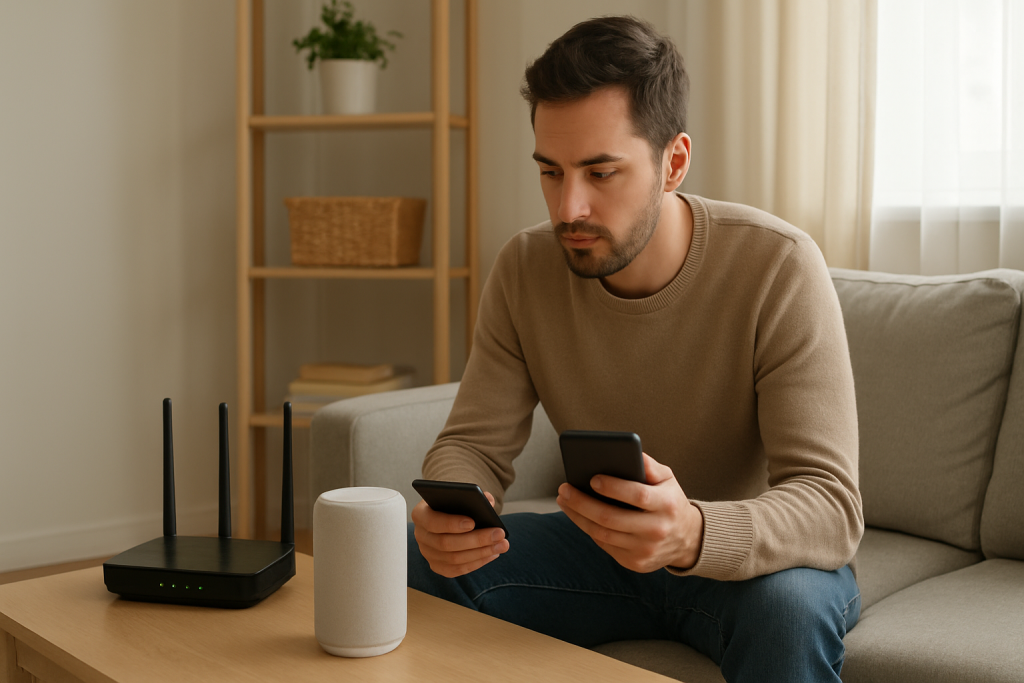
Real-world scenario: after a power outage, the router comes back with the guest network enabled (or the mesh re-optimizes), and your smart plug reconnects to the guest SSID because it has the strongest signal. Your Echo reconnects to the main SSID. Everything looks “online,” but Alexa can’t discover the plug because the two networks are intentionally separated.
Common user mistake: running discovery from the Alexa app while connected to a different Wi-Fi than the Echo (for example, your phone is on guest Wi-Fi or cellular). The app can still send a discovery request, but troubleshooting gets confusing because you’re not viewing the same network the devices are actually using.
Step-by-Step Fix
Confirm the Echo and the light/plug are on the same Wi-Fi network name (SSID).
What to do: In the Alexa app, open Devices > select your Echo > Status or Wi‑Fi Network and note the network name. Then check the light/plug’s own app to see which Wi‑Fi it’s connected to. Make sure both are on the same SSID (not “Guest”).
What the result means: If they’re on different SSIDs, discovery will often fail because guest networks and segmented SSIDs typically block local traffic.
If it fails: Move the light/plug to the same SSID as the Echo. If the device app doesn’t let you change Wi‑Fi without setup mode, use its “Change Wi‑Fi” option or re-add it in the device’s app (not in Alexa yet), then return to Alexa discovery afterward.
Check for guest network and client isolation settings on your router/mesh.
What to do: Log into your router/mesh app and look for settings like Guest Network, Client Isolation, AP Isolation, Wireless Isolation, or “Guests can access local network.” Ensure your smart devices and Echo are not on a guest network, and disable isolation for the main network.
What the result means: If isolation was on, Alexa discovery can be blocked even though both devices show “connected.” Turning it off usually restores discovery within minutes.
If it fails: If you can’t find the setting, temporarily disable the guest network entirely and connect everything to the main network. If you use a mesh, also check whether it has a per-network isolation toggle.
Run a quick “same-network” test using your router’s client list.
What to do: Open your router/mesh app and view the connected devices list. Look for the Echo and the light/plug. Confirm both show as connected to the same network and (if shown) the same LAN/subnet.
What the result means: If one device is missing, it may not actually be connected. If it’s present but on a guest segment, discovery is likely blocked by design.
If it fails: If the light/plug doesn’t appear, check its app for “offline” status and bring it closer to the router temporarily. If the Echo doesn’t appear, confirm it’s not connected to a different saved Wi‑Fi network.
Verify you’re using the correct Amazon account and the Echo is registered where you think it is.
What to do: In the Alexa app, go to More > Settings > Your Profile and confirm the signed-in account. Then open the Echo device page and confirm it’s registered to that same account (not a different household member’s account).
What the result means: If your phone is signed into a different Amazon account than the Echo, discovery may run but results won’t match what the Echo can control.
If it fails: Sign out/in to the correct Amazon account in the Alexa app. If the Echo is registered to a different account, you may need the account owner to manage discovery and device sharing.
Check skill linking and permissions (especially if the device uses a manufacturer skill).
What to do: In the Alexa app, go to More > Skills & Games > Your Skills. Find the relevant smart home skill and confirm it’s enabled and linked to the correct account. If there’s a “Disable Skill” and “Enable” option, disable then re-enable and sign in carefully.
What the result means: If the skill is linked to the wrong vendor account (or an old login), Alexa may not “see” the devices even though they work in the vendor app.
If it fails: In the vendor app, confirm the device is in the correct “Home” and online. Then re-link the skill again and run discovery.
Fix naming and grouping issues that can look like discovery problems.
What to do: In the Alexa app, go to Devices and search for the device name you expect. Also check Lights and Plugs categories. If you find duplicates (for example, “Kitchen Light” and another “Kitchen Light”), rename them to unique names. Then check Groups (like “Kitchen”) and ensure the device is assigned correctly.
What the result means: If the device already exists in Alexa but is misnamed or duplicated, it can feel like “it won’t discover,” when it’s actually already there but hard to identify or control by voice.
If it fails: Delete the duplicate entry (only the one that’s not responding), then run discovery again after confirming the network steps above.
Use a temporary hotspot test to prove it’s a network isolation issue.
What to do: Create a mobile hotspot with a simple name and password. Connect the Echo to the hotspot (Alexa app > Echo > Change Wi‑Fi). Then set up the light/plug on that same hotspot using its app. Run Alexa discovery.
What the result means: If discovery works on the hotspot, your home router/mesh settings are the blocker (isolation, guest segmentation, multicast filtering).
If it fails: If it still won’t discover on the hotspot, the issue is more likely account linking, the device’s own setup state, or a firmware/app problem. Go to Advanced Troubleshooting below.
Do a targeted restart in the correct order (to refresh local discovery), not a random reboot.
What to do: Unplug the modem (if separate) for 30 seconds, plug it back in and wait until it’s fully online. Then power-cycle the router/mesh node that acts as the main router and wait for Wi‑Fi to stabilize. Finally, unplug the Echo for 20 seconds and plug it back in. After that, power the light/plug off and on using its switch or button (not by cutting wiring). Then run discovery.
What the result means: This sequence forces a clean network start so devices get correct IP addresses and rediscovery traffic is fresh.
If it fails: Return to isolation/guest settings and the hotspot test. If those point away from the network, focus on account linking and firmware.
Advanced Troubleshooting
Account and cloud issues that block discovery
If the device works in its own app but never appears in Alexa, that often means Alexa is connected to the wrong cloud account for that device. This happens after an account change, password reset, or when a family member originally set it up. Disable and re-enable the skill and make sure you sign in to the same vendor account that shows the device online.
If you use Amazon Household or multiple profiles, check whether you’re speaking to a profile that doesn’t have access to smart home devices. A common clue is: the device appears for one person’s Alexa app login but not another’s. In that case, manage devices from the primary account and confirm household sharing settings.
Network settings that specifically break local discovery
Look for router options that affect multicast/broadcast traffic. Some routers have toggles that sound unrelated, but they matter for discovery: “Block multicast,” “Wireless multicast forwarding,” or advanced IGMP settings. If multicast is blocked between Wi‑Fi clients, Alexa may not find devices that rely on local announcements.
If you have multiple access points, make sure they’re operating as a single home network and not as separate routed networks. “Access Point mode” is usually fine; “Router mode” on a second unit often creates a second network, which breaks discovery across the boundary.
Firmware and app/software causes
Outdated firmware can cause a device to stay connected but not respond to discovery. Check for updates in the device’s own app and in the Alexa app (Echo updates are automatic, but you can confirm the Echo is online and has current software in its device settings). If updates are pending, install them, then try discovery again.
Also check that the Alexa app itself is up to date. If the app is outdated, device discovery and skill authorization can fail or loop.
Configuration conflicts: routines, duplicates, and permissions
Duplicates can block clean discovery. If Alexa has an old entry for a device that was removed and re-added, Alexa may keep a “ghost” device that doesn’t respond. Remove non-working duplicates from the Alexa app, then re-run discovery.
For lights, check that the device is categorized correctly (light vs plug) and placed in the right group. If a light is in a room group with an Echo, voice commands like “turn on the lights” depend on that grouping. Mis-grouping doesn’t always prevent discovery, but it commonly makes people think discovery failed because voice control doesn’t match the room.
When to Reset or Replace the Device
Use a soft restart first when the device is present in the vendor app but not responding reliably in Alexa, or when it was working and suddenly stopped after a network change. A soft restart means power-cycling using the plug’s button/switch or the lamp’s normal power switch, then re-trying discovery after verifying network isolation settings.
Consider a factory reset only when: (1) the device cannot be moved to the correct Wi‑Fi, (2) it won’t complete setup in its own app, or (3) it repeatedly reconnects to the wrong network and you can’t change it. Factory reset usually removes the device from its app, clears Wi‑Fi credentials, and forces you to set it up again from scratch. You may lose device-specific settings like schedules, scenes, and custom names, and you’ll need to re-add it to Alexa and any groups/routines.
Replace the device if it won’t power on normally, won’t enter pairing/setup mode after following the manufacturer’s steps, or it drops offline even when placed close to the router on a stable network. Stop using the device immediately and unplug it if you notice overheating, a burning smell, discoloration, crackling sounds, or melting. Those are hardware failure signs and should not be troubleshot further at home.
How to Prevent This in the Future
Keep smart home devices and Echos on the same primary Wi‑Fi network, and avoid using guest networks for smart devices. If you need a separate network for visitors, reserve the guest SSID for phones and laptops only.
If you manage your own router settings, leave client isolation disabled on the main network. If you use a mesh system, keep all nodes in the same operating mode and avoid adding a second router behind the first unless you specifically need separate networks and understand the tradeoffs.
Use simple, unique device names. Avoid naming a plug and a light the same thing (for example, two “Living Room Lamp” entries). Clear names reduce “discovery confusion” and prevent Alexa from controlling the wrong device.
Keep account ownership consistent. If one household member set up the smart home skill, document which email/login was used. When passwords change, re-link skills promptly so Alexa doesn’t lose access later.
After major network changes (new router, SSID rename, enabling guest Wi‑Fi, adding mesh nodes), expect to revisit smart device Wi‑Fi settings. Do one change at a time and confirm discovery before moving on, so you know exactly what caused a break.
FAQ
Why does the device work in its own app but Alexa can’t discover it?
This usually points to either network isolation (Alexa can’t reach it locally) or account linking (Alexa is connected to a different vendor account than the one that owns the device). If a hotspot test works, it’s almost certainly your home network settings. If the hotspot test fails too, re-link the skill and confirm you’re using the correct account.
Do my Echo and smart plug need to be on the same Wi‑Fi band (2.4 GHz vs 5 GHz)?
They don’t need to be on the same band as long as they are on the same home network and your router allows devices to communicate across bands. The common misconception is “Alexa can’t use 5 GHz for smart devices.” The real issue is usually guest network separation or client isolation, not the band.
Alexa says “discovering devices” but finds nothing. What does that indicate?
If discovery runs with no errors but finds nothing, it often means Alexa can’t see broadcast/multicast discovery traffic on your network, or the skill is linked to an account with no devices. Confirm same SSID, disable isolation, then verify the skill login.
Can duplicate names stop discovery?
Duplicate names don’t usually prevent discovery itself, but they can make it look like discovery failed because the device appears under an unexpected name or Alexa controls the wrong one. Renaming devices to unique, room-specific names and removing duplicates in the Alexa app helps prevent this.
Should I delete and re-add everything in Alexa?
Not as a first move. Start by fixing the network conditions that block local discovery (same SSID, no guest/isolation, multicast not blocked) and confirming the correct account/skill linking. Only then delete duplicates or reset a specific device that won’t move to the correct Wi‑Fi or won’t complete setup in its own app.
At this point, the hard part has already been done for you—what matters is clear, and the shape of the answer doesn’t keep shifting. The noise can fade, and the page can finally feel like it’s doing its job.
What’s left is just the everyday reality: not a grand reveal, but a steadier baseline. Relief isn’t flashy, yet it settles in anyway.