ISP Modem Plus Your Router Conflicts: How to Fix Double NAT for Smart Devices
Quick Answer
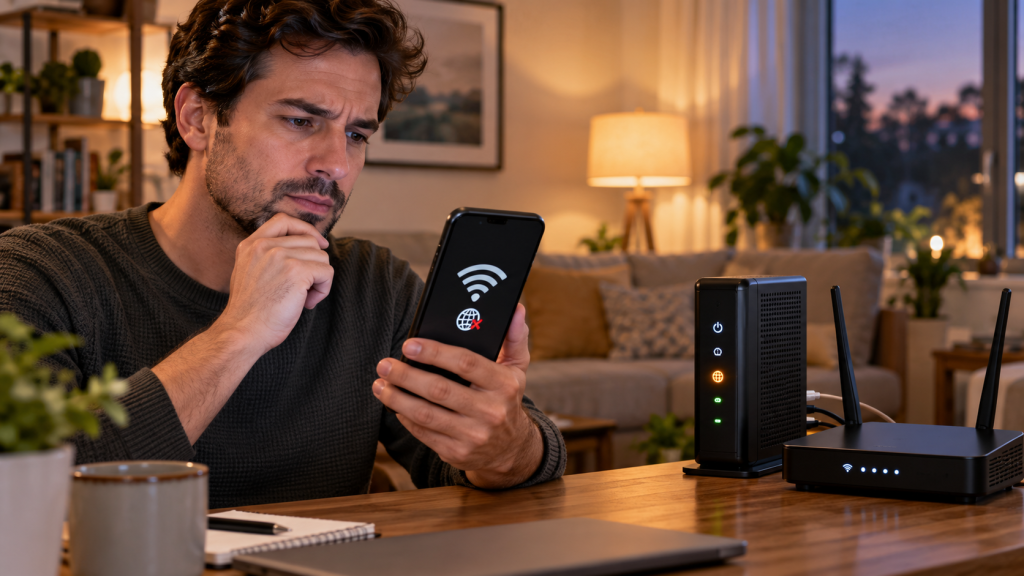
If your ISP gateway (modem-router combo) is routing your home network and your personal router is also routing, you end up with Double NAT (two layers of Network Address Translation). Many smart devices and apps work poorly with Double NAT, causing random offline status, delayed notifications, failed remote access, and unreliable device discovery.
Fix it by using only one router to do the routing. The most reliable approach is to put the ISP gateway into Bridge Mode (or enable IP Passthrough) so your personal router becomes the only router. If Bridge Mode isn’t available, switch your personal router to Access Point (AP) mode so the ISP gateway becomes the only router.
After changing modes, reboot in the correct order and confirm you have a single private network and a single DHCP server. This usually stabilizes smart plugs, cameras, speakers, and hubs within minutes.
Why This Happens
Double NAT occurs when two devices both perform routing and NAT. In many homes, the ISP provides a gateway that already includes Wi-Fi and routing. When you add your own router (often for better coverage or features), it may also create its own private network. The result is a “network behind a network.”
Smart devices are especially sensitive because they depend on predictable local networking and consistent paths for discovery and control. Many use local broadcast or multicast discovery (for example, to let your phone find a speaker or hub), and those discovery packets often do not traverse cleanly across two NAT boundaries. Remote access can also break because inbound connections and port mappings become complicated when two routers are translating addresses.
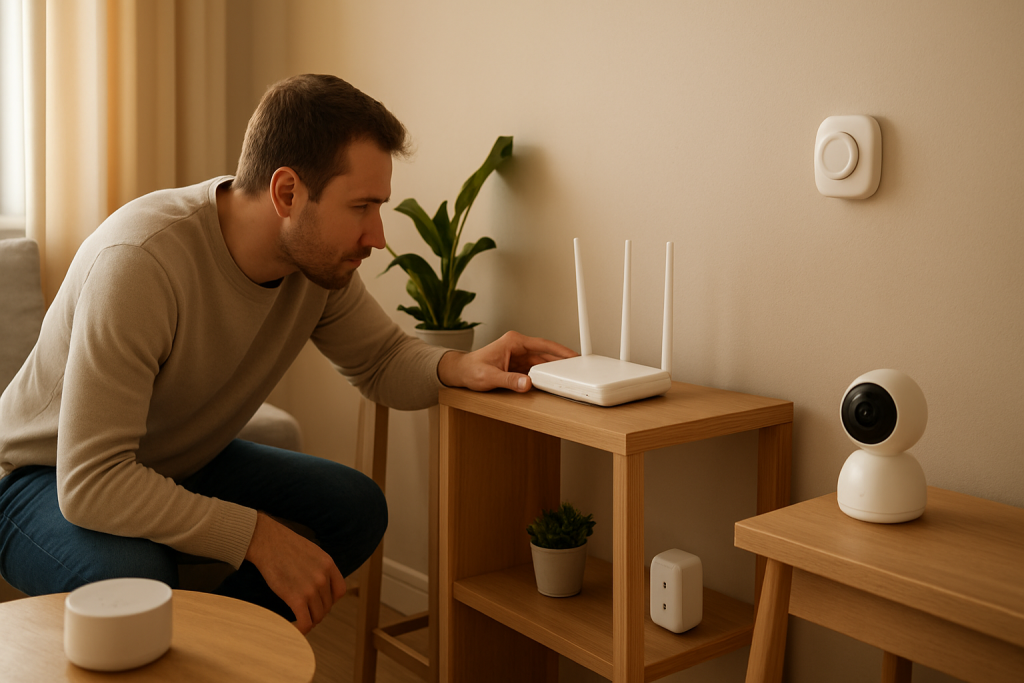
A common real-world scenario is an apartment with thick walls and crowded Wi-Fi channels. You add a stronger router and place it deeper in the unit for better signal, but you leave the ISP gateway active near the entry closet. Now you have two Wi-Fi networks, two DHCP servers, and two NAT layers. Your phone may roam between 2.4GHz and 5GHz, your smart devices may cling to 2.4GHz at the edge of coverage, and the control app may “lose” devices even though the internet still works.
One common user mistake is plugging the ISP gateway into the WAN/Internet port of the personal router without changing either device’s mode. That wiring is correct for a single-router setup, but if the ISP gateway is still routing, it creates Double NAT. Another common mistake is trying to “fix” it by turning off Wi-Fi on one device while leaving routing enabled on both; the conflict remains even if only one box is broadcasting Wi-Fi.
An overlooked technical cause is that some ISP gateways silently re-enable routing features after a firmware update or a remote configuration push from the ISP. You may have had Bridge Mode working for months, then smart devices suddenly start dropping because the gateway reverted to router mode and began handing out its own IP addresses again.
Double NAT can also amplify DHCP and IP conflicts. DHCP is the service that hands out local IP addresses (like 192.168.1.x). If both the gateway and your router run DHCP, clients may receive addresses from different “worlds,” leading to devices that can reach the internet but can’t see each other locally. Smart hubs and phones end up on different subnets, and discovery fails.
Step-by-Step Fix
Confirm you actually have Double NAT. Log into your personal router and check its WAN/Internet IP address. If the WAN IP is private (commonly 192.168.x.x, 10.x.x.x, or 172.16–172.31.x.x), your router is behind another router, which is the classic Double NAT pattern. Also check whether your ISP gateway is handing out addresses (its LAN DHCP is enabled) and whether it has its own Wi-Fi network active.
Practical testing method: On a phone connected to your home Wi-Fi, check its IP address in Wi-Fi details. Then check the router’s LAN subnet (for example, 192.168.0.x). If your phone is on one subnet but a smart hub is on another, or your router’s WAN is private, you have a strong indicator of Double NAT or split networks.
Choose your target design: one router only. Decide which device should be the “main router” (the only device doing NAT and DHCP). In most homes, the best choice is your personal router (better Wi-Fi, better controls, easier firmware updates). That means the ISP gateway should be put into Bridge Mode or IP Passthrough mode.
If you rely on ISP features like built-in phone service (VoIP) or TV boxes that require the gateway to remain a router, you may instead keep the ISP gateway as the router and convert your personal router to Access Point (AP) mode.
Option A (recommended): Enable Bridge Mode / IP Passthrough on the ISP gateway. Log into the ISP gateway’s admin page (often 192.168.0.1 or 192.168.1.1). Look for “Bridge Mode,” “IP Passthrough,” or “Disable Routing.” Enable it, then save/apply.
What to expect: The gateway may disable its Wi-Fi and DHCP automatically, and it may reboot. Afterward, your personal router should receive a public WAN IP from the ISP (not a private 192.168.x.x address). This removes the second NAT layer and usually restores stable smart device discovery and remote access.
Option B: Put your personal router into Access Point (AP) mode. If Bridge Mode is unavailable (common with some ISP firmware), set your personal router to AP mode. This turns off its NAT and DHCP so it behaves like a Wi-Fi access point and Ethernet switch.
After enabling AP mode, connect the ISP gateway to a LAN port on your personal router (not the WAN/Internet port) if the router’s AP instructions require it. This ensures all devices share one LAN and one DHCP server (the ISP gateway), preventing smart devices from landing on separate subnets.
Fix the Wi-Fi layout for smart devices (2.4GHz vs 5GHz). Many smart devices work best (or only) on 2.4GHz due to range and compatibility. If your router uses a single SSID for both bands (band steering), some setup apps struggle and devices may fail to onboard or may roam unpredictably.
If you’re troubleshooting instability, temporarily separate SSIDs (for example, “Home-2.4” and “Home-5”) and connect smart devices to 2.4GHz. Keep your phone on the same SSID during setup. After everything is stable, you can decide whether to keep separate SSIDs or re-enable band steering.
Ensure only one DHCP server is active. If your ISP gateway is bridged, your personal router should run DHCP. If your personal router is in AP mode, the ISP gateway should run DHCP. Having both enabled is a top cause of “some devices work, others don’t” behavior.
Simple check: In the router that should NOT be routing, confirm DHCP is disabled. Then reboot affected smart devices so they request a fresh IP address from the correct DHCP server.
Reboot in the correct order to rebuild the network cleanly. Power off the ISP gateway, personal router, and any smart hubs. Power on the ISP gateway first and wait until it is fully online. Then power on your personal router. Finally, power on hubs and smart devices (or reboot them from their apps if supported).
This order helps prevent stale leases and ensures the “main router” is ready to assign IP addresses when devices reconnect.
Verify the result: one subnet, one NAT. Recheck your personal router’s WAN IP. In Bridge Mode, it should now show a public IP (or at least not a private RFC1918 address). Confirm your phone and smart devices share the same IP range (for example, all 192.168.50.x). Then test local control (device discovery) and remote control (from cellular data) to confirm stability.
Advanced Troubleshooting
If you still see smart devices dropping offline after eliminating Double NAT, focus on issues that commonly ride along with a two-router setup: multicast discovery, firmware quirks, and RF interference.
Check for CGNAT vs Double NAT (important distinction)
Some ISPs use Carrier-Grade NAT (CGNAT). With CGNAT, your router may show a WAN IP that isn’t truly public, and inbound connections may not work even with a single router. This can look like Double NAT symptoms for remote access, but local device stability should still improve once you have only one router inside the home.
If your router’s WAN IP is in 100.64.0.0/10, that’s commonly CGNAT. In that case, focus on app-based cloud control rather than port forwarding, or request a public IP from your ISP if you need inbound access.
Multicast/Discovery settings (overlooked but common)
Smart home discovery often uses mDNS/Bonjour, SSDP/UPnP discovery, or other multicast traffic. Some routers have settings like “AP Isolation,” “Client Isolation,” “IGMP Snooping,” “Multicast Enhancement,” or “Block LAN to WLAN multicast.” If enabled incorrectly, devices may be online but invisible to apps.
Check that guest networks are not being used for smart devices and that client isolation is off on the main SSID. If you have multiple access points or mesh nodes, confirm they’re in the same network mode (not a mix of router mode + AP mode).
Router configuration issues that mimic instability
QoS or “Smart Queue” features can help, but misconfigured QoS can starve small IoT packets when the network is busy. Also check firewall settings that block local traffic between Wi-Fi and Ethernet. If your smart hub is wired and your phone is on Wi-Fi, a restrictive LAN policy can break control even though both have internet.
UPnP is sometimes needed for certain consoles and may help some smart platforms, but it should not be used as a bandage for Double NAT. Fix the NAT topology first, then decide whether UPnP is appropriate for your environment.
Firmware/software causes
Update firmware on both the ISP gateway (if the ISP allows) and your personal router. Firmware updates often fix DHCP bugs, Wi-Fi driver issues, and multicast handling. Also update the smart hub’s firmware and the control app on your phone. A mismatch can cause repeated re-pairing prompts or devices that show “offline” until the app is restarted.
If the ISP gateway keeps reverting out of Bridge Mode after updates, ask the ISP to set Bridge Mode on their side or provide a modem-only device. This is a frequent cause of “it worked for months, then broke overnight.”
Signal and interference checks (especially in apartments)
Even with Double NAT fixed, poor signal can cause dropouts that look like network instability. 2.4GHz travels farther and penetrates walls better, but it’s crowded and prone to interference from neighbors, Bluetooth, baby monitors, and microwaves. 5GHz is faster and often cleaner, but range is shorter and thick walls can cause rapid signal loss.
Test by temporarily moving the router closer to the problem devices or relocating it away from dense wiring closets, metal cabinets, and behind TVs. If stability improves, you’re dealing with RF and placement as well as routing. Consider adding a mesh node or wired access point rather than increasing transmit power, which can make interference worse.
When to Reset or Replace the Device
Reset is appropriate when configuration drift or corrupted settings keep reintroducing the problem. Replace is appropriate when hardware limitations or ISP restrictions prevent a stable single-router design.
Reset your personal router if you cannot reliably disable DHCP/NAT (AP mode) or cannot maintain Bridge Mode behavior due to conflicting settings. After a factory reset, configure it fresh: set router mode (or AP mode), set SSIDs, and confirm DHCP settings before reconnecting all smart devices.
Reset the ISP gateway if you changed multiple settings and can’t regain access, or if the gateway is stuck in a half-bridged state (for example, Wi-Fi off but still routing). After reset, immediately apply the chosen plan: Bridge Mode with your router as primary, or gateway routing with your router in AP mode.
Replace the ISP gateway (or request a modem-only unit) if Bridge Mode is missing, unreliable, or frequently reverted by ISP updates and you need your own router to be primary. This is common with some modem-router combos that are heavily ISP-managed.
Replace your personal router if it lacks AP mode, has unstable firmware, cannot handle many simultaneous IoT clients, or drops multicast traffic under load. Homes with dozens of smart devices often benefit from a router known for strong IoT handling and regular firmware support.
How to Prevent This in the Future
Design your network so there is one clear “brain” doing routing, NAT, and DHCP. Document which device is the router and which is bridged/AP so future changes don’t accidentally reintroduce Double NAT.
When adding new equipment (mesh systems, extenders, additional routers), avoid “router behind router” installations unless you have a specific reason and understand the tradeoffs. Extenders should be used sparingly; a wired access point or mesh system in AP mode is usually more stable for smart devices.
Keep smart devices on the main LAN, not a guest network, and avoid client isolation features unless you explicitly want devices blocked from each other. If you separate 2.4GHz and 5GHz SSIDs, keep names and passwords consistent over time to prevent devices from clinging to old credentials.
Plan for signal realities: place the main router centrally when possible, away from thick walls and interference sources. In apartments, choose less congested channels (especially on 2.4GHz) and consider using 5GHz for phones and laptops while leaving IoT devices on 2.4GHz for stability and range.
Finally, after ISP maintenance or a gateway firmware update, re-check that Bridge Mode or IP Passthrough is still active. This single check can prevent days of “random” smart home failures that are actually a reintroduced Double NAT layer.
FAQ
How do I know if Double NAT is the reason my smart devices keep going offline?
Look for signs of two networks: your router’s WAN/Internet IP is private (192.168.x.x/10.x.x.x/172.16–31.x.x), devices appear in the app only when your phone is on a specific Wi-Fi, or a smart hub and phone get different IP ranges. Double NAT commonly causes discovery and remote access issues even when general browsing seems fine.
Should I use Bridge Mode on the ISP gateway or AP mode on my router?
Bridge Mode on the ISP gateway is usually best because it makes your router the single routing point and avoids ISP gateway Wi-Fi and DHCP conflicts. Use AP mode on your router when the ISP gateway can’t be bridged or must remain the router for ISP services. The goal is the same: only one device should do NAT and DHCP.
Will separating 2.4GHz and 5GHz fix Double NAT?
No. Separating bands can help onboarding and reduce roaming-related hiccups, but it does not remove Double NAT. Fix the routing first (Bridge Mode or AP mode), then optimize Wi-Fi bands for stability—most smart devices should stay on 2.4GHz for range and compatibility.
Can Double NAT cause IP conflicts or DHCP problems?
Yes. If both the ISP gateway and your router run DHCP, devices can receive addresses from different subnets, which breaks local communication. You may see devices that have internet access but can’t be discovered or controlled locally. Ensuring only one DHCP server is active is a key part of the fix.
My internet works, but my smart home app can’t find devices locally. What should I check first?
First confirm you have a single network (no Double NAT) and that your phone and smart devices are on the same SSID/subnet. Then check for guest network usage, client isolation, and multicast-related settings that can block discovery. If those look good, verify firmware updates on the router and hub and test signal by moving the router closer to the devices.
There’s a kind of relief in watching the pieces finally line up, even if it takes far less ceremony than we used to pretend. The problem stops hovering at the edge of daily life and becomes something you can actually put down.
What’s left is quieter than expected: fewer arguments, fewer rereads, fewer mental backflips. Not dramatic—just steadily, undeniably better.