WiFi Works on Phones but Smart Devices Stay Offline: What to Check
Quick Answer
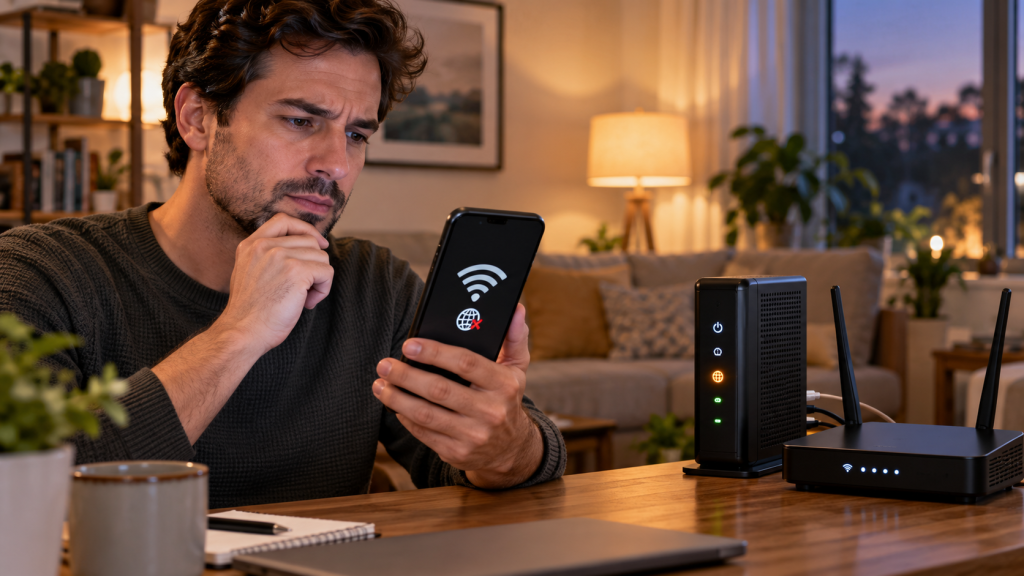
If your phones and laptops stay connected but smart plugs, bulbs, cameras, or thermostats go offline, the most common cause is band steering: the router combines 2.4GHz and 5GHz under one network name (SSID) and automatically “steers” devices. Many smart devices only support 2.4GHz and can fail to join when the router tries to be helpful.
Start by confirming the device is on a 2.4GHz-capable network and that your router isn’t forcing it onto 5GHz. The fastest fix is usually to temporarily split your WiFi into separate 2.4GHz and 5GHz network names (or disable band steering), connect the smart device to 2.4GHz, then re-enable features carefully if desired.
Why This Happens
Phones are “forgiving” WiFi clients. They support both 2.4GHz and 5GHz, handle modern security modes, roam between access points, and recover quickly from brief drops. Many smart devices are the opposite: low-power radios, simplified WiFi stacks, and limited support for newer router features.
Band steering is a frequent trigger. When your router advertises one SSID for both bands, it decides which band a device should use. That decision is based on signal strength, device history, and proprietary logic that varies by brand. A smart device that only supports 2.4GHz may still see the combined SSID, attempt to join, and then fail during the handshake because the router nudges it toward 5GHz or because the device misinterprets the network capabilities.
2.4GHz vs 5GHz matters here:
2.4GHz travels farther and penetrates walls better, but it’s slower and more crowded (neighbors, Bluetooth, microwaves). 5GHz is faster and cleaner but has less range. Smart devices often use 2.4GHz because it’s adequate for small data and better for distance. When band steering tries to “upgrade” a device to 5GHz, it can backfire—especially in homes with thick walls, older devices, or routers set to aggressive steering.
A real-world scenario: In an apartment building, your phone stays fine because it hops to 5GHz close to the router and can tolerate interference. A smart bulb in a bedroom behind two plaster walls may only see marginal 2.4GHz. If the router’s steering logic keeps changing how it presents the network, the bulb’s setup process times out and it stays offline.
Other contributors can stack on top of band steering:
Common user mistake: trying to set up a 2.4GHz-only device while the phone is connected to 5GHz on the same SSID. Some apps pass network info differently depending on the band, and setup can fail even though the SSID name is identical.
Overlooked technical cause: WPA3-only or “WPA3-Personal” mode. Many smart devices can’t authenticate with WPA3. A phone will connect; a smart plug won’t. Mixed WPA2/WPA3 can also confuse older clients on certain routers.
Network services issues: DHCP problems or IP conflicts. DHCP is the router handing out local addresses. If the router’s DHCP pool is exhausted, or a device grabs an address already in use, the smart device may connect to WiFi but still show “offline” in the app because it can’t reliably communicate.
Firmware/software causes: Router firmware updates can change steering behavior or security defaults. Smart devices may also need firmware updates but can’t fetch them while they’re stuck offline, creating a loop.
Step-by-Step Fix
Confirm the device supports 2.4GHz only (most do). Check the device label, manual, or product page for “802.11 b/g/n” (usually 2.4GHz) versus “a/n/ac/ax” (often 5GHz capable). If it’s 2.4GHz-only, plan to connect it to a dedicated 2.4GHz SSID at least during setup.
Temporarily split your WiFi into two names (disable band steering). Log into your router and create separate SSIDs, such as “HomeWiFi-2.4” and “HomeWiFi-5.” If you see settings like “Smart Connect,” “Band Steering,” “One WiFi,” or “Unified SSID,” turn that off temporarily. Then connect your phone to the 2.4GHz SSID and run the smart device setup again.
Use a practical test: check the device’s connection at the router. After attempting setup, open the router’s connected clients list. Look for the device name or MAC address. If it never appears, it’s failing to join WiFi (often steering/security/channel issues). If it appears briefly then disappears, it may be failing authentication or losing signal. If it stays connected but the app shows offline, suspect DHCP/IP, firewall isolation, or cloud/app issues.
Set 2.4GHz to a compatible channel and width. For troubleshooting, set 2.4GHz channel width to 20 MHz (not 40 MHz). Choose channel 1, 6, or 11. Avoid “Auto” if you’re in a congested area and the router keeps hopping channels. Many smart devices struggle when 2.4GHz uses wide channels or rapidly changes.
Check security mode: use WPA2-Personal (AES) for setup. If your router is set to WPA3-only, switch to WPA2-Personal (AES). Avoid WPA2/WPA3 mixed mode if you’ve seen device compatibility problems; some routers implement mixed mode poorly. After devices are stable, you can try re-enabling WPA3 if your smart devices support it (many still don’t).
Turn off client isolation/guest network for smart devices. Make sure the smart device is not being added to a guest network that blocks local device discovery. Features named “AP Isolation,” “Client Isolation,” “Device Isolation,” or “Block LAN access” can prevent setup and local control. Put smart devices on your main network unless you intentionally manage them on an IoT VLAN with proper rules.
Reboot in the right order to clear stale leases. Power down the modem (or ISP gateway), router, and the smart device. Bring them back up in this order: modem/gateway first, then router, then the smart device. This helps DHCP and routing settle cleanly, especially after changing SSIDs or security modes.
Move the device (or a temporary setup location) closer to the router. Distance and interference matter more for low-power smart devices. For initial pairing, place the device within 10–15 feet of the router with minimal walls in between. If it works close-up but fails in the final location, you’re dealing with signal quality, not just settings.
Update router firmware, then re-check band steering behavior. Install the latest router firmware from the manufacturer or through the router app. Some firmware versions are known to cause steering loops or unstable 2.4GHz beacons. After updating, keep the split SSIDs until everything is stable for a few days.
Advanced Troubleshooting
Identify whether it’s WiFi join failure or “connected but unreachable”
Use two checks: (1) the router’s client list, and (2) the device’s IP address. If the device has an IP address but is still offline in the app, the WiFi link may be fine and the issue is routing, DNS, or cloud access.
If your router shows the device with an IP like 192.168.1.x, try pinging it from a computer on the same network (if you’re comfortable doing so). If pings fail but the device stays listed, it may be blocked by isolation settings or a firewall rule. If pings work but the app says offline, the device’s cloud connection or the vendor service may be down, or the device may have outdated firmware.
Watch for DHCP pool exhaustion or IP conflicts
DHCP issues can look random: some devices work, others don’t. If you have many devices (phones, TVs, tablets, smart switches, cameras), your router may run out of available addresses. Check the DHCP range in router settings. Expanding the pool (for example, from 192.168.1.100–192.168.1.150 to 192.168.1.50–192.168.1.250) can stabilize connections.
IP conflicts happen when two devices end up with the same address. Symptoms include devices that connect but frequently go offline, or only one of two devices works at a time. If your router has an “Address Reservation” feature, reserve an IP for each smart device after it connects successfully.
Check for router configuration features that break older IoT clients
Some router options improve performance for modern phones but can destabilize smart devices:
802.11ax (Wi-Fi 6) on 2.4GHz: If your router allows disabling Wi-Fi 6 specifically on 2.4GHz, try turning it off temporarily. Many IoT radios are 802.11n and behave better when the 2.4GHz radio is kept simple.
PMF/802.11w (Protected Management Frames): If set to “Required,” older devices may fail to connect. Set it to “Capable” for compatibility.
Airtime fairness: Can starve low-throughput clients. If you see frequent IoT dropouts, try disabling it.
ISP modem-router combo limitations
ISP gateways often have band steering enabled by default with limited controls. If you can’t split SSIDs, look for an “IoT network” option (some gateways provide a dedicated 2.4GHz SSID). If that’s not available, consider putting the gateway in bridge mode and using your own router or mesh system that allows separate SSIDs and clearer steering controls.
Interference and placement testing
An overlooked cause is localized interference: a smart device placed behind a TV, inside a metal electrical box, near a microwave, or next to a cordless phone base can have a much weaker signal than your phone a few feet away. A practical test is to temporarily power the device from an extension cord (or move it if possible) and see if it stays online in a different spot. If it stabilizes, you’ve confirmed a radio environment problem rather than an account/app issue.
When to Reset or Replace the Device
Resetting makes sense when the device has incorrect saved WiFi details or is stuck in a partial setup state. Do a factory reset if you changed SSIDs/passwords, switched security modes, or attempted setup multiple times with band steering on. Follow the manufacturer’s reset method exactly (often holding a button for 5–15 seconds until an LED pattern changes).
Replace the device if it repeatedly fails to connect to a known-good 2.4GHz network with WPA2-AES, within close range of the router, after router firmware is current. Devices with failing radios can appear to “almost connect” but drop during authentication. Also consider replacement if the device is very old and only supports outdated security or has no firmware support; modern routers may not maintain legacy compatibility indefinitely.
If only one specific device model fails while other smart devices connect fine under the same conditions, that points to a device-side compatibility issue. If multiple brands fail similarly, it’s more likely router settings, band steering behavior, or 2.4GHz instability.
How to Prevent This in the Future
Keep a dedicated 2.4GHz SSID for smart devices. Even if you prefer a single network name for phones, a separate “Home-IoT-2.4” avoids band steering confusion and makes troubleshooting faster. Use a strong password and WPA2-AES unless all your devices explicitly support WPA3.
Make 2.4GHz predictable: channel width 20 MHz, and a stable channel (1/6/11). In dense neighborhoods and apartments, stability often beats peak speed for IoT reliability. Place the router centrally and away from interference sources; even moving it a few feet higher and away from a TV or metal shelving can improve coverage.
After adding new devices, reserve IP addresses for important gear like cameras, doorbells, and hubs. This reduces “random offline” behavior caused by DHCP lease changes or conflicts. Also, update router firmware a few times per year, but avoid changing advanced WiFi features unless you have a reason—many IoT issues start right after a router “optimization” toggle is enabled.
Finally, be cautious with mesh systems and extenders: they can help coverage, but some use band steering aggressively. If you use mesh, ensure the 2.4GHz SSID is available for IoT or that the system has an IoT onboarding mode designed for 2.4GHz-only devices.
FAQ
Why do my phones work fine but my smart plugs won’t connect?
Phones support both 2.4GHz and 5GHz and handle modern security and roaming features well. Many smart plugs are 2.4GHz-only and can fail when the router uses band steering with a single SSID, or when the router is set to WPA3-only. Splitting SSIDs and using WPA2-AES during setup solves most cases.
Do I need to disable 5GHz to set up smart devices?
Not usually. The cleaner approach is to split the network names so you can intentionally join the 2.4GHz SSID on your phone during setup. Disabling 5GHz can work as a temporary trick, but it’s disruptive and doesn’t address the root issue if band steering is the real problem.
My device shows connected in the router, but the app says offline. What does that mean?
That typically means WiFi association succeeded, but the device can’t communicate correctly afterward. Common causes include client isolation/guest network settings, DNS problems, firewall rules, or DHCP/IP conflicts. Check whether the device has a valid IP address and make sure it’s on the main network with LAN access allowed.
What’s the easiest way to test if it’s a signal problem?
Move the device close to the router for setup and run it there for 15–30 minutes. If it stays online near the router but drops offline in its normal location, you’ve confirmed a coverage or interference issue. Then consider repositioning the router, changing the 2.4GHz channel, or adding a mesh node closer to that area.
Will a router firmware update really help with smart device disconnects?
Yes, especially when band steering and 2.4GHz stability are involved. Firmware updates can fix steering logic, security compatibility, and DHCP bugs. Update the router first, then keep settings conservative (separate SSIDs, WPA2-AES, 20 MHz on 2.4GHz) until your smart devices remain stable.
There’s a quiet relief in seeing the fog lift—less worry, fewer mental tabs left open, more room for normal life to happen. The work is done; the rest is simply watching things line up the way they always should’ve.
Not every problem gets a neat ribbon-cutting moment, but this one does feel oddly satisfying. By the time you reach the end, the page reads like confirmation instead of persuasion.