Smart Devices Stop Working After Switching Internet Providers: What to Check
Quick Answer
When smart devices stop working right after you switch internet providers, the most common cause is an IP range change on your home network. Your new ISP gateway/router may be using a different LAN subnet (for example, changing from 192.168.1.x to 192.168.0.x or 10.0.0.x), which can break devices that were previously set up with static IPs, DHCP reservations, or app integrations that “remember” old addresses.
Start by confirming your router’s LAN IP/subnet, then ensure every smart device is set to obtain an IP address automatically (DHCP) or update any reservations to match the new range. After that, check 2.4GHz Wi-Fi connectivity (many smart devices require 2.4GHz), and verify you don’t have two routers creating a double-NAT or “two networks” situation.
Why This Happens
Most smart homes depend on a predictable local network. When you change providers, you often replace the modem, the router, or both with an ISP modem-router combo. Even if your Wi-Fi name and password stay the same, the new equipment frequently uses a different private IP range (also called the LAN subnet). This matters because smart devices and the apps that control them use local IP addresses for discovery, pairing, and fast control.
Here are the most common IP-range-related ways things break:
First, some devices (or the person who set them up) used a static IP address. If a smart plug was manually set to 192.168.1.50 and your new router uses 192.168.0.x, that plug will sit on an address that doesn’t exist on your network anymore, so the phone app can’t find it.
Second, DHCP reservations may no longer apply. A DHCP reservation tells the router to always give a specific device the same IP. When you replace the router, those reservations vanish unless you re-create them. Devices may come back with new IPs, and integrations like Home Assistant, local camera viewers, or hubs that point to old IPs will fail.
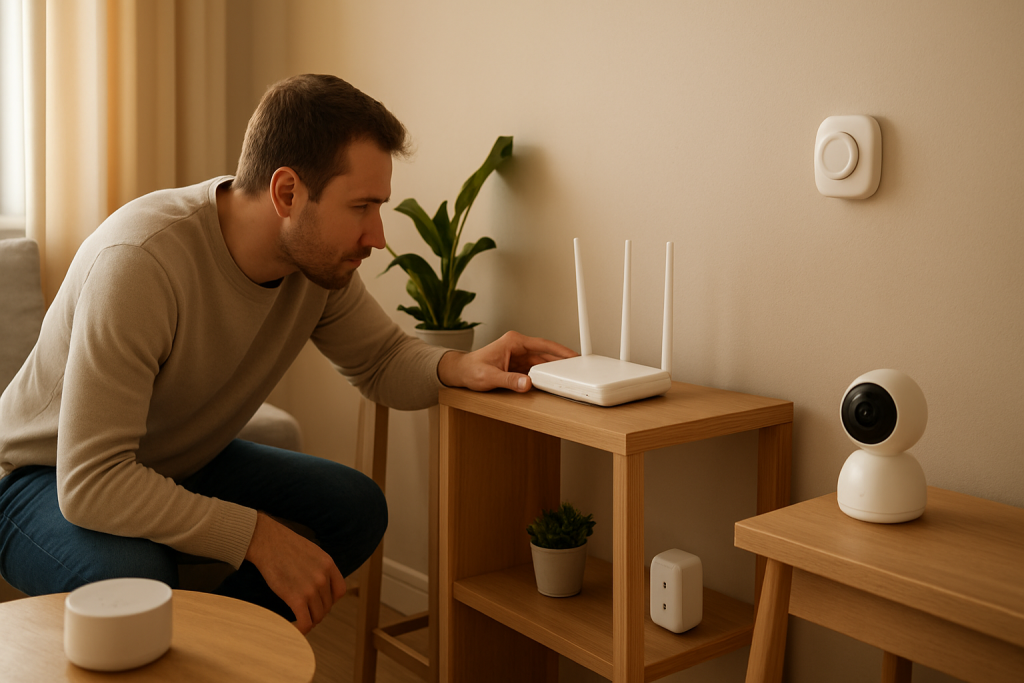
Third, you can end up with two active routers. A common real-world scenario is an apartment where the ISP installs a new gateway, but you keep your old router for better Wi-Fi coverage through thick walls. If both devices are routing (not just one in bridge/AP mode), you can create two different IP ranges at once. Some devices connect to one network, others to the other, and they can’t see each other reliably.
Finally, provider changes often coincide with Wi-Fi setting changes. Many smart devices only support 2.4GHz. If the new router uses a single combined network name (band steering) or prioritizes 5GHz, your phone may be on 5GHz while the device is on 2.4GHz, and certain setup flows fail or discovery becomes inconsistent. This isn’t the primary root cause, but it commonly appears alongside an IP/subnet change.
An overlooked technical cause is that some new gateways enable “AP isolation,” “client isolation,” or an IoT/guest network by default. That can block local device discovery even if IP addressing is correct. Another is firmware behavior: new routers may ship with buggy mDNS/UPnP handling until updated, which affects smart speakers, hubs, and casting devices.
Step-by-Step Fix
Identify your current IP range (subnet) and router LAN address. On your phone or computer connected to your home Wi-Fi, check the “IP address” and “gateway/router” values. If your device IP is something like 192.168.0.23 and the gateway is 192.168.0.1, your subnet is likely 192.168.0.x. Write this down, because you’ll use it to spot mismatches.
If you have a smart home hub (Home Assistant, Hubitat, SmartThings hub, etc.), note its IP too. If it changed since the ISP switch, any integrations pointing to the old address may need updating.
Confirm you have only one router doing routing (avoid double-NAT and “two subnets”). If you kept an old router and also have a new ISP gateway, decide which one should be the main router. The simplest approach is: ISP gateway in bridge mode (if supported) and your own router handles Wi-Fi and DHCP; or keep the ISP gateway as the router and put your old router into Access Point (AP) mode.
A quick check: if your phone’s gateway is 192.168.0.1 but your old router’s admin page shows its WAN IP is also a private address (like 192.168.0.2), you may be double-NATed. That often creates two IP ranges and breaks device-to-device discovery.
Remove static IP settings on smart devices (or update them to the new range). This is the most common “IP range change” failure. If any device was configured with a manual IP, subnet mask, or gateway, change it to “DHCP/Automatic.” Many smart devices hide this setting in their own app under advanced network settings.
If the device must remain static (common for cameras, NVRs, or hubs), set a DHCP reservation on the router instead of configuring a static IP on the device. Pick an address inside your current subnet and outside the router’s automatic DHCP pool to reduce conflicts.
Re-create DHCP reservations and update integrations that point to old IPs. If you previously reserved addresses for devices (printers, cameras, hubs), re-add those reservations on the new router. Then update any apps or services that reference IP addresses directly (for example, RTSP camera URLs, local API endpoints, or home automation integrations). If you don’t, everything may “look connected” but controls will fail.
Verify the device is on the correct Wi-Fi band (2.4GHz vs 5GHz). Many smart plugs, bulbs, and older cameras only support 2.4GHz. If your new router uses a single Wi-Fi name for both bands, band steering can confuse setup. Temporarily create a dedicated 2.4GHz SSID (for example, “HomeWiFi-2G”) and connect your phone to that SSID during pairing.
After setup, you can often keep the separate SSID or re-enable band steering, but if devices frequently drop, keeping IoT devices on a stable 2.4GHz-only network is usually more reliable.
Power-cycle in the right order to refresh DHCP leases. Unplug the modem/gateway, router (if separate), and the affected smart devices. Plug in the modem/gateway first, wait for it to come fully online, then plug in the router, and finally power the smart devices. This forces devices to request new IP addresses in the correct range and clears stale network state.
Test with a practical method: confirm the device gets an IP and responds locally. In your router’s connected devices list, find the smart device and note its IP address. Then try to ping it from a computer on the same network (if you have one). If ping fails, that doesn’t always prove it’s broken (some devices block ping), but if the device never appears in the router list or shows an “offline”/missing IP, you’re still dealing with Wi-Fi association or DHCP/IP issues.
For cameras or hubs that have a web page, try opening the device IP in a browser. If the page loads locally but the cloud app says offline, the issue may be DNS, firewall, or account linking rather than Wi-Fi.
Advanced Troubleshooting
Check for IP conflicts (simple DHCP explanation). DHCP is the router service that hands out IP addresses to devices automatically. An IP conflict happens when two devices end up using the same address, causing random disconnects or “works for a minute” behavior. This is more likely after a provider switch if you restored old settings, manually assigned IPs, or have multiple routers handing out addresses.
Signs of an IP conflict include devices that appear and disappear in the app, or one device knocking another offline. Fix it by ensuring only one DHCP server is active (one router), removing manual/static IPs, and narrowing your DHCP pool to leave room for reservations.
Look for router configuration issues that block discovery. Smart devices often rely on local discovery protocols like mDNS, SSDP/UPnP, or broadcast packets. On some ISP gateways, settings like “Wireless Isolation,” “AP Isolation,” “Client Isolation,” or “Block LAN to WLAN multicast” can prevent your phone from finding devices even if they’re connected. Disable isolation for your main LAN SSID. If you use a guest network for IoT, understand that guest networks often block device-to-device traffic by design.
Confirm DNS and time settings. An overlooked cause after switching providers is DNS filtering or misconfigured DNS. If smart devices can’t resolve cloud hostnames, they’ll show offline. Try setting the router DNS to a known public DNS provider temporarily, then retest. Also verify the router’s time is correct; incorrect time can break certificate validation for cloud services.
Update firmware on the router and key smart devices. ISP-installed gateways may be behind on firmware or may have new firmware that introduced bugs. Check for updates (or request the provider to push an update). Also update your smart home hub firmware and the controlling phone app. Firmware issues commonly show up as intermittent connectivity, broken device discovery, or devices that only reconnect after reboots.
Evaluate signal quality and interference (especially in apartments and thick-wall homes). Even if the main root cause is an IP range change, poor Wi-Fi can make the recovery confusing because devices appear “offline” while you’re fixing addressing. In an apartment building, neighboring networks can saturate 2.4GHz channels. Thick walls, metal utility closets, and placing the ISP gateway behind a TV can reduce signal to IoT devices at the edges of your home.
Move the router to a central location if possible, keep it away from microwaves and cordless phone bases, and consider setting 2.4GHz to a fixed channel (1, 6, or 11) rather than “auto” if stability is poor. For distant devices, a mesh node or wired access point often works better than a basic extender.
When to Reset or Replace the Device
Resetting a smart device is appropriate when you’ve confirmed the network is healthy (single router, correct IP range, stable Wi-Fi) but the device still won’t obtain a valid IP address or won’t complete onboarding. A factory reset clears stored Wi-Fi credentials, cached network parameters, and sometimes old static IP settings that survive normal reboots.
Reset or re-pair the device if:
It never appears in the router’s client list after multiple attempts, or it repeatedly grabs an IP in the wrong range (a clue it’s connecting to an old extender/router still broadcasting). Also reset if the app insists the device is on a different network even though your SSID/password are correct; that can happen when the device is stuck on outdated provisioning data.
Consider replacement if the device is very old (early-generation Wi-Fi chipsets) and cannot handle modern router defaults like WPA3-only mode, protected management frames, or band steering. If your new router is set to WPA3-only, switch to WPA2/WPA3 mixed mode; if the device still can’t connect and you’ve verified 2.4GHz availability, it may simply be incompatible.
How to Prevent This in the Future
Keep your LAN IP range consistent across provider changes. If you use your own router, you can keep the same subnet (for example, 192.168.1.x) even when the ISP changes. This prevents breakage for devices and integrations that depend on stable addressing. If you must use the ISP gateway, check whether you can change its LAN IP/subnet to match your previous network.
Prefer DHCP reservations over static IPs on devices. Reserve IPs in the router for devices that need stable addresses (cameras, hubs, servers). This keeps everything in one place, so when you replace a device you can recreate the reservations quickly. Document your reservation list and any integrations that reference IPs directly.
Separate IoT thoughtfully, not blindly. A dedicated IoT SSID on 2.4GHz can improve stability, but avoid putting it on a guest network that blocks local traffic unless you understand the tradeoff. If you do segment IoT, ensure your controller (phone/hub) can still reach devices as needed.
Plan Wi-Fi placement and interference mitigation. Put the router in a central, elevated location when possible. In a long apartment or a home with thick walls, add a mesh node or wired access point rather than relying on high transmit power. Stable signal reduces the chance you misdiagnose a Wi-Fi dropout as an IP problem during future changes.
Keep firmware and apps current. Schedule occasional checks for router firmware updates and keep smart home apps updated. Many “sudden” smart device issues are triggered by a router update, a phone OS update, or a cloud API change that requires a newer app version.
FAQ
Do I need to rename my Wi-Fi network back to the old name after switching providers?
Not necessarily. Matching the old SSID and password can help devices reconnect, but it won’t fix an IP range change if devices or integrations depended on specific IP addresses. Focus first on confirming the new subnet and removing static IP settings or rebuilding DHCP reservations.
How do I know if an IP range change is the problem?
If devices were previously reachable at addresses like 192.168.1.x and your new router uses 192.168.0.x or 10.0.0.x, anything configured with a static IP or an integration pointing to the old address will fail. Checking the router’s LAN IP and the device list is the fastest way to confirm.
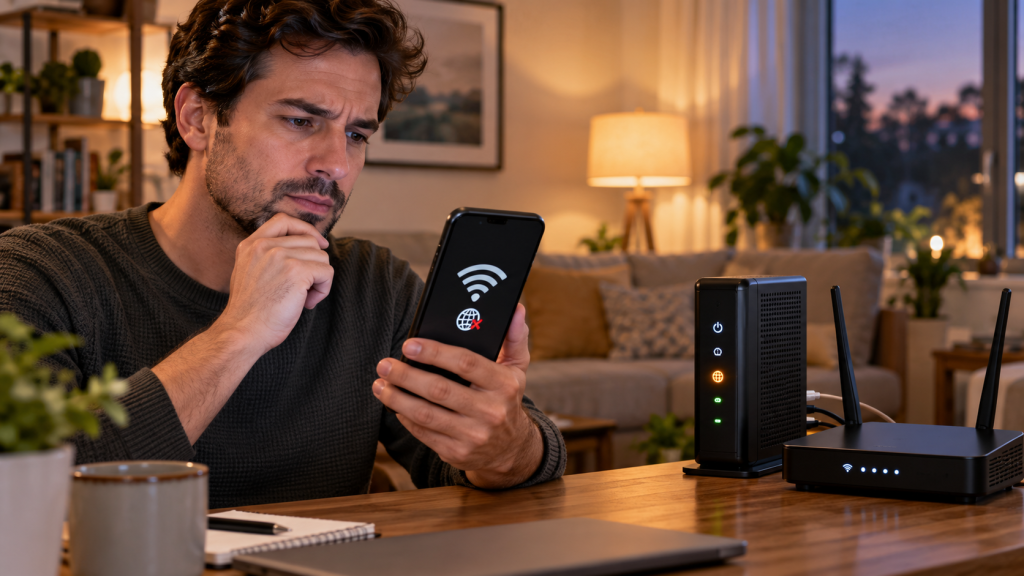
Why do my smart devices connect to Wi-Fi but still show “offline” in the app?
They may have an IP address but cannot reach the internet due to DNS issues, blocked outbound traffic, or incorrect time/certificates. Alternatively, the app may be on a different subnet due to double-NAT (two routers) or isolation settings that block local discovery.
Is 5GHz better for smart devices than 2.4GHz?
5GHz is often faster and less congested, but many smart devices only support 2.4GHz. Even for devices that support both, 2.4GHz typically has better range through walls. For reliability, it’s common to keep IoT devices on 2.4GHz and use 5GHz for phones, laptops, and streaming devices.
What is the most common mistake people make after an ISP switch?
Leaving the old router connected as a second router without putting it in Access Point mode, which creates two IP ranges and unpredictable connectivity. The next most common mistake is keeping static IP settings on devices that no longer match the new router’s subnet.
After all that noise, it’s oddly calming to let the issue sit where it belongs and move on with the rest of the day. The solution isn’t dramatic, just satisfying—like finding the missing sock and realizing you’re not the only one who’s ever fumbled laundry.
Some things don’t demand constant attention; they just need to be handled and then they stop tugging at the edges. That’s the real payoff here: a little less friction, a little more room to breathe.