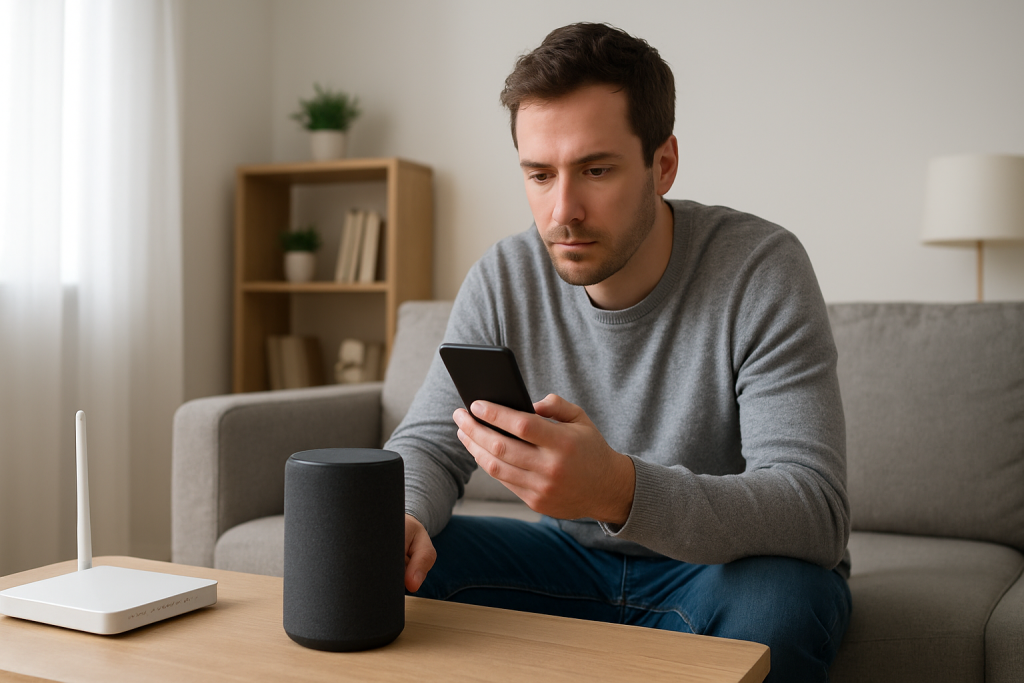
Google Home Keeps Disconnecting on Mesh WiFi: How to Stabilize It
Quick Answer
The most common real-world reason Google Home and Nest speakers keep disconnecting on a mesh network is roaming and band steering. The mesh system tries to move the speaker between nodes (access points) or between 2.4 GHz and 5 GHz to improve signal, but many smart speakers prefer a steady connection over frequent handoffs. The result is repeated dropouts, delayed responses, or the device showing as offline in the Google Home app.
Three quick diagnostic checks you can do right now:
1) In the Google Home app, open the device and check which WiFi network it is on (and whether it shows weak signal or offline). If it flips between online and offline while you stand still, roaming is likely involved.
2) Look at your mesh app client list and find the speaker. If the connected node changes frequently (or it alternates between 2.4 and 5), the mesh is steering it too aggressively.
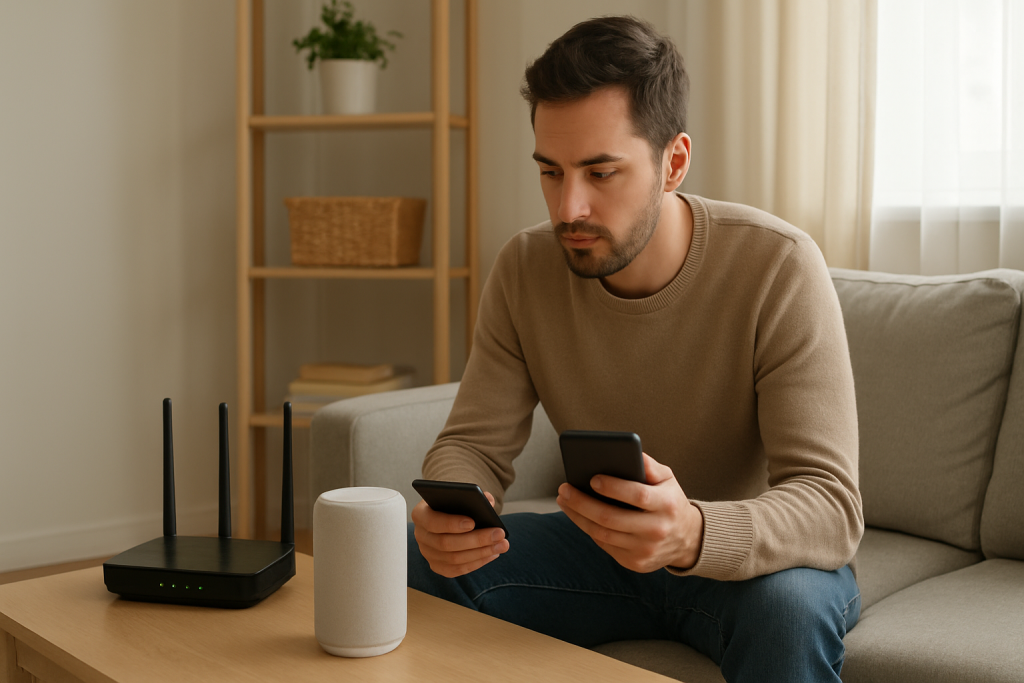
3) Do a hotspot test: temporarily connect the speaker to your phone hotspot in the same room. If it stays stable on the hotspot, the speaker is fine and your mesh roaming/steering behavior is the problem.
Affected devices often include Google Home Mini, Nest Mini, Nest Audio, Nest Hub, Nest Hub Max, and Chromecast with Google TV (when used for Assistant features).
Why This Happens
Mesh WiFi is designed to keep phones and laptops moving smoothly around the house by handing them off between nodes. Google Home and Nest speakers do not roam like a phone. They tend to stick to a connection until it becomes unusable, and then they reconnect. When a mesh system actively nudges (or forces) a device to roam, the speaker can bounce between nodes or bands and briefly lose its session to Google services. That looks like random disconnects, music stopping, or Assistant responding slowly.
Tightly related causes that usually show up together:
1) Band steering between 2.4 GHz and 5 GHz: the mesh tries to move the speaker to 5 GHz for speed, but the speaker may have a weaker 5 GHz link through walls, causing repeated reconnects.
2) Node steering (roaming): the speaker is near the edge of two nodes’ coverage and keeps being encouraged to switch, even though it would be better to stay on one.
3) Multiple nodes too close together: overlapping coverage can confuse low-mobility devices. More nodes is not always better.
4) Mixed security or advanced features: WPA3-only, Protected Management Frames set too strictly, or client isolation can cause intermittent authentication or discovery failures.
5) DNS or gateway switching during mesh optimization: some systems briefly change routing paths or DNS handling during self-healing events, which can interrupt the speaker’s cloud connection.
Real-world scenario: a Nest Mini sits on a kitchen counter between the main router node and a hallway node. The mesh sees similar signal strength to both and keeps re-evaluating. Every time the speaker is steered, it drops the stream for a moment. You notice it most during music, timers, or when multiple people are using WiFi.
Common user mistake: placing a mesh node in the same room as the speaker because it seems like it should help. If that node is also close to another node, the speaker can end up in a constant tug-of-war between them.
Overlooked technical cause: the speaker may be connecting to a different SSID than you think (for example, a guest network, an old saved network, or a second SSID created by the mesh for IoT). Discovery and control can break if your phone and speaker are not on the same local network, even if both have internet access.
Most Likely Causes in Real Homes
1) Band steering pushing the speaker between 2.4 GHz and 5 GHz, causing unstable signal and reconnect loops.
2) Node roaming between two nearby mesh points, especially when the speaker sits in a hallway, kitchen, or open-plan area where signals overlap.
3) Mesh node placement that creates too much overlap or a weak backhaul link (the node itself has an unstable connection to the main node).
4) Security/compatibility settings (WPA3-only, strict Protected Management Frames, or “smart connect” features) that some smart speakers handle poorly.
5) Account or app-side sync issues that look like WiFi dropouts (device appears offline in the app but still plays audio intermittently).
Step-by-Step Fix
Confirm the symptom is roaming-related, not a general outage.
What to do: When the speaker disconnects, check whether other devices on WiFi (phone, TV, laptop) are also losing internet. Also note whether the speaker drops during movement (walking around with your phone controlling it) or during heavy usage (streaming, video calls).
What the result means: If only the speaker drops while everything else stays online, roaming/steering or speaker compatibility is likely. If everything drops, you have a broader internet or router stability problem.
What to try next if it fails: If the whole network drops, skip ahead to the reboot order step and then review mesh backhaul and ISP stability in Advanced Troubleshooting.
Check which node and band the speaker is actually using.
What to do: Open your mesh app and find the speaker in the client/device list. Note the connected node and whether it is on 2.4 GHz or 5 GHz (some apps show this; if yours does not, it may show signal quality or link rate). Watch it for a few minutes, especially right after a disconnect.
What the result means: If the connected node changes, or the band changes, and the timing matches the disconnects, steering is the main cause. If it stays on one node and still drops, look for security/DNS/account issues.
What to try next if it fails: If you cannot identify the speaker in the client list, temporarily rename the device in Google Home (for example, Kitchen Mini Test) so it is easier to spot, then refresh the mesh client list.
Run a hotspot stability test to separate speaker issues from mesh behavior.
What to do: In the Google Home app, remove the speaker from WiFi setup only if needed to connect it to a temporary network, then connect it to your phone hotspot (keep the phone in the same room). Play music for 10–15 minutes or ask repeated Assistant questions.
What the result means: If it stays stable on the hotspot, the speaker hardware is fine and the mesh roaming/steering is the problem. If it still drops on the hotspot, the issue may be the speaker firmware, power, or account/cloud connection.
What to try next if it fails: If the hotspot test is stable, proceed to the steps that reduce steering (lock to one node, prefer 2.4 GHz, adjust placement). If it is unstable even on hotspot, jump to Advanced Troubleshooting for account/firmware checks.
Reduce band steering pressure: keep the speaker on 2.4 GHz if your mesh allows it.
What to do: If your mesh system supports an IoT network, a separate 2.4 GHz SSID, or a setting to disable band steering, use it for the speaker. If it offers a temporary 2.4 GHz setup mode, use that to onboard the device and keep it there.
What the result means: 2.4 GHz travels better through walls and is often more stable for stationary smart speakers, even if it is slower. Stability matters more than speed for voice assistants.
What to try next if it fails: If you cannot split bands, move to the next step and focus on node selection and placement to stop node bouncing.
Stop node bouncing by improving placement and overlap.
What to do: Place the speaker so it is clearly closer to one node than the others. If it sits between two nodes, move it a few feet toward the preferred node, away from hallways and doorways. If you have a mesh node very close to another node, consider moving that node farther away to reduce overlap.
What the result means: If the speaker stays connected to one node for hours and the disconnects stop, your issue was roaming due to borderline coverage overlap.
What to try next if it fails: If the speaker still flips nodes, look for a setting in your mesh app like device binding, client steering control, or preferred node, and apply it in the next step.
Bind the speaker to a specific node (if your mesh supports it).
What to do: In your mesh app, look for options such as device priority, client binding, lock to access point, or preferred node. Assign the speaker to the node with the strongest, most stable connection to the main router.
What the result means: If binding stops disconnects, the mesh steering logic was the trigger. This is one of the most reliable fixes for stationary devices.
What to try next if it fails: If your mesh does not support binding, your best substitutes are placement changes and reducing the number of nodes in the immediate area.
Check for guest network or isolation issues that break control and make the device look offline.
What to do: Confirm your phone and the speaker are on the same SSID (not guest). In the mesh settings, ensure guest network isolation is not being used for the speaker. Also check that any setting like AP isolation, client isolation, or block LAN access is off for the main network.
What the result means: If the speaker stays connected but the app cannot see it, this is often a local network discovery problem rather than a true WiFi disconnect.
What to try next if it fails: If you need the speaker on a separate IoT SSID, make sure your mesh supports local device discovery between networks; otherwise keep the speaker on the main network.
Use the correct reboot order to clear stale routing and mesh state (only after you have observed steering behavior).
What to do: Power off the modem (if you have one) for 60 seconds, then power it on and wait until it is fully online. Next reboot the main mesh router node, then the satellite nodes, then finally reboot the Google/Nest speaker. This order matters because it forces the mesh to rebuild a clean path to the internet before the speaker reconnects.
What the result means: If stability improves for a day and then returns to disconnecting, the underlying cause is still steering/placement/configuration, but the reboot temporarily smoothed it out.
What to try next if it fails: Proceed to account/app checks and firmware updates in Advanced Troubleshooting.
Verify Google Home app, Home structure, and Voice Match are not adding confusion during reconnects.
What to do: In the Google Home app, confirm the device is assigned to the correct Home and room. If multiple family members use the Home, confirm the device appears consistently for all users. In Assistant settings, confirm the language is consistent across users (mismatched languages can cause odd behavior) and re-run Voice Match if voice recognition fails after reconnects.
What the result means: If the device stays on WiFi but appears missing or duplicated in the app, this points to account/home sync issues rather than pure WiFi dropouts.
What to try next if it fails: Remove and re-add the device to the Home only after you have stabilized the network side; otherwise you may chase symptoms.
Confirm the mesh is not self-healing through a weak backhaul.
What to do: In the mesh app, check the connection quality of each node to the main node (often called backhaul quality). If a node shows weak/poor backhaul, devices connected to it will disconnect more often. Move that node closer to the main node or reduce obstacles. If your system supports Ethernet backhaul and you already have cables in place, use them.
What the result means: If the speaker is bound to or naturally chooses a node with weak backhaul, it will drop even when the local WiFi signal looks strong.
What to try next if it fails: If backhaul is consistently weak, consider using fewer nodes or relocating them so each node has a strong link to the main node.
Advanced Troubleshooting
This section is only needed if the basic fixes above do not stabilize the connection.
Account/cloud issue: If the speaker stays connected to WiFi (it appears in the mesh client list as connected) but the Google Home app shows it offline or commands fail, sign out and back into the Google Home app on your phone, then confirm the same Google account is used for the Home. If multiple accounts are involved, remove unused accounts from the phone to prevent the app from switching contexts. If outages are suspected, check whether multiple Google services are slow at the same time; in that case the speaker is not the cause.
Network issue: Check DNS settings in the router/mesh. If you use custom DNS and see intermittent failures across smart devices, try switching to your ISP DNS or a well-known public DNS to test. Also verify IPv6 settings: some networks behave better with IPv6 enabled, others with it disabled, depending on ISP and router firmware. Make one change at a time and observe for several hours.
Firmware/software cause: Update the mesh firmware and the Google Home app. Mesh firmware updates often change steering behavior. If an update recently happened and disconnects began immediately after, look for steering, WPA3, or PMF settings that may have changed to more aggressive defaults.
Configuration conflict: If WPA3-only is enabled, try WPA2/WPA3 mixed mode for compatibility. If Protected Management Frames (PMF) has options, avoid a required-only setting for broad compatibility unless you know all devices support it. If your mesh has options like fast roaming (802.11r), enabling it can help phones but can confuse some IoT devices; if you see problems starting after enabling it, turn it off and retest.
When to Reset or Replace
Use a soft restart (power cycle) when the speaker is stable on hotspot but unstable on mesh, or when it is stuck in a temporary offline state after you change WiFi settings. A soft restart does not erase your Home setup; it simply forces the device to reconnect cleanly.
Use a factory reset only when: the speaker will not stay connected even on a hotspot, it cannot complete WiFi setup, it repeatedly disappears from the Google Home app after being added, or it behaves differently from other identical speakers in the same location. A factory reset removes the device from your Google Home structure, clears saved WiFi credentials, and requires you to set it up again from scratch.
Hardware safety warning: Do not open the speaker, pry the case, or attempt internal repairs. If you suspect power instability, use a known-good outlet and the original power adapter, and keep the device away from heat sources and moisture. If the power cable is damaged, stop using it.
How to Prevent This
Stabilize roaming behavior for stationary devices: Keep smart speakers on a predictable connection by reducing band steering pressure (prefer 2.4 GHz when possible) and avoiding placement in overlap zones between nodes.
Plan mesh placement for backhaul first, coverage second: A node with weak backhaul creates “looks strong but drops” problems. Place nodes where they can reliably connect to the main node, not just where you want better signal in a room.
Keep SSIDs consistent and avoid unnecessary networks: If you use a guest network, reserve it for guests. Keep smart home devices on the main network unless you are sure your system supports discovery and control across network segments.
Change one setting at a time and observe: Mesh systems can have multiple steering features. If you change three things at once, it becomes hard to know what actually fixed the issue.
Maintain account stability: Use one primary Google account to own the Home, keep the Google Home app updated, and avoid frequently removing and re-adding devices unless you are intentionally rebuilding the setup.
FAQ
Does a stronger WiFi signal always stop Google Home disconnects on mesh?
No. A stronger signal can actually make roaming worse if it increases overlap between nodes. The goal is not maximum bars everywhere; it is a stable decision about which node and band the speaker should use.
Should I add another mesh node near the speaker to fix it?
Usually not. Adding a node close to the speaker often increases the chance of node bouncing. If you add a node, it should improve backhaul quality and reduce dead zones, not create a new overlap zone where two nodes are equally attractive.
My Google Home shows offline in the app, but it still plays music sometimes. Is the WiFi actually disconnecting?
Not always. That pattern can happen when local discovery between your phone and the speaker breaks (guest network, isolation, or network segmentation) even though the speaker still has internet access. Check that your phone and speaker are on the same SSID and that isolation features are off on the main network.
Is 5 GHz better than 2.4 GHz for Google Home and Nest speakers?
5 GHz can be faster, but 2.4 GHz is often more stable through walls and over distance. For a stationary voice assistant, stable connectivity is usually more important than peak speed, so 2.4 GHz is frequently the better choice if your mesh steering keeps pushing the device around.
Common misconception: If the speaker disconnects, it must be a bad speaker.
In most homes, repeated disconnects are caused by the mesh steering the speaker between nodes or bands, not by failing hardware. If the hotspot test is stable, the speaker is very likely fine and the fix is to reduce steering, adjust placement, or bind the device to a node.
What’s left feels almost anticlimactic: not because the problem vanished, but because it no longer gets to live in the fog. The words land cleaner now, like the room got a window.
There’s a quiet satisfaction in that. You can move on without dragging the same doubt along behind you, like a shoe that keeps catching on the same crack.