Google Home Bluetooth Not Connecting: How to Fix It
Quick Answer
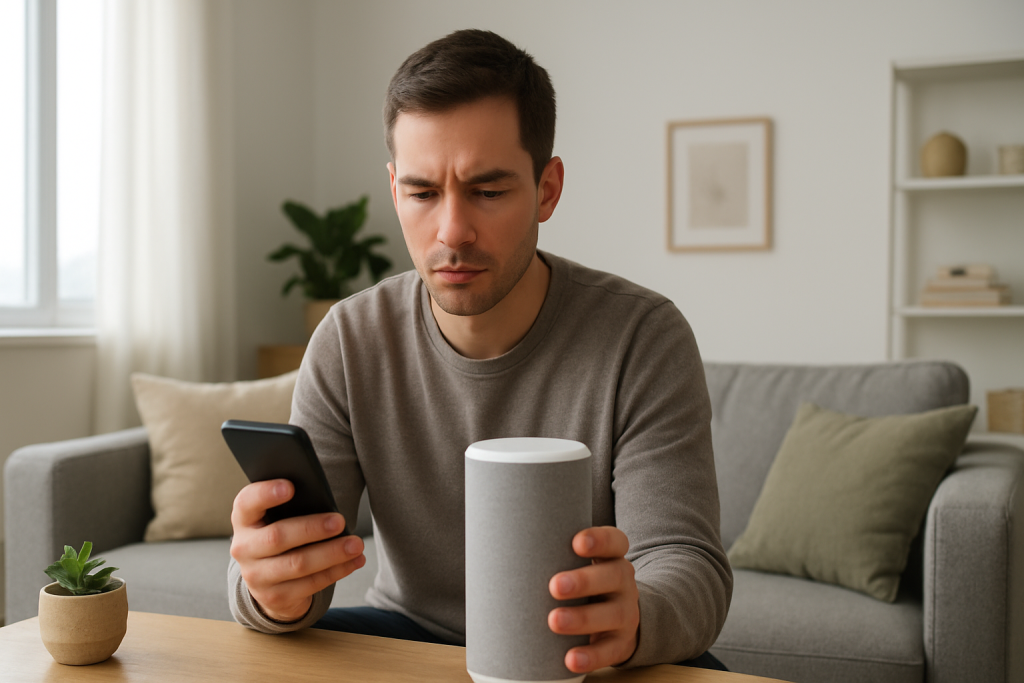
The most common real-world cause is a Bluetooth audio profile or codec negotiation problem made worse by stale pairings. In plain terms: your phone and the Google Home or Nest speaker remember an old connection, then fail to agree on the audio mode the next time you try to connect.
Do these three quick checks first:
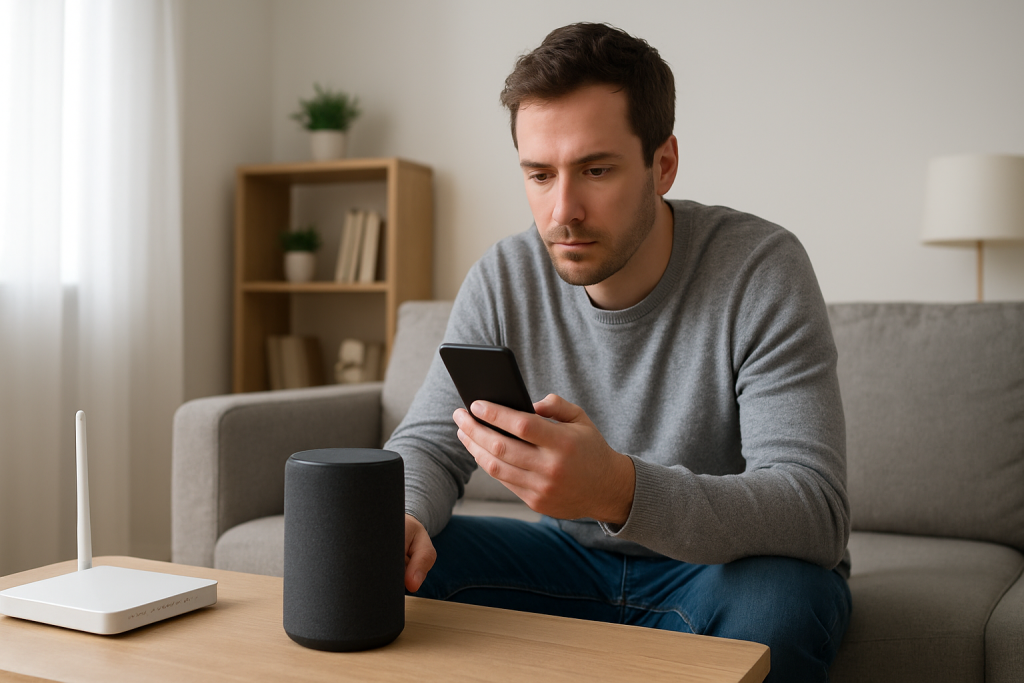
1) Check whether the speaker is already connected to a different device. If another phone, tablet, or laptop is connected, your device may be rejected or stuck in a half-connected state.
2) On your phone, forget the speaker in Bluetooth settings and then pair again from scratch. If it connects only after forgetting, stale pairing data was the problem.
3) Try a second device (another phone/tablet). If one device connects and the other does not, the issue is usually codec/profile settings or Bluetooth cache on the failing device, not the speaker.
Affected devices: Google Home, Home Mini, Nest Mini, Nest Audio, and some Nest displays when used as Bluetooth speakers. The same logic applies when pairing a phone, tablet, or computer.
Why This Happens
Bluetooth audio is not just one connection. After pairing, the two devices negotiate which audio profile to use (typically A2DP for music) and which codec and features to use inside that profile. When that negotiation fails, you may see symptoms like connected but no sound, pairing fails immediately, or it connects and drops within seconds.
The dominant root cause is a mismatch during audio profile/codec negotiation caused by remembered settings from a previous pairing. This often happens after an OS update, after switching phones, or after pairing the speaker with multiple devices over time.
Closely related causes that feed into the same failure:
1) Stale pairings on either side. Your phone thinks it has valid keys and settings, while the speaker has a different record (or vice versa).
2) Competing connections. Another device reconnects automatically, interrupting negotiation with the device you are trying to pair.
3) Bluetooth cache or Bluetooth stack glitches on the phone/tablet. The device may keep trying the wrong profile or hold on to a broken A2DP session.
4) Audio routing conflicts. The phone may connect for calls (hands-free) but fail to enable media audio, or it may connect as media but route audio elsewhere.
5) Firmware/software mismatch. A speaker firmware update or a mobile OS update can change supported codecs or timing, exposing an edge-case negotiation failure.
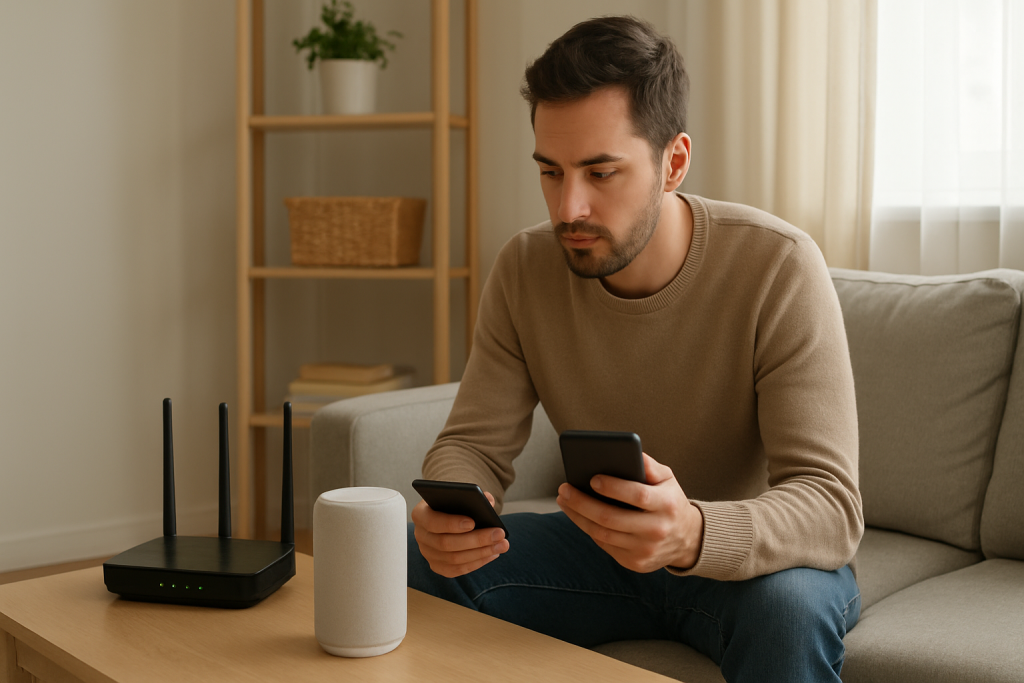
Real-world scenario: a family pairs a Nest Mini to a laptop for a video call, then later tries to connect a phone for music. The laptop reconnects silently when it wakes, the phone shows Pairing… then fails, and the speaker appears unavailable. The underlying issue is not range or Wi-Fi; it is the speaker already holding an active Bluetooth session and refusing a second negotiation.
Common user mistake: trying to pair from the phone’s Bluetooth list repeatedly without clearing the old pairing first. Each attempt reuses the same stale record, so the failure repeats.
Overlooked technical cause: the phone connects, but Media audio is disabled for that device in Bluetooth settings. That looks like a codec/profile problem because the connection exists, but the A2DP media profile is not actually active.
Most Likely Causes in Real Homes
1) Stale Bluetooth pairing records on the phone or the speaker, especially after OS updates or switching devices.
2) The speaker is already connected to another device that auto-reconnects (laptop, tablet, family member’s phone).
3) Media audio/A2DP is not enabled for the speaker on the phone, causing connected-but-silent behavior.
4) Bluetooth cache or audio routing conflict on the phone (Android Bluetooth cache, iOS audio output selection, or a stuck media session).
5) Speaker firmware or Google Home app state is out of sync, causing Bluetooth mode to behave inconsistently.
Step-by-Step Fix
Confirm the symptom and what it implies. Try pairing and note what happens: does it fail to pair, connect then disconnect, or connect with no sound?
What the result means: Pairing fails immediately usually points to stale pairing or another device already connected. Connects but no sound usually points to the wrong audio profile (Media audio/A2DP not active) or audio routing.
If it fails: Continue to the next step; you will clear stale pairings and force a fresh negotiation.
Check whether the speaker is already connected to another device. On the device you suspect might be connected (laptop/tablet/another phone), open Bluetooth and see if it shows Connected to the Google Home/Nest speaker. If yes, disconnect it.
What the result means: If disconnecting the other device immediately allows your phone to pair, the issue was competing auto-reconnect, not a defective speaker.
If it fails: If you cannot find the other device or it keeps reconnecting, temporarily turn Bluetooth off on that other device (or put it in Airplane mode) and try pairing again.
Forget the speaker on your phone/tablet and remove the phone from the speaker’s paired list if possible. On your phone: Settings > Bluetooth > the speaker name > Forget/Unpair. If your speaker has a Bluetooth paired devices list in the Google Home app, remove the phone there too.
What the result means: This clears stale pairing keys and forces a clean handshake and codec/profile negotiation.
If it fails: If you do not see the speaker in the app, proceed anyway by forgetting it on the phone and continue to the next step to re-initiate pairing from the speaker side.
Put the speaker into Bluetooth pairing mode from the speaker side, then pair from the phone. Use the Google Home app device controls to start Bluetooth pairing, or use the speaker’s pairing method if available. Then, on the phone, select the speaker from the Bluetooth list.
What the result means: Starting pairing from the speaker side helps ensure it is advertising correctly and not stuck trying to resume an old session.
If it fails: If you see the speaker but pairing fails, move to the next step to check the audio profile settings and routing on the phone.
After it connects, verify Media audio is enabled and audio is routed to the speaker. On Android: Bluetooth device details often include toggles for Calls and Media audio. Ensure Media audio is on. On iPhone/iPad: open Control Center and confirm the audio output is set to the speaker, not the phone or another device.
What the result means: If enabling Media audio fixes it, the connection was fine but the A2DP media profile was not active, which looks like a codec/profile negotiation failure.
If it fails: If Media audio is enabled but there is still no sound, continue to the next step to force a fresh media session and rule out stuck audio routing.
Force a new media session and re-check volume at both ends. Start playback from a simple source (a local audio file or a basic streaming app), pause, switch output to the speaker, then play again. Turn volume up on the phone and on the speaker.
What the result means: If sound starts after restarting playback, the connection was established but the initial media stream did not negotiate cleanly.
If it fails: If it remains silent, proceed to the next step to isolate whether the problem is your phone or the speaker.
Test with a second device to isolate the side that is failing. Pair a different phone/tablet/computer to the same speaker.
What the result means: If the second device works, your original device likely has a Bluetooth cache/codec/profile issue. If no devices can connect, the speaker’s Bluetooth state is likely stuck or the speaker is holding a hidden connection.
If it fails: If neither device works, continue to the next step to refresh the speaker’s state through the Google Home app and account sync checks.
Confirm the speaker is correctly attached to your Google Home and not in a half-configured state. Open the Google Home app, select the device, and confirm it appears online and in the correct Home. If you have multiple Homes, verify you are managing the right one.
What the result means: A device that is partially set up or associated with the wrong Home/account can behave inconsistently, including Bluetooth controls not applying correctly.
If it fails: If the device does not appear or shows offline, fix that app/account state first (sign in to the correct Google account, confirm permissions), then retry Bluetooth pairing.
Check language and Voice Match only if Bluetooth pairing seems to work but voice commands to start Bluetooth do not. In the Google Home app, confirm Assistant language matches what you speak and Voice Match is enabled for your profile if you rely on voice commands for Bluetooth actions.
What the result means: This does not usually block Bluetooth itself, but it can make it seem like pairing is broken if the speaker is not correctly interpreting commands to enter pairing mode.
If it fails: If voice commands remain unreliable, use the app to initiate pairing and continue to the next step if connection still fails.
Perform a controlled reboot order only after clearing pairings. Unplug the speaker for 30 seconds and plug it back in. If you have repeated connection drops across multiple devices, also restart network gear in order: modem (if separate) then router, then wait for the network to stabilize, then power the speaker back on.
What the result means: Power-cycling the speaker clears a stuck Bluetooth session and forces a clean advertisement and negotiation. Restarting the router is only relevant if the Google Home app cannot reliably control the device or the device state is not updating, which can interfere with initiating pairing from the app.
If it fails: If pairing still fails after a clean reboot and fresh pairing attempt, continue to the next step to check for configuration conflicts and environment issues.
Run a quick interference and distance test focused on Bluetooth, not Wi-Fi. Move the phone within a few feet of the speaker. Temporarily turn off nearby Bluetooth devices you are not using (smartwatch, old tablet, laptop) and retry pairing.
What the result means: If it works only at very close range or only when other Bluetooth devices are off, the negotiation is being disrupted by interference or competing reconnections.
If it fails: If proximity and reducing nearby Bluetooth devices does not help, proceed to Advanced Troubleshooting.
Advanced Troubleshooting
Use this section only if the basic fixes above fail. At this point, you are trying to identify whether the problem is account/cloud state, firmware/software behavior, or a configuration conflict that keeps reintroducing stale negotiation conditions.
Account/cloud issue (Google Home app state not applying): If the Google Home app shows the device but device settings fail to load, or changes do not stick, sign out of the Google Home app and sign back in with the correct Google account. Then confirm the device is in the correct Home structure. A mismatched account can make it seem like Bluetooth pairing mode is enabled when it is not.
Network issue (only relevant when pairing mode is initiated from the app): Bluetooth itself does not require Wi-Fi, but the Google Home app often uses Wi-Fi/local network access to control the speaker. If the app cannot reliably reach the speaker, you may not be putting it into pairing mode correctly. As a diagnostic, try controlling the speaker from another phone on the same Wi-Fi. If that works, the original phone may have local network permissions blocked.
Firmware/software cause: If Bluetooth started failing right after a phone OS update or after the speaker updated, the most effective workaround is to remove all stale pairings and re-pair cleanly, then test with a second device type (for example, an iPhone if you normally use Android, or vice versa). If one platform works and the other does not, the failing platform likely has a codec/profile handling issue. Keeping the speaker online long enough to complete updates can also resolve edge-case Bluetooth behavior, but the key step is still forcing a fresh negotiation by clearing pairings.
Configuration conflict (multiple devices auto-connecting): In homes with shared devices, the speaker may be in a constant tug-of-war. Disable auto-connect for the speaker on devices that should not use it regularly, or forget the speaker on those devices entirely. If the speaker is intended for one primary phone, keep the pairing list short to reduce stale negotiation states.
Hotspot test (isolates app control problems): If you suspect the Google Home app cannot control the speaker due to local network restrictions, temporarily connect your phone to a simple network (such as a phone hotspot from another device) and see whether the app can still access device controls when both are on the same network. This is not about Bluetooth; it is about whether you can reliably trigger pairing mode from the app. If app control works on the hotspot but not on your home network, the issue is likely local network isolation or permissions, not the speaker’s Bluetooth radio.
When to Reset or Replace
Try a soft restart first when Bluetooth connects but behaves inconsistently (drops, no audio, or only works after multiple attempts). A soft restart (unplugging the speaker for 30 seconds) clears temporary Bluetooth state without removing your Home setup.
Use a factory reset only when you have cleared pairings on your phone, confirmed no other device is connected, and multiple devices still cannot pair. Factory reset is also appropriate if the speaker does not enter pairing mode reliably or the Google Home app cannot manage it even though the device has power.
What a factory reset removes: It removes the device from your Google Home setup, clears saved settings, and forces you to set it up again in the Google Home app. It also clears stored Bluetooth pairing information, which is useful when stale negotiation data is stuck on the speaker side.
Hardware safety warning: Use only the documented reset method for your specific model. Do not open the device, do not press with sharp tools, and do not attempt internal repairs. If the device is unusually hot, smells like burning, or shows physical damage, stop using it and disconnect power.
When replacement is more likely: If the speaker cannot be discovered by any device in Bluetooth scanning even in pairing mode, after factory reset, and it also shows other instability (random reboots, frequent offline behavior), hardware failure becomes more plausible. In most homes, though, Bluetooth failures are resolved long before this point by clearing stale pairings and preventing competing auto-connects.
How to Prevent This
Keep the pairing list short. The more phones and computers that have been paired, the more likely stale records and auto-reconnect conflicts become. If a device no longer uses the speaker, forget the speaker on that device.
Be intentional about auto-connect. Laptops and tablets often reconnect in the background when they wake. If that device is not the primary audio source, disconnect it after use or disable its auto-connect behavior where possible.
After major OS updates, refresh the pairing once. If Bluetooth becomes flaky right after an update, forgetting and re-pairing is not busywork; it forces a clean profile/codec negotiation using the new software behavior.
Place the speaker to reduce Bluetooth interference. Keep it a little away from dense electronics clusters (behind TVs, next to streaming boxes, or directly beside a Wi-Fi router). Bluetooth is short-range and sensitive to local interference; a small placement change can reduce negotiation failures and dropouts.
Maintain account stability in the Google Home app. If multiple household members manage the same device, keep the device in the correct Home and avoid frequent account switching on the controlling phone. This reduces situations where pairing mode is triggered from the wrong account or Home structure.
For mesh or complex Wi-Fi homes, focus on app control reliability. Bluetooth pairing does not need Wi-Fi, but initiating pairing from the app and seeing accurate device status often does. If your network isolates clients or uses aggressive band steering, ensure your phone can consistently reach local devices. Stable app control reduces repeated pairing attempts that create stale negotiation states.
FAQ
Why does my phone say Connected but there is no sound?
This usually means the Bluetooth connection exists but the media audio profile (A2DP) is not active or audio is routed somewhere else. Check the Bluetooth device details on your phone and ensure Media audio is enabled, then confirm your phone’s audio output is set to the Google Home/Nest speaker.
Do I need Wi-Fi for Google Home Bluetooth to work?
No, Bluetooth audio does not require Wi-Fi. The confusion comes from the Google Home app, which often uses your local network to control the speaker and start pairing mode. If you can pair from the phone’s Bluetooth settings without using the app, Wi-Fi is not part of the Bluetooth connection itself.
My Google Home worked yesterday. What changed?
The most common change is not the speaker hardware. It is an automatic reconnect from another device, a phone OS update, or a stale pairing record that finally stopped negotiating correctly. Clearing the pairing on both sides and pairing again typically restores a clean audio profile/codec negotiation.
Is Bluetooth range the main reason pairing fails?
Range can matter, but it is not the main reason pairing fails in most homes. If the speaker shows up in the scan list but pairing fails or connects with no sound, the more likely cause is stale pairing data, competing auto-connect, or media audio not being enabled.
Why does it connect to one family member’s phone but not mine?
That points strongly to a phone-side issue: a stale pairing entry, Bluetooth cache problem, or a media profile setting on the phone. Forget the speaker on your phone, re-pair from scratch, and verify Media audio is enabled for that connection.
It’s a rare moment when the problem stops taking up all the mental space. The solution doesn’t need a big speech—just the right shift, and suddenly everything feels less crowded.
Now the only real work is living with the difference: quieter days, fewer awkward pauses, and a sense that things are finally behaving. Not dramatic, not flashy—just better, in the way that counts.