Alexa Routines Work Sometimes but Not Always: What to Check
Quick Answer
When Alexa Routines run “sometimes,” the most common reason is timing and coordination problems between the Alexa cloud, your Echo device, and the service the routine depends on. Small cloud sync delays, brief connectivity jitter, or routine conditions that conflict with each other can cause a trigger to be missed even though everything looks fine later.
Start by checking the Routine’s activity history and the Alexa app device status, then simplify the Routine to one trigger and one action for a day. If it becomes reliable, the issue is usually a conflicting condition, a flaky trigger source, or a device/account sync delay rather than the Echo itself.
Why This Happens
Most Alexa Routines are not executed entirely “inside” your Echo. The trigger may be detected in the cloud (time schedules, location, some smart home events), the actions may depend on cloud skills (lights, thermostats, music services), and the Echo must be online at the moment the routine is delivered. If any part of that chain is slow or briefly unavailable, the routine can be skipped or partially run.
Here are the most common, tightly related causes behind inconsistent routines:
1) Cloud sync delays between the Alexa app and your devices. After editing a routine, changing a device name, moving an Echo to a new Wi-Fi network, or relinking a skill, the cloud may take time to propagate the updated configuration. During that window, Alexa can behave as if it’s using an older version of the routine.
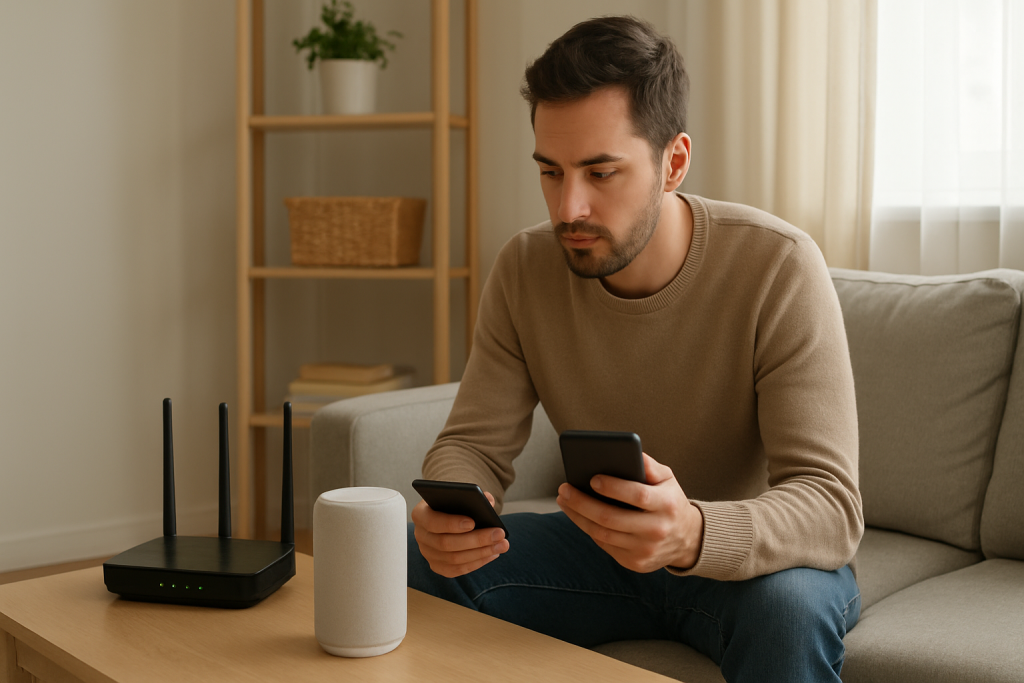
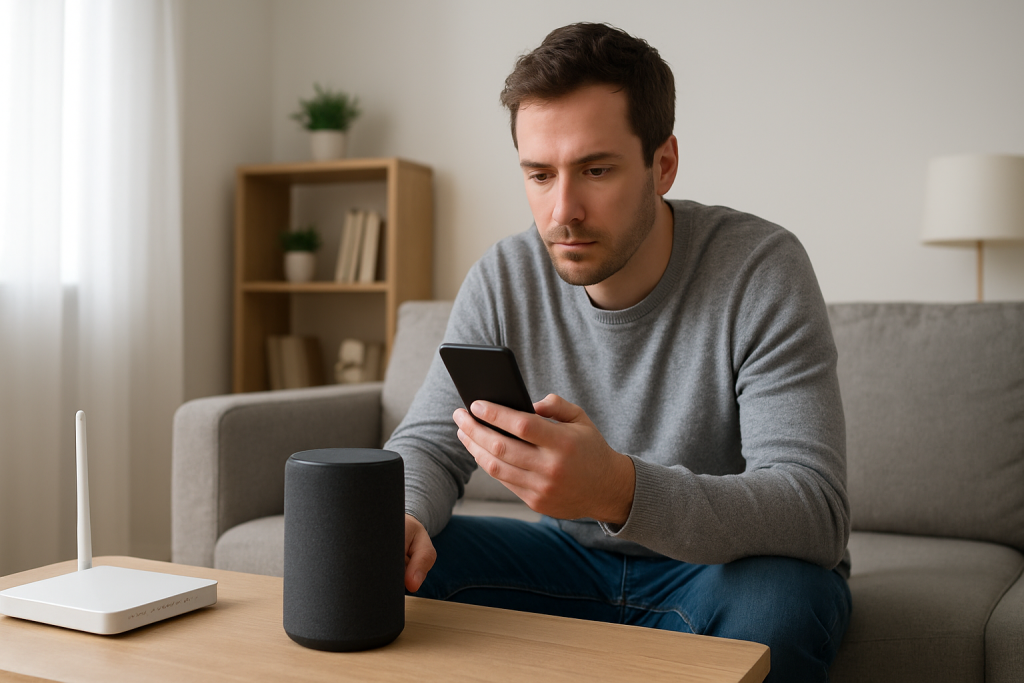
2) Connectivity jitter at the exact trigger time. You can have “good Wi-Fi” overall and still have brief drops or high latency. Routines often fail when the Echo is temporarily disconnected, the router is busy, or the internet connection blips for a few seconds. This is especially noticeable with routines scheduled at the top of the hour (when many devices and services are busy).
3) Conflicting conditions inside the routine. “Only when someone is home,” “only during these hours,” “only on this device,” multiple triggers, or multiple actions that depend on different services can conflict. If one condition evaluates differently than you expect, the routine won’t fire even though the trigger occurred.
4) Trigger source delays or missed events. Motion sensors, door sensors, and some third-party smart home devices report events through their own cloud. If that service delays or drops an event, Alexa never receives the trigger. The routine appears inconsistent even though the Echo is fine.
5) Account/profile confusion. Routines belong to an Amazon account, and some behaviors depend on profiles, voice profiles, or household settings. A routine created under one account may not run the way you expect if you’re speaking to a different profile or if the wrong phone is set for location-based triggers.
6) An overlooked technical cause: time zone or daylight saving mismatches. If your Echo device location, Alexa app location, or router time is off, scheduled routines can drift, run late, or appear to skip. This often shows up after moving, changing routers, or after a long power outage.
Real-world scenario: In an apartment with a mesh Wi-Fi system, an Echo Show in the bedroom “sometimes” misses a 7:00 AM routine. Most mornings it works, but on random days it doesn’t. The cause is often that the Echo roams between mesh nodes overnight, briefly loses connectivity, and the cloud-delivered routine arrives during that transition.
Common user mistake: Editing a routine repeatedly and testing immediately, assuming the newest version is active everywhere. If you change a trigger and test right away, you may be testing a mix of old and new settings until sync completes.
Step-by-Step Fix
Check the Routine’s history to see if Alexa thinks it ran.
What to do: Open the Alexa app and find the routine’s activity/history (look for routine activity in the app’s activity feed). Check the time it should have run and whether it shows “started,” “completed,” or errors on specific actions.
What the result means: If the routine shows it ran, but the device didn’t respond (light didn’t turn on, music didn’t play), the trigger likely worked and the failure is in an action (skill/device communication). If there is no entry at all, the trigger or conditions likely prevented it from firing.
What to try next if it fails: If you can’t find any record, move to the next step and verify device and cloud connectivity at the time of the miss.
Confirm the Echo and the target devices show as online in the Alexa app.
What to do: In the Alexa app, open the Echo device page and confirm it’s connected. Then open the smart home device(s) used in the routine (lights, plugs, thermostat) and confirm they appear responsive. If the routine uses a skill (music, scenes, security), check that the skill is enabled and not asking you to sign in again.
What the result means: If the Echo is offline or “unresponsive,” routines may be delivered late or not at all. If only the smart device is unresponsive, the routine may trigger but fail on the action step.
What to try next if it fails: If devices look offline or stale, continue to Step 3 to separate a cloud sync issue from a network jitter issue.
Do a controlled “hotspot test” to detect network jitter versus Alexa cloud issues.
What to do: Temporarily connect one Echo (the one that misses routines most often) to a mobile hotspot for a short test window. Keep the routine simple during this test (one trigger, one action that doesn’t depend on other local devices if possible, like an Alexa announcement or volume change).
What the result means: If routines become reliable on the hotspot, your home network is likely introducing brief disconnects or latency spikes. If routines are still inconsistent on the hotspot, the problem is more likely routine configuration, account sync, or a third-party service delay.
What to try next if it fails: If the hotspot test doesn’t improve reliability, go to Step 4 and simplify the routine to isolate conflicting conditions.
Simplify the routine to remove conflicting conditions and flaky triggers.
What to do: Create a temporary test routine with (a) a time-based trigger, (b) no extra conditions, and (c) a single action like “Alexa says ‘Test routine ran’” or “Set volume to 3.” Run it for a day. Then add back one condition or action at a time.
What the result means: If the simple routine runs consistently, the issue is likely a conflicting condition (location, time window, “only on device,” multiple triggers) or a specific action that depends on a service that sometimes delays.
What to try next if it fails: If even the simplest routine misses, focus on account/cloud sync and device connectivity in Steps 5 and 6.
Check for overlapping routines that fight each other.
What to do: Look for other routines scheduled at the same time or triggered by the same event (motion, door open, “good morning”). Pay attention to actions that set volume, turn devices on/off, change Do Not Disturb, or change a smart home “scene.” Temporarily disable any routine that could counteract the one you’re testing.
What the result means: If disabling another routine makes the problem disappear, you had a configuration conflict. For example, one routine turns on a light while another turns it off due to a different condition, making it look like the first routine didn’t run.
What to try next if it fails: If there are no obvious conflicts, proceed to Step 6 and verify account, location, and time settings that affect triggers.
Verify time zone, device location, and location-based settings.
What to do: In the Alexa app, confirm your device address/location and time zone are correct. If you use location-based routines (“when I arrive/leave”), confirm the correct phone is selected and that location permissions are allowed for the Alexa app on that phone.
What the result means: Wrong time zone or location can cause schedules to drift or location triggers to miss. If the phone providing location is not the one you carry, arrival/leave triggers will appear random.
What to try next if it fails: If settings were wrong, correct them and wait a few hours for cloud sync, then retest. If settings were already correct, move to Advanced Troubleshooting.
Advanced Troubleshooting
Account and cloud sync issues (common after changes)
If routines started failing after you changed your Amazon password, enabled two-step verification, added a second adult to an Amazon Household, or relinked a smart home skill, suspect cloud authorization or stale tokens. A routine may trigger, but actions that rely on a skill can fail silently until you sign in again.
What to do: In the Alexa app, review enabled skills and look for any that show an alert, require re-linking, or have a “Sign in” prompt. Disable and re-enable the specific skill used by the routine (not all skills at once), then wait a few minutes and retest. If the routine uses music, confirm the default music service is still set and authorized.
Network jitter that looks like “random” misses
Even short drops can break routines, especially on Echos that roam between access points or sit at the edge of coverage. If your router has multiple bands or a mesh system, roaming and band steering can cause brief disconnects that you may never notice while browsing.
What to do: Place the Echo temporarily closer to the main router/node and test for a day. If your system allows it, temporarily separate 2.4 GHz and 5 GHz into different network names and connect the Echo to the more stable option for that location. If reliability improves, you’ve confirmed a roaming/steering issue rather than a routine logic problem.
Firmware/software delays
Echos update automatically, and an update can coincide with a scheduled routine. Also, if the Alexa app is out of date, routine edits may not save correctly or may not display current settings.
What to do: Check for app updates on your phone and install them. Then power-cycle only the Echo that’s misbehaving (unplug, wait about 30 seconds, plug back in) and give it a few minutes to fully reconnect before testing. If missed routines correlate with times the Echo is “starting up,” the device may be rebooting due to updates or brief power dips.
Configuration conflicts: conditions, profiles, and permissions
Routines can be affected by Do Not Disturb, Night Mode, Guard modes, or household profiles. A routine that announces something may appear “not to run” if the Echo is set to a mode that suppresses audio or if the action targets a different Echo than the one you’re listening to.
What to do: Confirm the routine’s “From” device (the Echo that speaks/plays audio) is the one you expect. If the routine uses “Announce,” verify the target devices are selected correctly. If you use voice profiles, test triggering the routine from the Alexa app button instead of voice to remove profile recognition from the equation.
When to Reset or Replace the Device
Try a soft restart first when routines fail across multiple types (time-based and sensor-based) and the Alexa app frequently shows the Echo as “unresponsive.” A soft restart is simply unplugging the Echo, waiting about 30 seconds, and plugging it back in. This clears temporary network and software states without erasing your setup.
Consider a factory reset only if: (1) the Echo stays offline while other devices are fine, (2) it repeatedly drops from Wi-Fi even after you’ve confirmed stable coverage, or (3) routines fail only on that one Echo while the same routine works on another Echo in the home. A factory reset removes the device from your account and wipes Wi-Fi settings, device preferences, and local configuration. You will need to set it up again in the Alexa app and reselect it in routines that target a specific device.
Replace or stop using the device immediately if you notice overheating, a burning smell, crackling sounds from the power adapter, or visible damage. In those cases, do not continue troubleshooting by repeated power cycling. Disconnect it safely and seek official support options.
How to Prevent This in the Future
Make routine logic simple and predictable. Use one trigger per routine when possible. If you need multiple behaviors, split them into separate routines (for example: one for “at 7:00 AM,” another for “when motion detected”). This reduces conflicts and makes failures easier to diagnose.
Avoid stacking too many cloud-dependent actions at the same second. If a routine turns on multiple devices and starts music, add short delays between actions. This gives the cloud and skills time to process commands in order and reduces partial failures.
Keep account and permissions stable. If you change your Amazon password or replace your phone, revisit location permissions and re-check any skills tied to routines. Many “random” routine failures are actually expired logins or shifted location sources.
Improve Echo connectivity where it matters. Place Echos where they have consistent signal, not just “some signal.” If you use mesh Wi-Fi, try to keep the Echo in a spot where it doesn’t constantly roam between nodes. Consistency is more important than peak speed for routine reliability.
Audit routines quarterly. Disable routines you no longer use, rename routines clearly, and remove duplicate triggers. A crowded routine list increases the chance of overlapping schedules and conflicting actions that look like missed triggers.
FAQ
Why does my routine show “ran” but nothing happened?
That usually means the trigger worked, but one of the actions failed. Common reasons are a smart home device being offline, a skill needing you to sign in again, or an action targeting the wrong Echo. Check the routine history for which step failed, then test that device or service directly in the Alexa app.
Do Alexa routines run locally, or do they need the internet?
Most routines depend on the Alexa cloud for triggers, conditions, and actions, so they can be affected by internet hiccups or cloud sync delays. Even if your Echo can hear you locally, the routine may still need cloud communication to execute reliably.
My routines fail more often right after I edit them. Is that normal?
It can be. After edits, the updated routine has to sync through the Alexa cloud to the devices involved. If you test immediately, you can catch a short window where the old settings are still active on one device. Make one change at a time, then wait a few minutes before judging reliability.
Is it a Wi-Fi strength problem if music works but routines don’t?
Not necessarily. Streaming music can buffer and recover from brief drops, while a routine trigger or command delivery can be missed if the Echo is offline for only a few seconds at the wrong moment. That’s why a hotspot test or a day of testing with a simplified routine is so useful.
Can two routines cancel each other out?
Yes, and it’s a common misconception that Alexa will “merge” them intelligently. If one routine turns a device on and another turns it off (or changes a mode like Do Not Disturb) around the same time, the end result can look like the first routine never ran. Disabling overlapping routines temporarily is a fast way to confirm this.