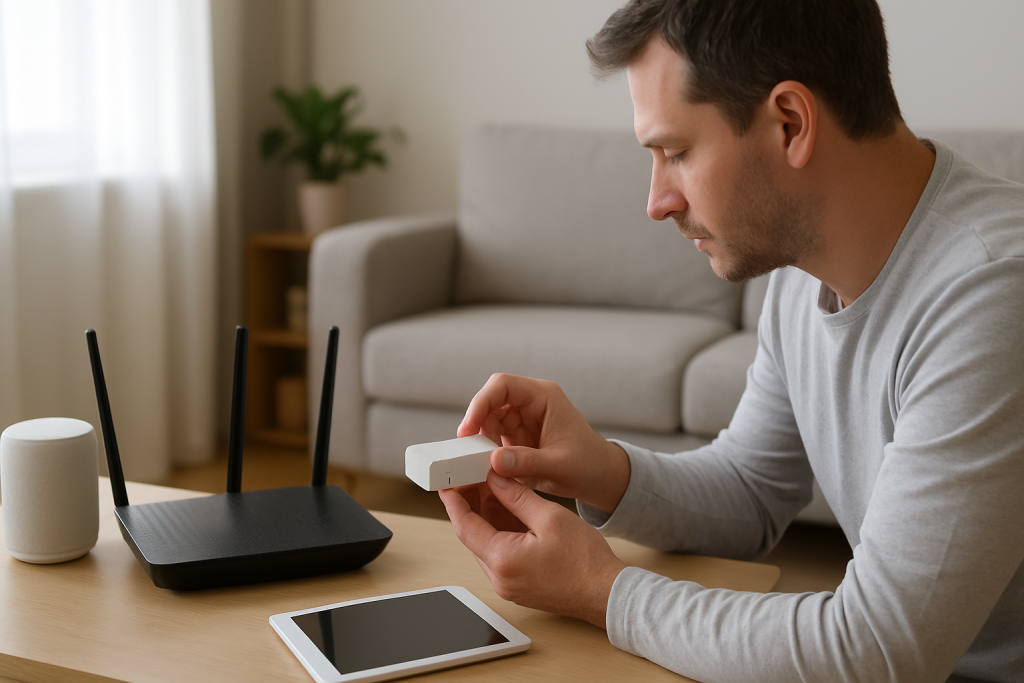
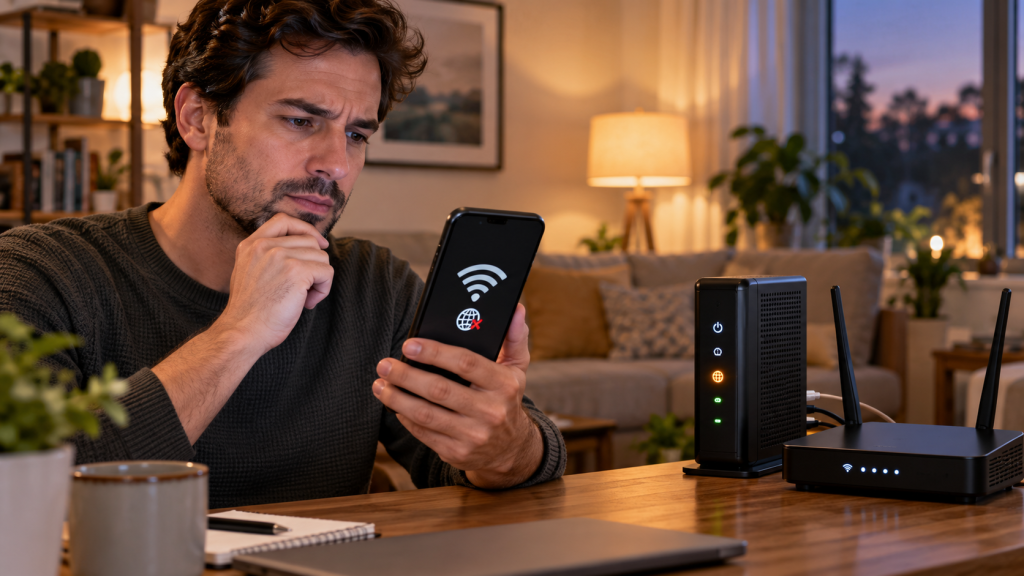
How to Fix Device Unreachable Errors in Smart Home Apps
Quick Answer
A “Device Unreachable” error usually means your phone and the smart device can’t talk to each other on your home network, even if both appear connected to Wi-Fi. The most common cause is firewall-based device isolation on the router (often called AP Isolation, Client Isolation, or “Block LAN to WLAN”), which prevents devices on Wi-Fi from discovering or reaching other local devices.
Start by confirming your phone is on the same Wi-Fi network as the device (not cellular or a guest network), then check your router settings for isolation features and disable them for the main SSID. If you use an ISP modem-router combo or a mesh system, also check for “guest,” “IoT,” or “secure” network modes that intentionally separate devices.
Why This Happens
Most smart home apps rely on local network communication for discovery and control. Even when cloud control exists, initial setup and many day-to-day commands use local traffic such as mDNS/Bonjour, SSDP/UPnP, or direct IP connections. If your router’s firewall rules or isolation features block device-to-device traffic, the app can’t find the device and reports it as unreachable.
Firewall device isolation shows up in several common ways:
1) Your phone can browse the internet, and the smart device shows “connected,” but the app can’t discover or control it. 2) The device works for a while, then becomes unreachable after a router update or after you moved it to a different SSID (like a guest network). 3) The device is reachable from outside the home (cloud control) but not locally, or vice versa.
A real-world scenario: In an apartment with many neighboring networks, you might separate devices onto a “Guest” SSID to reduce interference or for security. On many routers, guest networks are isolated by design. Your phone on the main SSID cannot reach a smart plug on the guest SSID, so the app shows “unreachable” even though both have strong Wi-Fi signals.
Other contributors can make the problem appear random:
2.4 GHz vs 5 GHz differences: Many smart devices only support 2.4 GHz. If your phone is on 5 GHz and your router is configured to isolate bands or uses separate SSIDs with isolation rules, discovery can fail. Even when band steering uses one SSID, some routers apply different firewall policies per band.
Router distance and interference: Thick walls, metal appliances, and crowded Wi-Fi channels can cause packet loss. That can look like “unreachable,” especially for battery-powered sensors with weak radios. This is common in older buildings where the router is in a closet near the ISP cable entry point.
Overlooked technical cause: Multicast filtering or “IGMP snooping” bugs can break discovery protocols (mDNS/SSDP) while normal internet browsing still works. Some “security” features block multicast to reduce noise, unintentionally blocking smart home discovery.
Firmware/software causes: Router firmware updates can re-enable isolation defaults, change firewall behavior, or add new “IoT protection” modes. App updates can also change how the app discovers devices, making previously borderline networks fail.
DHCP/IP conflicts: Your router assigns IP addresses via DHCP. If two devices end up with the same IP (often due to a manual/static IP set on a device or a misconfigured reservation), one or both can become unreachable. This can happen after a power outage when devices reconnect in a different order.
Common user mistake: Connecting the phone to the guest Wi-Fi (or leaving a VPN enabled) during setup. The app may pair using one network path, then later your phone returns to the main network and can’t reach the device due to isolation.
Step-by-Step Fix
Confirm your phone is on the correct network (and not blocked by VPN). On your phone, verify you are connected to your home Wi-Fi SSID (not “Guest”). Turn off any VPN or “Private Relay”-style features temporarily. Then force-close and reopen the smart home app to refresh discovery.
Check whether the device is on 2.4 GHz and your phone can still reach it. If your router has separate SSIDs (for example, “HomeWiFi-2.4” and “HomeWiFi-5”), confirm the smart device is connected to the intended SSID. Many smart devices require 2.4 GHz. If your phone is on 5 GHz, that’s usually fine, but only if your router allows cross-band local traffic. If you suspect band isolation, temporarily connect your phone to the 2.4 GHz SSID and test control again.
Disable firewall device isolation on the main SSID. Log in to your router and look for settings such as:
AP Isolation, Client Isolation, Wireless Isolation, “Block LAN to WLAN,” “Intra-BSS blocking,” “Guest network isolation,” “Access Intranet,” or “Allow guests to access local network.”
Ensure isolation is disabled on the SSID where your phone and smart devices live. If you have an “IoT network” feature, verify it is not configured to block phone-to-IoT access. Save settings and reboot the router if prompted.
Move smart devices off the guest network (or allow local access). If the device is on a guest SSID, either rejoin it to the main SSID or enable the guest option that allows access to local devices. Some routers only allow guest-to-internet, which will break local discovery and direct control.
Power-cycle in the right order to clear stale sessions. Turn off the smart device for 15 seconds and turn it back on. If the device uses a hub/bridge, power-cycle the hub too. If problems persist, reboot the router. Wait for Wi-Fi to fully return, then open the app and test again.
Check for DHCP issues and IP conflicts. In the router’s client list, confirm the device has a single IP address and appears only once. If the router shows duplicates, or if the device’s IP keeps changing rapidly, do the following:
Remove any manual/static IP settings on the device (if available), then create a DHCP reservation in the router for that device’s MAC address. This keeps the IP stable without risking conflicts.
Update firmware and app versions. Update the router firmware (especially if you recently changed routers or enabled new security features). Update the smart device firmware from within its app, and update the smart home app itself. Firmware fixes often address multicast discovery and Wi-Fi stability bugs.
Test signal quality and interference where the device is installed. Move the device closer to the router temporarily. If it becomes reachable immediately, the root cause may be weak signal or interference. In apartments, changing the 2.4 GHz channel to 1, 6, or 11 can help. Also keep devices away from microwaves, cordless phone bases, and dense metal surfaces.
Advanced Troubleshooting
Use a practical test to confirm isolation is the problem
A fast way to prove firewall isolation is involved is to test local reachability. If your smart device has an IP address shown in the router’s client list, try one of these checks while your phone is on the same SSID:
1) Ping the device from a computer on the same Wi-Fi (some devices block ping, so failure isn’t definitive). 2) Use a network scanner app to see whether the device appears and whether its ports are visible. 3) Most importantly, see if discovery works only when both phone and device are on the same band/SSID and fails across guest or “IoT” segments. If the device disappears the moment you move your phone to a different SSID, isolation is strongly indicated.
Check router features that silently block smart home traffic
Some router options are well-intentioned but disruptive:
Multicast filtering / “Block multicast”: Can break mDNS/SSDP discovery used by many apps. Disable it for the main SSID if smart devices can’t be found.
IGMP snooping: Usually helps IPTV, but buggy implementations can disrupt discovery. If you see an “IGMP snooping” toggle and smart home discovery is unreliable, test with it off.
SPI firewall / “DoS protection”: Rarely blocks local traffic, but some routers misapply rules. If you enabled aggressive protection settings recently, revert to defaults and retest.
ISP modem-router combo and double NAT complications
With an ISP modem-router combo plus your own router, you can end up with two firewalls (double NAT). Local device discovery can fail if your phone is on one router’s Wi-Fi and the smart device is on the other, even if both have internet. Put the ISP device into bridge mode (preferred) or set your router to access point mode so all devices share one LAN.
Mesh systems: node placement and band steering edge cases
Mesh Wi-Fi can improve coverage, but placement matters. If a node is too far from the main unit, the backhaul becomes unstable and devices may flap between “reachable” and “unreachable.” Also, some mesh systems offer an “IoT network” that isolates devices by default. If you use it, ensure it allows controller devices (phones/tablets) to access IoT clients locally.
Security apps and DNS-based filtering
Some routers include security subscriptions that filter traffic or block “unknown” devices. If a smart device is flagged, it may be allowed to reach the internet but blocked from LAN access. Temporarily disable the security filter or add the device to an allowlist, then retest.
When to Reset or Replace the Device
Resetting is appropriate when you’ve confirmed the network is healthy and isolation is disabled, but the device still won’t stay reachable. Consider a reset if any of these are true:
1) The device repeatedly reconnects with a new MAC address or shows inconsistent identity in the router list. 2) Firmware updates fail or the device can’t complete onboarding even when close to the router. 3) The device only works on one phone but not others on the same network, suggesting corrupted pairing data.
Before resetting, remove the device from the app (if possible) and note any automation rules you’ll need to rebuild. Then perform the manufacturer’s factory reset and re-add it while your phone is on the intended SSID (usually 2.4 GHz).
Replacement is justified when the Wi-Fi radio is likely failing or the device is incompatible with your network environment. If the device becomes unreachable even 5–10 feet from the router, or it overheats, drops off daily, or cannot stay connected after a clean reset and firmware update, replacement is often faster than continued troubleshooting. Also consider replacing older 2.4 GHz-only devices if your environment is extremely congested and the device has a weak antenna design.
How to Prevent This in the Future
Design your Wi-Fi with smart devices in mind. Use 2.4 GHz for IoT devices that need range and wall penetration, and reserve 5 GHz for high-bandwidth devices. If you split SSIDs, keep a clear naming scheme so you don’t accidentally place controllers on a guest network.
Avoid isolation unless you intentionally manage it. If you want extra security, consider an “IoT” VLAN/SSID only if your router supports allowing specific cross-access (for example, allowing your phone subnet to reach IoT devices while blocking IoT-to-IoT). Otherwise, a simple main SSID without client isolation is more reliable for most homes.
Keep router settings stable. After firmware updates, re-check guest network rules, AP isolation toggles, and multicast settings. A common router configuration issue is that updates restore “Wireless Isolation” defaults or enable new “smart security” modes automatically.
Use DHCP reservations for critical devices. Assign stable IPs via DHCP reservation for hubs, bridges, and frequently controlled devices. This reduces “unreachable” events caused by IP changes or accidental conflicts.
Place equipment to reduce interference. Keep the router in a central location, elevated, and away from thick walls, aquariums, and metal cabinets. In apartments, choose less congested channels and avoid placing smart hubs behind TVs or inside entertainment centers.
Document your network. Keep a short note of SSIDs, passwords, and which devices belong where. Many “unreachable” incidents come from a simple mistake: the phone is on the wrong SSID during setup, or a guest network password was changed without rejoining IoT devices.
FAQ
Why does my smart device say “unreachable” even though it’s connected to Wi-Fi?
Because “connected to Wi-Fi” only means it joined the wireless network and likely has internet. If your router has client/AP isolation, guest network isolation, or multicast blocking enabled, your phone and the device may be prevented from communicating locally, which causes unreachable errors in smart home apps.
Does it matter if my phone is on 5 GHz and the device is on 2.4 GHz?
Usually it’s fine, but not always. Some routers apply different firewall policies per band or treat the 2.4 GHz SSID as an “IoT” segment with isolation. If discovery fails, temporarily put your phone on the same SSID/band as the device to test, then adjust router isolation settings so cross-band local access works.
What router setting most commonly breaks smart home discovery?
AP/Client Isolation (and guest network isolation) is the top culprit. A close second is multicast filtering, which can block mDNS/SSDP discovery. If devices work only through cloud control or only after repeated retries, check these settings first.
How can an IP conflict cause “Device Unreachable”?
Your router assigns IP addresses using DHCP. If two devices end up with the same IP address, traffic can go to the wrong device or fail intermittently, making the smart device appear unreachable. Using DHCP reservations (instead of manual static IPs) helps keep addresses stable and avoids conflicts.
When should I factory reset the device versus fixing the network?
Fix the network first if multiple devices show unreachable errors or if the issue started after a router change, firmware update, or moving devices to a guest/IoT SSID. Factory reset the device if only one device fails after isolation is disabled, signal is strong, DHCP is stable, and firmware/app updates don’t help.
At some point the noise fades, and what’s left feels oddly simple. The bigger drama dissolves into the background, like a song you used to hate that finally stops getting stuck in your head.
There’s room again for the ordinary stuff—coffee, conversation, whatever your day actually needs. And that’s the real payoff: not a grand reveal, just a steadier way to move through it.