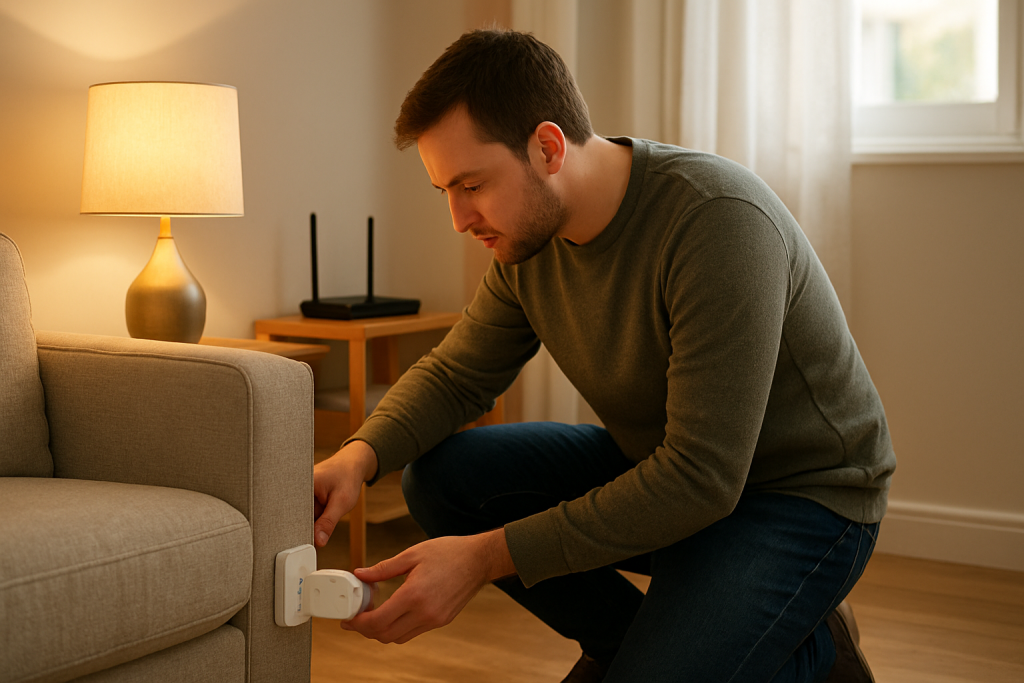
Smart Plug Not Working for Multiple Users? Fix Sharing Issues
Quick Answer
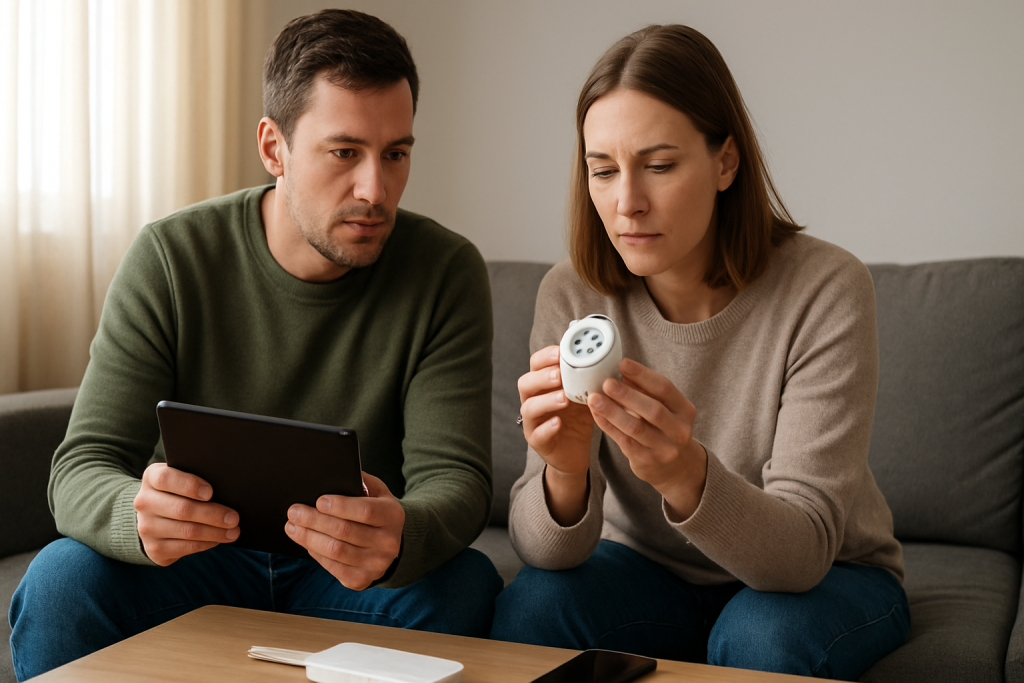
When a smart plug or smart switch works for one person but not for other household members, it’s usually a sharing permission or account sync problem—not a “bad device.” In real homes, this often happens after an app update, a password change, a router reboot, or when the device was set up under one account but others are trying to control it through a different home, different platform, or a different login.
If one user can control the device in the manufacturer app (or Apple Home/Google Home/Alexa/SmartThings) but another user only sees it as offline, missing, or “not responding,” the device is typically fine; the second user’s app is out of sync with the home, lacks permission, or is linked to the wrong account/controller.
Do these three actions first: (1) Confirm both users are signed into the same “home” (and not a different account or duplicate home) in the primary app that owns the device. (2) Re-send the device share/invite and accept it again, then confirm permissions are set to allow control. (3) Force a sync in the ecosystem app (Alexa/Google Home/Apple Home/SmartThings) by disabling/re-enabling the linked service or re-running device discovery, then check if the device reappears under the correct home/room.
Why This Happens
Multi-user control depends on a chain: the device is owned by one account (often the manufacturer app or a hub/controller), that account is shared to other users, and then each ecosystem (Alexa, Google Home, Apple Home, SmartThings, Matter controllers, Zigbee hubs) maintains its own local/cloud “view” of who is allowed to see and control the device. If any link in that chain is out of sync, one person can control the plug/switch while others can’t.
Common, tightly related causes include:
1) The device is shared, but the invited user accepted with the wrong account (for example, a different email, Apple ID, Google account, or region). This creates a situation where the invite “exists,” but the device never shows up in the expected home.
2) The device exists in two places (duplicate homes or duplicate devices) due to migration, Matter re-pairing, or linking the manufacturer app to multiple platforms. One user is controlling “Device A” while the other is looking at “Device B” that is offline or unassigned.
3) Permissions are limited. Many apps allow sharing but restrict admin actions, accessory control, or remote access. A shared user may be able to see the plug but can’t toggle it, run schedules, or view energy monitoring.
4) A cloud/session mismatch after an update or password change. One phone keeps an old token and continues working; the other phone must re-authenticate or refresh the device list.
Real-world scenario: after a power outage, the plug reconnects, the owner can still toggle it in the brand app, but family members using Alexa or Google Home can’t control it because the linked skill/service didn’t refresh and is still pointing at an older device ID.
Common user mistake: inviting someone to the “account” but not to the specific “home,” or accepting an invite while logged into a different account on that phone.
Overlooked technical cause: Matter and some hub-based systems can have a single “fabric/controller” that effectively owns permissions; if the device is paired to one controller first, other controllers may only get partial access until sharing/multi-admin is completed correctly.
Most Likely Causes in Real Homes
1) Wrong home or wrong account selected on the second user’s app. Many apps allow multiple homes/locations, and it’s easy to be looking at the empty one.
2) Sharing invite accepted incorrectly or not fully completed. The invite may show “pending” on the owner side even if the recipient thinks they accepted.
3) Linked ecosystem out of sync (Alexa/Google Home/SmartThings) after an update, password change, or relink. The owner’s manufacturer app works, but voice assistants show “device unresponsive.”
4) Duplicate devices or name collisions across apps. Two entries with the same name cause commands to target the wrong one, or the wrong device appears in the shared user’s room.
5) Router/mesh change caused the device to be reachable locally but not consistently registered to cloud services for secondary accounts, especially right after outages or DHCP changes.
Step-by-Step Fix
Check which app/account “owns” the device (the source of truth). Open the manufacturer app (or hub app) on the owner’s phone and confirm the plug/switch is online and controllable there; then note the exact home/location name and the owner login used. If it works here, the device and basic network connection are likely fine. If it doesn’t work here, fix connectivity first (power cycle the plug/switch once, wait 60–90 seconds for it to reconnect, then retest) before troubleshooting sharing. If it still won’t come online in the owner app, skip ahead to the reset section.
On the second user’s phone, verify the correct account and correct home is selected. In the relevant app (manufacturer app, Apple Home, Google Home, Alexa, SmartThings), check the profile/account email/ID and switch to the same home/location name the owner sees. If the device appears after switching homes, the issue was simply a home/account mismatch. If the device still does not appear, move to re-sharing.
Redo the share cleanly: remove the existing share, re-invite, and re-accept while watching for the correct login. On the owner side, remove the shared user from the device share (or home members list), then send a new invite. On the recipient phone, log out and back in (or confirm the correct account), then accept the new invite and confirm control permissions are enabled. If this works, the problem was a stale invite or wrong-account acceptance. If it fails (invite never arrives, stays pending, or device still missing), move to ecosystem sync.
Force a device list refresh in the ecosystem where the failure happens. If the second user’s issue is mainly in Alexa/Google Home/SmartThings (but the manufacturer app share now looks correct), refresh that ecosystem: disable and re-enable the linked service/skill integration, or run device discovery/sync, then wait a few minutes for devices to repopulate. If the device reappears and controls correctly, the issue was an integration sync problem. If it still shows offline, continue to the next step.
Check for duplicates and name/room collisions. In the ecosystem app, search the device name and look for multiple entries (for example, a local device and a cloud device, or an old “plug” and a new “plug”). Rename the working one uniquely (for example, “Living Room Plug A”), remove or hide the stale/offline duplicate, and confirm it’s assigned to the correct room/home. If voice commands start working after removing duplicates, the issue was command targeting. If there are no duplicates or it still fails, continue.
Verify permissions that affect control (not just visibility). Some platforms allow a member to see accessories but restrict adding/removing devices, editing automations, or remote access. On the owner account, check the member role (admin vs member) and device permissions; on Apple Home, confirm the user has control access for accessories; in other ecosystems, confirm the shared user can control devices and run routines. If upgrading the role/permissions fixes it, the issue was permission scope. If permissions look correct but control still fails, continue.
Test whether the problem is local-only vs cloud-only using a simple isolation check. Have both users connect to the same home WiFi and test control; then have the second user turn WiFi off (cellular only) and test again. If it works on WiFi but fails on cellular, it usually means remote access/cloud access isn’t enabled for that shared user (or the ecosystem link is broken). If it fails both ways for the shared user but works for the owner, return to sharing/invite steps and then proceed to advanced troubleshooting (account sync and controller ownership).
For hub-based (Zigbee) or Matter setups, confirm the correct controller is used for sharing. If the plug/switch is connected through a hub or Matter controller, verify the shared user is added to that same home/controller (not just the voice assistant). If the device is paired to one controller but the household uses another as primary, the shared user may never get control. If adding the user to the controller’s home fixes it, the issue was controller ownership. If it still fails, move to Advanced Troubleshooting.
Advanced Troubleshooting
This section is only needed if basic fixes fail.
Account/cloud issue: If sharing invites won’t arrive, remain pending, or repeatedly “disappear,” the account session may be stuck. On both phones, update the app, then log out/in. If there was a recent password change, re-authenticate everywhere the account is linked (manufacturer app and any Alexa/Google/SmartThings integrations). If only one family member is affected, remove them from the home entirely and re-add them as a new member rather than re-sharing individual devices.
Network issue tied to sync (not general WiFi): Mesh WiFi and band steering can cause a plug/switch to reconnect with a different IP after an outage or router reboot. The owner app may recover quickly while other platforms cache the old connection. If the device frequently “changes state late” or appears offline only in integrations, reboot order can matter: router first, then hubs/bridges, then wait for the plug/switch to re-register. If you use a hub, keep it on a stable node (avoid moving it between mesh points).
Firmware/software cause: If the owner can control the device but shared users can’t after a firmware update, the device may have updated but the cloud model hasn’t fully propagated to all linked ecosystems. Check for app updates on both phones and ensure the device firmware is current. If an update shows “failed” or “stuck,” don’t repeatedly toggle power; instead, leave it powered and online for 10–15 minutes, then refresh the device list and retry the sync step.
Configuration conflict (groups, scenes, automations, permissions): If a shared user can toggle manually but schedules/routines fail (or the plug turns on/off unexpectedly), look for duplicate automations in multiple places (manufacturer app plus Alexa/Google/Apple/SmartThings). If two platforms fight, one user may think the device “isn’t responding” when it’s actually being overridden. Temporarily disable automations in one app at a time to find which platform is controlling it, then keep automations in a single “source” platform.
Ecosystem sync issue (Alexa/Google Home/Apple Home/Matter): If the device is shared properly in the owner ecosystem but not visible to the shared user in a voice assistant, the voice assistant may not inherit the manufacturer app share. In many homes, you must share the device in the platform where it’s actually used (for example, add the family member to the Alexa household, the Google Home household, or the Apple Home home), not only in the manufacturer app. For Matter, confirm multi-admin/home sharing is completed so the second controller is authorized; otherwise, it may show a placeholder device that never responds.
When to Reset or Replace the Device
A soft restart is simply power cycling the smart plug (unplug/replug) or turning the smart switch circuit off and back on using the breaker only if you’re comfortable doing so safely and it controls only that switch; otherwise, just use the normal power method available for the plug. A soft restart is useful after outages and router changes because it forces a fresh reconnect.
A factory reset is different: it removes the device from its account/home and wipes configuration. After a factory reset you may lose device pairing, room assignment, schedules/timers, automations, voice assistant links, and (for energy-monitoring smart plugs) accumulated energy history in the app. Plan to re-add the device, re-share it, and re-link it to Alexa/Google/HomeKit/SmartThings if used.
Reset is reasonable when sharing fixes fail because the device is “stuck” in a previous ownership state (especially after a controller change, migration, or Matter pairing attempt) and can’t be shared cleanly. Replace the device only when behavior suggests a reliability problem beyond account sync: persistent offline status across all apps even after stable power and network, repeated failed firmware updates that never recover, or unstable relay behavior (random clicking/on-off) with automations disabled.
Safety note: if the plug/switch is hot to the touch, shows discoloration, has a burning smell, or the outlet/switch plate shows visible damage, stop using it and address the safety issue first before any app troubleshooting.
How to Prevent This in the Future
Use one clear “source of truth” for ownership: decide whether the manufacturer app, a hub app, or a primary ecosystem home will be your main home record, and keep sharing centered there. Avoid setting up the same plug/switch multiple times across different apps unless the platform requires it.
Keep home and room organization consistent. Use unique device names (avoid multiple “Plug” entries), and keep the device assigned to the correct home and room. This prevents voice assistants and shared users from controlling the wrong duplicate.
Maintain permission and sharing hygiene. When someone gets a new phone or changes their email/password, re-check that they are still in the correct home and have the right role. If you remove and re-add a member, also refresh linked ecosystems so device lists rebuild cleanly.
Reduce automation conflicts by keeping schedules in one place. If you set timers in the manufacturer app, don’t also set competing routines in Alexa/Google/SmartThings for the same device unless you are intentionally coordinating them.
Build a simple outage recovery habit: after a power outage or router reboot, wait for WiFi and any hubs/bridges to stabilize, then check the owner app first, then refresh ecosystem integrations. This sequence prevents stale device lists and “ghost offline” devices for shared users.
Stay current on app updates across all household phones. A common multi-user failure is one phone running an older app that handles home membership differently, leading to missing devices or permission errors.
FAQ
Why can the owner control the smart plug, but I can’t see it at all?
If the owner can control it, the plug/switch is usually fine. Missing devices for a second user almost always means you’re signed into a different account, viewing a different home/location, or the sharing invite wasn’t accepted under the correct login. Confirm the home name and account on both phones, then re-send and re-accept the share.
Does being on the same WiFi automatically give everyone control?
No. This is a common misconception. Most smart plugs and smart switches require account-based permissions, even when you’re on the same network. Being on the same WiFi can help with local discovery, but it does not replace being added to the correct home with proper permissions.
My smart plug works in the brand app, but Alexa/Google Home says “device unresponsive” for other users. What does that mean?
That usually means the voice assistant integration is out of sync or linked to the wrong account/home. Re-sync devices (or disable/re-enable the linked service) and check for duplicate device entries. Also ensure the other users are added to the same Alexa household or Google Home home, not just shared in the manufacturer app.
If I factory reset the device, will that fix sharing permanently?
A factory reset can fix devices stuck in an old ownership/controller state, but it’s not always permanent by itself. You still need to set it up under the correct primary account/home, then share it correctly and refresh any linked ecosystems. Expect to recreate schedules, routines, room assignments, and any energy monitoring history may be lost.
There’s a funny kind of relief in seeing the noise line up with the answer. The world doesn’t magically get simpler, but the feeling of being stuck in circles loosens.
Maybe that’s the point: not a grand transformation, just enough clarity to keep moving. After all, most problems don’t need a spotlight—they need a little plain recognition.