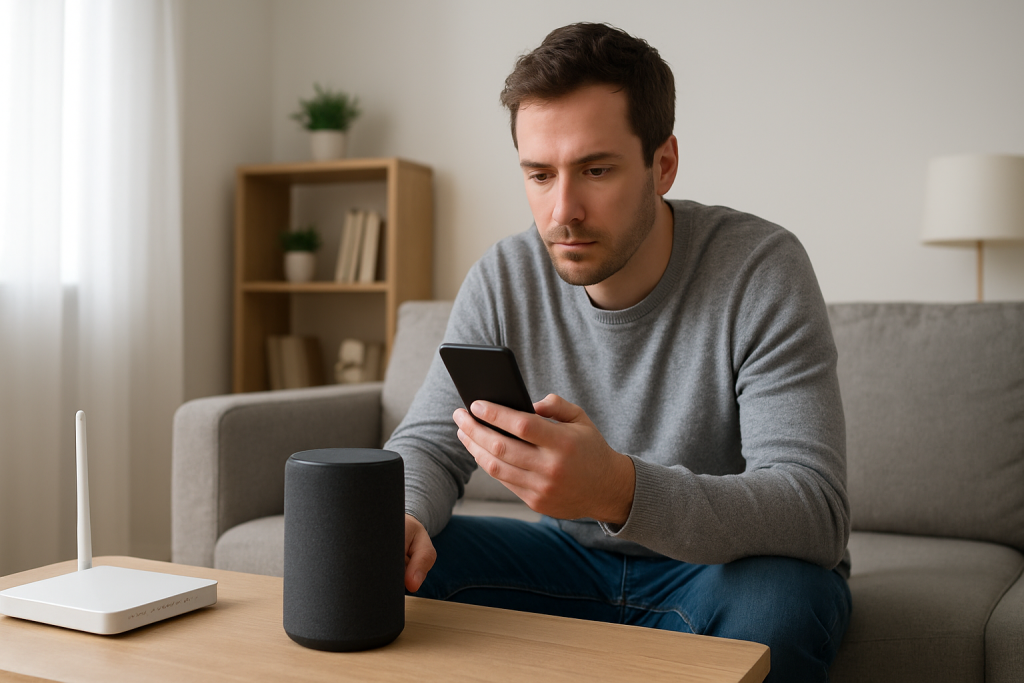
Google Home Setup Cant Find Device During Pairing: Fixes to Try
Quick Answer
The most common reason Google Home setup can’t find your device during pairing is that the phone can’t “see” the speaker/display’s discovery broadcast. That broadcast can be blocked by WiFi isolation settings, missing phone permissions, or a Bluetooth handoff problem (the app uses Bluetooth briefly to pass WiFi details to the device).
Do these three checks first:
1) On your phone, turn on Bluetooth and Location services, and allow the Google Home app permission for Nearby devices (Android) or Bluetooth and Local Network (iPhone). If discovery suddenly works, the issue was permissions or Bluetooth handoff.
2) Confirm your phone is on the same home WiFi network you want the device to use (not cellular, not a guest network). If you’re on Guest WiFi, many routers isolate devices so discovery fails.
3) Temporarily turn off any VPN or security app that creates a “local VPN.” If pairing works after disabling it, the VPN was blocking local discovery traffic.
Affected devices: Google Nest Mini/Audio, Nest Hub/Hub Max, Chromecast with Google TV, Chromecast Audio, and many Google Assistant speakers from third parties can all fail discovery for the same reasons.
Why This Happens
During setup, your phone and the Google/Nest device must discover each other on the local network. The device advertises itself using local discovery methods (often multicast/Bonjour-like traffic), and the Google Home app also uses Bluetooth briefly to hand off WiFi credentials. If either of those paths is blocked, the app will sit at searching or show can’t find device.
Most failures come from one of these tightly related causes:
1) Client isolation: Guest WiFi, AP isolation, or some mesh settings prevent devices from talking to each other, even though both have internet.
2) Phone permissions: Location, Nearby devices, Bluetooth, and Local Network permissions control whether the app can scan and connect during setup.
3) Bluetooth handoff issues: Bluetooth is on but unstable, connected to other accessories, or restricted by OS privacy settings, so the handoff never completes.
4) Band steering and mixed bands: The phone jumps between 2.4 GHz and 5 GHz (or between mesh nodes) mid-setup, so the device and phone are briefly on different segments and discovery breaks.
5) VPN or private DNS filtering: Some VPNs and “security” apps block local multicast traffic or local network access, which is exactly what discovery needs.
Real-world scenario: Your phone is on the Guest WiFi because it has a stronger signal in the kitchen. The Nest Mini is in setup mode and broadcasting, but the guest network isolates clients. The phone has internet, the speaker has power, yet the app can’t find it.
Common user mistake: Turning on the device and immediately starting setup while the phone is still on cellular data or connected to a different WiFi network than the one you intend to use.
Overlooked technical cause: iPhone Local Network permission (or Android Nearby devices permission) is denied. The app may still open and show your Home, but it cannot discover new devices on the LAN until that permission is allowed.
Most Likely Causes in Real Homes
1) Phone permissions missing or denied (Local Network/Nearby devices/Bluetooth/Location), so the app cannot scan for the device.
2) Guest WiFi or AP/client isolation enabled on the router or mesh, blocking discovery broadcasts.
3) VPN, iCloud Private Relay-like behavior, DNS filtering, or a security app interfering with local discovery.
4) Band steering or mesh roaming moving the phone between bands/nodes during setup, causing a mismatch or temporary isolation.
5) The device is already linked to another Google Home or account, or it is not actually in setup mode, so it isn’t advertising itself for pairing.
Step-by-Step Fix
Confirm the device is truly in setup mode.
What to do: Plug in the Google/Nest device near your router (or within the same room as your phone). Wait for the startup sound or on-screen setup prompt. If it has a mic switch, leave it in the normal position for setup. If the device was previously used, follow its specific instructions to enter setup mode (often indicated by a pulsing light or a setup message).
What the result means: If you see a setup prompt/pulsing light, the device is broadcasting discovery. If it looks normal (not in setup mode), the app may not find it because it is not advertising itself.
If it fails: Move to the next step, but plan to factory reset later if you suspect it is still tied to a previous home/account.
Fix phone permissions that control discovery and Bluetooth handoff.
What to do: On the phone you are using for setup, enable Bluetooth and Location services. Then check app permissions for Google Home.
Android: Settings > Apps > Google Home > Permissions. Allow Nearby devices, Location, and Bluetooth (names vary by Android version). Also ensure Location is turned on in Quick Settings.
iPhone: Settings > Privacy & Security. Ensure Bluetooth is allowed for Google Home, and in Settings > Google Home, enable Local Network. Also ensure Location is allowed (While Using the App is usually sufficient).
What the result means: If the device appears immediately after granting permissions, the root cause was blocked scanning or blocked Bluetooth handoff.
If it fails: Continue to step 3 and check network isolation and VPN interference.
Make sure your phone is on the correct WiFi and not on Guest or a different router.
What to do: Open your phone’s WiFi settings and confirm the network name (SSID) is your main home WiFi, not Guest and not a neighbor’s extender. Turn off cellular data temporarily to prevent the app from switching paths during setup.
What the result means: If switching to the main SSID makes the device show up, guest isolation or segmented WiFi was blocking discovery.
If it fails: Go to step 4 to test for isolation and local network blocking more directly.
Run a quick isolation test using a hotspot (diagnostic, not a permanent fix).
What to do: Create a WiFi hotspot from a second phone (or use your phone’s hotspot if you have another device to run Google Home). Connect the setup phone to that hotspot. Put the Google/Nest device into setup mode and try pairing again.
What the result means: If pairing works on the hotspot, your home router/mesh is blocking discovery (client isolation, multicast filtering, or segmentation). If pairing still fails on the hotspot, the issue is more likely phone permissions, Bluetooth handoff, or the device not being in setup mode.
If it fails: Proceed to step 5 to eliminate VPN/security filtering and Bluetooth conflicts.
Disable VPNs, private DNS, and security apps that can block local discovery.
What to do: Turn off any VPN (including work VPN), and temporarily disable apps that route traffic through a local VPN profile (some ad blockers, antivirus, and “safe browsing” tools). On Android, also try setting Private DNS to Off/Automatic. On iPhone, if you use any VPN profile, disconnect it for setup.
What the result means: If the device appears after disabling these, the blocker was local network filtering. You can often re-enable later and add an exception, but the setup must complete first.
If it fails: Continue to step 6 and focus on Bluetooth handoff reliability.
Clear Bluetooth conflicts and force a clean Bluetooth handoff.
What to do: Disconnect your phone from other active Bluetooth devices (car audio, earbuds, watches if they aggressively connect). Toggle Bluetooth off for 10 seconds, then on. Keep the phone within a few feet of the Google/Nest device during pairing.
What the result means: If discovery starts working when Bluetooth is clean, the issue was a Bluetooth connection conflict or unstable handoff.
If it fails: Go to step 7 and stabilize the WiFi band and node your phone is using.
Stabilize WiFi band steering and mesh roaming during setup.
What to do: Stand close to the main router or primary mesh node. If your router offers separate 2.4 GHz and 5 GHz network names, connect your phone to the 2.4 GHz SSID for setup (many smart speakers prefer 2.4 GHz). If you have a single combined SSID, temporarily disable “smart connect/band steering” if your router allows, or move closer so the phone stays on one band.
What the result means: If the device appears after you stabilize the connection, the earlier failures were caused by the phone switching bands/nodes mid-discovery.
If it fails: Continue to step 8 and verify the device is not already attached to a different Home or account context.
Verify you are using the right Google account and the right Home structure in the app.
What to do: Open Google Home app. Tap your profile icon and confirm the Google account is the one you want to own the device. Then check the Home selector (top of the app) and ensure you are adding the device to the correct Home. If you have multiple Homes (for example, a vacation home), switch to the correct one before adding.
What the result means: If the device only appears when you switch accounts/Homes, it was a context mismatch. Pairing may have been trying to attach the device to a different Home than expected.
If it fails: Proceed to step 9 and check language/region and Voice Match related blockers.
Check language settings and Voice Match status if setup stalls after discovery.
What to do: If the device is found but setup fails later, confirm your phone language and Google Assistant language are set to a supported option for your region. In Google Home, check Assistant settings and ensure Voice Match is not stuck in an incomplete state for the account you are using.
What the result means: If correcting language or completing Voice Match lets setup finish, the original problem was not discovery but a handoff to account configuration that looked like a pairing failure.
If it fails: Continue to step 10 and use the router’s client list to confirm network visibility.
Check the router client list to see whether the device is joining at all.
What to do: Log into your router/mesh app and open the connected devices/client list. Look for a new device name that resembles Nest, Google, Chromecast, or a generic manufacturer entry. If you see it, note which network it joined (main vs guest) and which band (2.4 vs 5 if shown).
What the result means: If the device appears in the client list but the app can’t find it, discovery traffic is being blocked (isolation/multicast filtering) even though basic WiFi is working. If it never appears, the device may not be receiving credentials due to Bluetooth handoff, or it may be failing to connect due to WiFi compatibility (often fixed by using 2.4 GHz and WPA2).
If it fails: Go to step 11 and apply a controlled reboot order to clear stale network states.
Do a controlled network restart in the correct order (only because it clears discovery states).
What to do: Unplug modem for 30 seconds, plug it back in and wait until it is fully online. Then restart the router/primary mesh node and wait until WiFi is stable. Finally, power-cycle the Google/Nest device. Keep your phone on WiFi (not cellular) and retry setup.
What the result means: If pairing works after this, the issue was likely a stuck multicast/discovery state in the router/mesh or a stale IP lease. The order matters because the router needs a clean upstream connection before it rebuilds local networking.
If it fails: Move to step 12 for the final basic step: a reset only if you suspect prior ownership or corrupted setup state.
If the device was previously used, factory reset it and try pairing again.
What to do: Use the model-specific factory reset method (button press sequence varies by device). After reset, wait for the setup prompt/pulsing light, then run setup again with the phone close by and all permissions enabled.
What the result means: If it appears after reset, the device was likely still linked to another Home/account or stuck in a partial setup state and wasn’t advertising correctly.
If it fails: Continue to Advanced Troubleshooting, because the remaining causes are usually account-side, router feature conflicts, or firmware/software issues.
Advanced Troubleshooting
Use this section only if the basic fixes above did not make the device appear during pairing, or if it appears but setup repeatedly fails at the same point.
Account/cloud issue: If Google services are having a temporary outage or your account has a sync problem, discovery may work but linking fails. Test by adding the device using a different Google account (a household member) just to see if the behavior changes. If it works on the other account, remove it afterward and focus on fixing the original account’s Home structure, permissions, and Assistant settings.
Network issue: Some routers have settings that specifically break discovery: AP isolation, multicast filtering, IGMP snooping misconfiguration, or separate VLANs for IoT. If your hotspot test succeeded but home WiFi fails, look for guest network isolation and any setting that mentions isolation, multicast, or device-to-device communication. Also confirm WiFi security is set to WPA2 or WPA2/WPA3 mixed mode; some older smart devices struggle on WPA3-only networks.
Firmware/software cause: If your phone OS is outdated or the Google Home app is outdated, pairing can fail even with correct networking. Update the Google Home app and your phone OS, then try again. If the device has a screen (Nest Hub), leaving it powered on and connected (even briefly) can allow it to pull updates after a successful partial connection; then retry setup.
Configuration conflict: If you run multiple routers (for example, ISP gateway plus your own router) and both are routing (double NAT), discovery can fail when the phone and device end up on different subnets. The symptom is that both have internet, but they never see each other. The fix is to ensure there is only one router doing routing, and the other is in bridge/access point mode, so everything is on one local network.
When to Reset or Replace
Soft restart (power cycle) is appropriate when the device was working before and suddenly won’t show up for pairing after a network change. It does not remove settings; it just clears temporary states.
Factory reset is appropriate when you suspect the device is still linked to another Home/account, you bought it used, you changed households, or setup repeatedly fails at the same stage even after permissions and network isolation checks. A factory reset removes the device’s saved WiFi network, its link to your Google Home structure, and local configuration. You will need to set it up again from scratch.
Replace is a last resort. Consider it only if the device will not enter setup mode (no setup prompt, no expected light pattern, no response to the reset sequence) or it powers off randomly. Hardware safety warning: do not open the device, puncture, heat, or attempt internal repairs. If the power adapter or cable is damaged, stop using it and use only the original type of power supply specified for that model.
How to Prevent This
Keep discovery-friendly WiFi settings: avoid using Guest WiFi for smart home devices, and avoid enabling AP/client isolation on the network where your phone and Google/Nest devices need to see each other. If you use a mesh system, keep the main SSID consistent and avoid creating multiple overlapping networks unless you understand how they segment devices.
Maintain account stability: set up devices using the primary household Google account that will manage them long-term. Keep the Home structure tidy in the app (one Home per address is simplest) so you do not accidentally add devices to the wrong Home.
Placement during setup matters: do initial pairing close to the router or primary mesh node and within a few feet of the phone. After setup, you can move the device to its final location.
Plan for mixed-band reality: many smart speakers and displays behave best on 2.4 GHz. If your router supports it, keep 2.4 GHz available and avoid WPA3-only mode if you have older smart devices.
Routine management: after major router changes (new SSID, new password, new mesh nodes), expect to re-check permissions and temporarily disable VPN/security filtering during setup. If you use a VPN regularly, remember that local discovery is a special case: internet can work while local pairing fails.
FAQ
Why does the Google Home app say can’t find device even though the device has power?
Power only means the device can turn on. Pairing requires the phone to receive the device’s local discovery broadcast and often complete a Bluetooth handoff. If guest WiFi isolation, blocked permissions, or VPN filtering prevents that local traffic, the app won’t find it even though the device is powered and waiting.
Do my phone and the Google/Nest device have to be on the same WiFi network during setup?
Yes. They must be on the same local network segment for discovery and setup. A common misconception is that as long as both have internet, pairing should work. Internet access is not enough; the phone must be able to reach the device locally.
Is Bluetooth required to set up Google Home devices?
In many setups, yes, at least briefly. The Google Home app often uses Bluetooth to securely pass WiFi credentials to the device. If Bluetooth is off, restricted by permissions, or tied up by another accessory connection, the handoff can fail and look like a discovery problem.
My device shows up on a hotspot but not on my home WiFi. What does that prove?
That strongly points to a home network configuration issue, not a bad device. Hotspots usually do not isolate clients or block multicast discovery in the same way some routers, guest networks, and mesh settings do. Focus on guest network isolation, AP/client isolation, multicast filtering, and double-router setups.
Will factory resetting always fix can’t find device during pairing?
No. A reset helps when the device is stuck in a previous ownership state or a partial setup state. If the real cause is isolation, missing permissions, VPN filtering, or band steering issues, the device may still be undiscoverable after a reset until those conditions are corrected.
There’s a strange kind of relief in watching the pieces line up without any drama. The change won’t announce itself, but it will show up in the quiet moments when everything just feels steadier.
For a while, it’ll probably feel like you’re still catching up—then it won’t. When the noise fades, you’re left with something simple enough to live with, and that’s oddly satisfying.