Smart Lights Flicker After Installation: Common Causes and Fixes
Quick Answer
The most common reason smart lights flicker right after installation is a power-control mismatch: the bulb or smart switch is not getting clean, steady power because it’s on a dimmer, a switch type it doesn’t support, or a circuit where the “neutral” and load behavior don’t match what the smart device expects. This is especially common when an old wall dimmer is left in place, when a smart bulb is put on a circuit controlled by a smart switch, or when multiple control methods (app + wall control + automation) fight each other.
Flicker can also be triggered by configuration conflicts that look like electrical problems: a bulb rapidly changing brightness due to an automation, an adaptive lighting feature, a scene loop, or a hub/group sync issue. In real homes, it’s often a combination: slightly unstable power plus an automation that keeps “correcting” brightness.
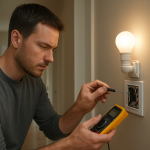
Do these three quick checks first: (1) Confirm the wall control is a plain on/off switch (not a dimmer) and leave it fully on. (2) In the app, check the bulb’s live status (brightness/color) while it flickers to see if the app is changing values. (3) Temporarily move one flickering bulb to a different lamp/outlet on a different circuit; if it stops, the original circuit or control method is the trigger. This applies to Wi-Fi bulbs, Zigbee bulbs on hubs, Matter bulbs, and bridge-based systems.
Why This Happens
Smart lights are more sensitive than traditional bulbs because they contain electronics that need stable power and because they can be controlled by multiple systems at once. When flicker starts immediately after installation, it usually points to either (a) the bulb is not receiving steady, full-voltage power, or (b) the bulb is receiving conflicting control commands that cause rapid brightness changes.
Here are the most common root causes tied to real installations:
1) Dimmer incompatibility (most frequent). If a smart bulb is on a wall dimmer, the dimmer “chops” the power to reduce brightness. Many smart bulbs interpret that chopped waveform as unstable input and flicker, pulse, or drop offline. Even if the dimmer is set to 100%, some dimmers still alter the signal enough to cause flicker.
2) Two controllers on one light (smart bulb + smart switch or smart relay). A smart bulb expects constant power and is dimmed by app commands. A smart switch expects to control power to the load. When both are used, the bulb may reboot repeatedly (power cut) or flicker as the switch’s dimming method conflicts with the bulb’s internal driver.
3) Neutral/load behavior and minimum load edge cases. Some smart switches (and some circuits with very low wattage LED loads) behave unpredictably if the switch expects a certain electrical load. This can show up as flicker, ghosting, or random pulses. Homeowners often notice it only after swapping in efficient LED smart bulbs.
4) Automation loops and “helpful” lighting features. Adaptive lighting, circadian modes, motion rules, presence routines, or voice assistant scenes can repeatedly set brightness/color. If two platforms both manage the same bulb (for example, a hub app plus a voice assistant app), the bulb may bounce between states and appear to flicker.
5) Mesh/network retries that look like flicker. Zigbee and some hub-based ecosystems use mesh routing. If a bulb is in a group and the group commands are being retried (due to weak routing or a chatty network), you can see rapid micro-changes in brightness. With Wi-Fi bulbs, repeated reconnections can trigger brief resets that look like flicker, especially right after install when firmware updates and cloud sync are happening.
Real-world scenario: A homeowner installs smart bulbs in a dining room that previously had a dimmer. The bulbs flicker only when the wall dimmer is anything other than full, and sometimes even at full. In the app, the bulbs look “online” and responsive, but the flicker persists because the dimmer is still shaping the power.
Common user mistake: Pairing the same bulbs to multiple controllers (for example, adding them to a hub and also directly to a voice assistant app), then enabling adaptive lighting in both places. The result is rapid brightness corrections that look like electrical flicker.
Overlooked technical cause: Group synchronization features (especially “smooth” transitions) can amplify small timing differences. If one bulb in a group has weaker signal or older firmware, it may lag and then catch up repeatedly, creating a visible shimmer in the room.
Most Likely Causes in Real Homes
1) Bulb on a dimmer switch. Smart bulbs generally need full, steady power; dimmers often cause flicker.
2) Smart bulb controlled by a smart switch/relay. Two control layers cause reboots, pulsing, or unstable dimming.
4) Loose group/room configuration across apps. Duplicate rooms, duplicated devices, or mixed groups cause repeated state corrections.
5) Mesh/network instability during setup or updates. Retries, reconnections, or firmware updates can produce brief flicker-like behavior.
Step-by-Step Fix
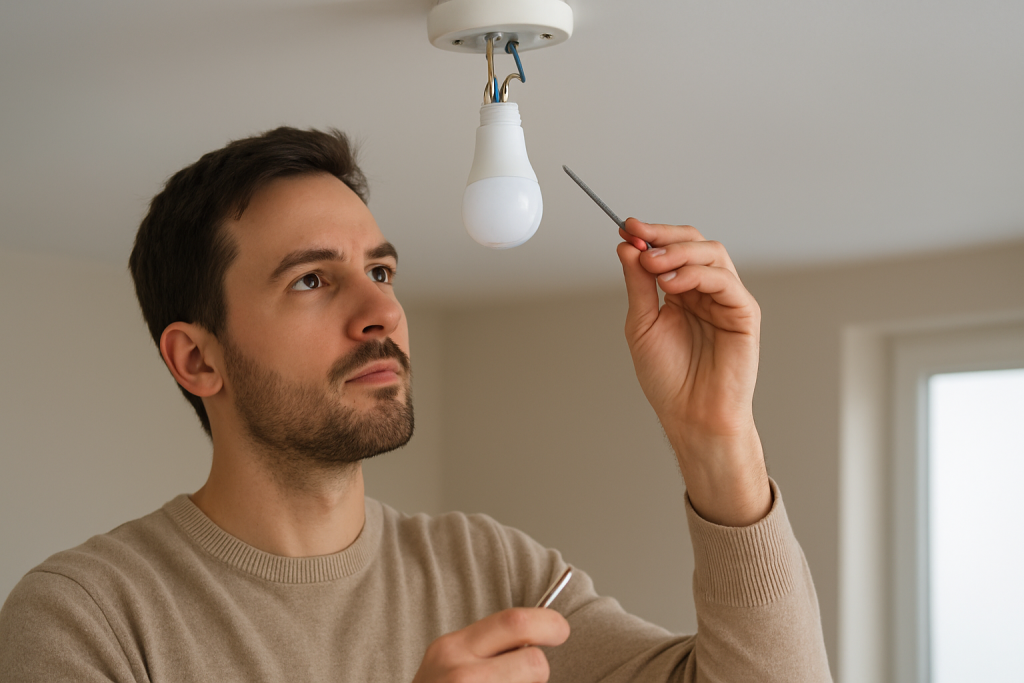
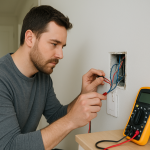
Confirm the wall control type and set it to steady power. What to do: Identify whether the light is controlled by a dimmer (slider/rotary/smart dimmer) or a plain on/off switch. If there is any dimmer in the path, set it to full brightness and leave it there during testing. If possible in your setup, use a plain on/off switch for smart bulbs and keep it on.
What the result means: If flicker stops when the dimmer is at full (or when the bulb is moved to a non-dimmed lamp), the flicker is power-control related, not a “bad bulb.”
What to try next if it fails: Continue to Step 2 to rule out app-driven flicker and control conflicts.
Watch the bulb’s live status in the app while it flickers. What to do: Open the primary app that controls the light (hub app, Wi-Fi bulb app, or Matter controller). Keep the device page open and watch brightness, color temperature, and on/off state while the flicker happens. If there is a device event/history view, check it.
What the result means: If the app shows brightness or color changing in sync with the flicker, the bulb is being commanded to change (automation, scene, adaptive lighting, or another controller). If the app shows the bulb going offline/online, it points to power interruptions or repeated reboots.
What to try next if it fails: If you see state changes, go to Step 4 (automation and group checks). If you see offline/online behavior, go to Step 3 (power cycle and circuit isolation).
Do a clean power cycle sequence and isolate one bulb. What to do: Turn the light off for 30 seconds, then on for 2 minutes. If multiple bulbs are involved, test with only one bulb powered at a time (remove others from the fixture if it’s safe and easy, or test a single lamp). For plug-in lamps, unplug for 30 seconds and replug.
What the result means: If the flicker happens only when multiple bulbs are powered together, it often points to group sync issues, mixed firmware versions, or a controller sending group commands repeatedly. If a single bulb flickers by itself, focus on the circuit/control method and the bulb’s configuration.
What to try next if it fails: Proceed to Step 4 to eliminate automation loops and duplicate controllers.
Check for automation, schedules, and adaptive lighting conflicts. What to do: In every app that can control the lights (hub app, voice assistant app, platform app), temporarily disable: schedules, routines, motion-based rules, adaptive/circadian lighting, and any “power restore behavior” rules. Also check for scenes that include the flickering bulbs. If the bulbs are in a group/room, temporarily remove them from the group and test individually.
What the result means: If flicker stops when automations are disabled, the cause is a rule conflict or a loop (for example, one automation sets 30% brightness while another keeps forcing 100%). If flicker stops when the bulb is removed from a group, the group sync or group membership is the trigger.
What to try next if it fails: Go to Step 5 to check for duplicate device entries and controller overlap.
Look for duplicate control paths (same bulb added in more than one place). What to do: Verify the bulb is not paired twice or controlled through two different integrations at the same time (for example, a bulb added directly to a voice assistant and also through a hub integration). In the voice assistant app, check if the bulb appears twice or if there are duplicate rooms. In the hub app, confirm the bulb is only joined once and belongs to the correct home/location.
What the result means: If you find duplicates, the system may be sending competing commands, causing rapid state changes that look like flicker.
What to try next if it fails: Remove the duplicate entry (from the secondary path) and keep one “source of truth” controller. Then retest. If no duplicates exist, proceed to Step 6.
Run a network isolation test (hotspot test for Wi-Fi bulbs, mesh behavior test for hub bulbs). What to do: For Wi-Fi bulbs, temporarily connect your phone to a mobile hotspot and, if the bulb supports it, move the bulb to a simple 2.4 GHz-only Wi-Fi environment (some routers can create a temporary guest SSID locked to 2.4 GHz). For Zigbee/hub-based bulbs, check if the flicker happens more in one room than another; then power the bulb closer to the hub/bridge temporarily (for example, move a lamp) to see if behavior improves.
What the result means: If Wi-Fi bulbs stop flickering on a simpler network, the original network is likely causing repeated reconnects or delayed commands. If hub bulbs improve closer to the hub, the mesh route is weak or unstable, which can cause repeated group command retries and visible shimmer.
What to try next if it fails: Continue to Step 7 for firmware/software checks and then Step 8 for configuration cleanup.
Check firmware/software updates and then reboot the controller. What to do: In the bulb’s app or hub app, check for firmware updates for bulbs and bridges/hubs. Apply updates, then reboot the hub/bridge (using its app option if available, or by power cycling it). After the hub is back, wait a few minutes for devices to resync.
What the result means: If flicker improves after updates or a hub reboot, the issue was likely a software bug, a partial update state, or a controller that was repeatedly retrying commands.
What to try next if it fails: Proceed to Step 8 to validate room/group configuration and power restore settings.
Verify room/location, group sync, and power-restore behavior settings. What to do: Confirm the bulb is assigned to the correct home and room in each app. If there is a “power restore” setting (what the light does after power loss), set it to a stable option (usually “last state” or a fixed brightness) and avoid rapid transitions. If the system offers group transition smoothing, temporarily disable it and test.
What the result means: If flicker happens after brief power interruptions (switch toggles, outages), power-restore behavior can create a visible pulse as the bulb boots and then receives a scene command. If group smoothing causes shimmer, one device in the group is lagging or retrying.
What to try next if it fails: Move to Advanced Troubleshooting to pinpoint account/cloud issues and deeper configuration conflicts.
Advanced Troubleshooting
This section is only needed if basic fixes fail.
Account or cloud sync issue: If the app shows the correct state but the bulb behaves differently, sign out of the controlling app and sign back in, then confirm the correct home/location is selected. If multiple household members manage the same home, confirm everyone is using the same home instance and permissions are correct. A common symptom is flicker that starts after someone “re-shares” devices or after a migration to a new app version.
Network issue (only when symptoms match): Focus on network troubleshooting only if you saw offline/online events, delays, or frequent “device not responding.” For Wi-Fi bulbs, confirm they are on 2.4 GHz if required, and that band steering isn’t bouncing them between bands. If you use a mesh Wi-Fi system, test by temporarily placing the bulb near the main router node (not a satellite) to see if stability improves. If it does, the bulb may be clinging to a weak node, causing repeated reconnects that look like flicker.
Firmware/software cause: If flicker started right after an update, check release notes in the app if available and look for settings that were reset (adaptive lighting re-enabled, power restore changed, group transition settings changed). If only one bulb in a set flickers after updates, that bulb may not have completed the update; leave it powered on for an extended period and recheck firmware status.
Configuration conflict (groups, scenes, automation, permissions): If flicker only happens when bulbs are in a group, rebuild the group: remove all bulbs, create a new group, add them back, and retest. If flicker only happens when using a voice assistant command, test the same action from the native app; if native app is stable but voice command triggers flicker, the voice assistant routine likely includes multiple steps (set brightness, then set color temperature) that execute rapidly. Simplify the routine to a single scene call if possible.
When to Reset or Replace the Device
Soft restart vs. factory reset: A soft restart is simply power cycling the bulb (off for 30 seconds, back on) or rebooting the hub/bridge. Do this first when flicker is new or intermittent. A factory reset is appropriate when the bulb’s configuration is clearly corrupted (it won’t hold settings, shows duplicated entries, or behaves differently than identical bulbs after you’ve removed automation conflicts).
What you lose after a factory reset: You will typically lose the bulb’s pairing, its name, room assignment, scenes/groups, and any custom behaviors tied to that device entry. You’ll need to add it again and reassign it in all apps that control it.
Safety note: If a bulb or fixture is unusually hot, smells like melting plastic, shows discoloration, or flickers along with audible buzzing from the fixture, stop using it and leave it off. Persistent overheating or visible damage is a replacement situation, not a configuration problem.
How to Prevent This in the Future
Keep smart bulbs on steady power. Use a consistent control method: either smart bulbs with the wall switch left on, or smart switches controlling dumb bulbs. Mixing both is a frequent cause of flicker and “random” behavior.
Place hubs/bridges and routers for stability. Keep the hub/bridge in a central location and avoid enclosing it in cabinets. For mesh networks, aim for strong signal in rooms with grouped lighting so group commands don’t get retried.
Manage automations deliberately. Avoid having two systems manage the same behavior (for example, adaptive lighting in two apps). If you want circadian lighting, enable it in one place only and disable similar features elsewhere.
Plan for power outages and switch toggles. Set power-restore behavior so lights return predictably after outages. If your household uses the wall switch, consider using app settings that reduce abrupt transitions after power returns.
Maintain firmware, but don’t update everything at once. Keep bulbs and hubs updated, but if you have many lights, update in batches and confirm stability before moving on. This reduces the chance of partial updates causing group sync oddities.
FAQ
Why do my smart bulbs flicker only when they’re dimmed?
If flicker happens mainly at low brightness, it usually points to a dimming compatibility issue: either the bulb is on a wall dimmer, or the bulb’s internal dimming range is being pushed by an automation or scene to a level where it becomes unstable. Test by setting brightness to 100% in the app; if it stabilizes, avoid wall dimmers and adjust scenes to keep the minimum brightness a bit higher.
Is flickering a Wi-Fi problem?
Sometimes, but not most of the time right after installation. If the app shows the bulb repeatedly going offline/online or commands are delayed, network instability can cause flicker-like resets. If the bulb stays online and the app shows brightness changing, it’s more likely an automation or duplicate controller issue than Wi-Fi signal strength.
My lights flicker only in a group, not individually. What does that mean?
That usually means group synchronization is the trigger: one bulb is lagging, retrying, or receiving commands through a weaker route. Remove the bulbs from the group and retest. If the flicker stops, rebuild the group and ensure all bulbs are updated and assigned correctly to the same room/home.
Misconception: “Flicker means the bulb is defective.” Is that true?
Not usually. A defective bulb can flicker, but most post-install flicker is caused by dimmers, mixed control methods, or automation conflicts. If the bulb is stable on a different lamp/circuit and when automations are disabled, the bulb itself is likely fine.
Why do the lights flicker after a power outage or when someone toggles the wall switch?
Many smart bulbs briefly boot at a default brightness, then apply their last state or a scene once the controller reconnects. That can look like a flicker or flash. Check the bulb’s power-restore setting and simplify any “on power restore” automations so the bulb doesn’t receive multiple rapid commands right after power returns.
There’s a relief in letting the clutter drop away, like you finally find the lost sock and realize it’s been staring you in the face the whole time. The hard part was never understanding—it was getting the headspace to accept what’s already there.
Now the noise doesn’t get to set the tempo. You can feel the difference in the small moments, when things stop tugging at your attention and just… move along.