Smart Bulbs Randomly Disconnect After a Power Outage: What to Do
Quick Answer
After a power outage, smart bulbs often “randomly” disconnect because the home network and the smart lighting system do not come back online in the same order. Your router, mesh nodes, and smart home hub (or cloud connection) may still be booting, changing channels, or re-establishing sessions while bulbs are trying to reconnect. Many bulbs will give up temporarily, fall back to a different state, or appear offline until they are prompted again.
This is most common with WiFi bulbs (they must rejoin the WiFi and often re-authenticate to a cloud service), Zigbee bulbs connected through a hub (they must rejoin the Zigbee mesh and rebuild routes), and mixed ecosystems (Matter, bridges, voice assistants) where several systems must agree on device status after the outage.
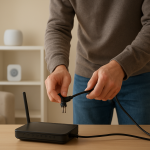
Do these three diagnostic actions immediately: (1) confirm the router/mesh and any smart hub/bridge are fully online before touching the bulbs, (2) check the bulbs’ status in the manufacturer app (not only a voice assistant) to see whether the issue is local connectivity or account sync, and (3) power-cycle in the correct sequence: internet modem/ONT → router/mesh → hub/bridge → bulbs (by toggling the wall switch once, not repeatedly).
Why This Happens
Power outages create a “cold start” for everything in your smart home. The primary problem is reconnection timing and coordination: smart bulbs attempt to reconnect before the network and controller layers are stable. When that happens, bulbs may connect to the wrong access point, miss a hub rejoin window, fail cloud re-authentication, or end up with stale device state in an app or voice assistant.
Here are tightly related causes that commonly stack together after an outage:
1) Router/mesh recovery changes the network the bulb expects. After a reboot, some routers and mesh systems temporarily broadcast different channel widths, steer devices between nodes, or delay the 2.4 GHz radio. If a WiFi bulb tries to reconnect during that window, it may fail and then retry much later, which looks random.
2) Zigbee mesh routing has to rebuild. Zigbee bulbs are often repeaters in the Zigbee network. After a power event, the mesh may come back in pieces. A hub can be online, but routes to individual bulbs may still be rebuilding. During that time, bulbs can show as unreachable even though they have power.
3) Cloud sessions and account tokens can be stale. Many ecosystems (including some WiFi bulb platforms and Matter controllers that rely on cloud-linked accounts) need to re-establish secure sessions. If your internet connection returns slowly, the app may show devices offline even though local control would work, or vice versa.
4) Groups/scenes/automations can fight the “recovery state.” After an outage, bulbs may default to a power-on behavior (last state, on, off, or a specific brightness). At the same time, schedules, sunrise/sunset automations, or “power restore” routines can trigger. If multiple controllers (manufacturer app, voice assistant, hub) issue commands, bulbs can appear to drop because they stop responding consistently.
5) Overlooked technical cause: IP address and mDNS discovery churn. WiFi bulbs that use local discovery can become “lost” if the router assigns a new IP address or if multicast discovery (mDNS/SSDP) is delayed after reboot. The bulb may be connected, but the app cannot find it reliably until discovery stabilizes.
Real-world scenario: a neighborhood outage ends and your modem comes back first, then the router, then mesh nodes one by one. Meanwhile, several bulbs try to reconnect to a weak node at the far end of the house. A few succeed, others fail and retry later. The hub or voice assistant then shows a mixed state: some lights respond, some are “offline,” and a few flip on unexpectedly due to power-on behavior plus a schedule.
Common user mistake: rapidly flipping the wall switch multiple times to “force” a reconnect. Many smart bulbs interpret repeated power toggles as a factory reset or pairing mode trigger, which can make the situation worse by removing the bulb from its previous network or hub.
Most Likely Causes in Real Homes
1) Network not fully recovered when bulbs reconnect. The router/mesh is still stabilizing, so bulbs fail initial reconnect and appear to drop later.
2) 2.4 GHz WiFi steering or mesh roaming confusion. Bulbs latch onto a distant node or get bounced, causing intermittent control.
3) Zigbee mesh routes rebuilding (especially if bulbs act as repeaters). Some bulbs become unreachable until the mesh settles.
4) App/account state out of sync with the local network. The bulb is connected, but the app or voice assistant shows it offline due to cloud or discovery delays.
5) Automation conflicts right after power restore. Competing schedules/scenes make bulbs look unreliable or “random.”
Step-by-Step Fix
Confirm the network is truly back (don’t start with the bulbs). What to do: verify your internet connection is stable on a phone or laptop, then check that the router/mesh shows normal status (no “setup,” “offline node,” or “optimizing” messages). If you have a smart lighting hub/bridge, confirm it shows connected in its app (or its status indicator shows normal operation).
What the result means: If the internet or mesh is still unstable, bulb disconnects are usually a symptom, not the root problem.
If it fails, try next: power-cycle in order: modem/ONT (wait until fully online) → router (wait 2–5 minutes) → mesh nodes (if separate) → hub/bridge. Only after that, move to the next step.
Check device status in the manufacturer app first (not only voice control). What to do: open the bulb’s native app (or the hub/bridge app for Zigbee systems) and look at each bulb’s status. Note whether the app shows “offline,” “unreachable,” “updating,” or “needs attention.” If you use Matter, also check the controller app that owns the device (the “home” where it was paired).
What the result means: If bulbs work in the manufacturer/hub app but not in a voice assistant, the issue is usually account sync or a controller mismatch, not the bulb itself.
If it fails, try next: if bulbs are offline in the manufacturer/hub app too, continue to step 3 to stabilize reconnection. If they are online there but missing elsewhere, jump to step 6 (account/controller sync checks).
Do a clean power cycle sequence for lighting control (without rapid toggling). What to do: turn the affected lights off at the wall switch for 10 seconds, then turn them on once and leave them on. Do not toggle repeatedly. For plug-in lamps, unplug for 10 seconds and plug back in.
What the result means: If a bulb comes back and stays responsive for several minutes, it likely just missed the initial reconnect window.
If it fails, try next: if the bulb enters pairing mode or flashes, stop toggling power and proceed to step 7 (reset decision). If it stays offline, go to step 4 (WiFi band/mesh test) or step 5 (Zigbee mesh test) depending on bulb type.
WiFi bulbs: verify 2.4 GHz connection behavior and mesh roaming. What to do: confirm your phone is on the same home WiFi (not cellular). If your router uses a single combined network name for 2.4/5 GHz, temporarily move closer to the router and try controlling the bulb. If you have a mesh, test control from two locations: near the main router and near the mesh node closest to the bulb.
What the result means: If control works near the router but fails near a distant node, the bulb may be attaching to a weak node or being steered poorly after reboot.
If it fails, try next: power off and on the mesh node closest to the problem area (one node at a time), then retest. If the bulb is still unstable, proceed to step 8 (hotspot isolation test) to confirm whether the bulb can stay connected on a simpler network.
Zigbee bulbs (hub/bridge): test mesh recovery and repeater dependency. What to do: in the hub/bridge app, check whether only certain rooms are affected (often the farthest ones). Then power off and on one affected bulb and one nearby always-powered Zigbee device (such as a plug or in-wall device, if you have one) to encourage route rebuilding. Leave all Zigbee bulbs powered on for at least 15 minutes so the mesh can settle.
What the result means: If some bulbs return gradually over 10–20 minutes, the mesh was rebuilding routes after the outage.
If it fails, try next: reboot the hub/bridge once (after the router is stable), then wait again. If only a few bulbs never return, proceed to step 7 (reset decision) for those specific bulbs.
Check room/home location, controller ownership, and account sync (especially with Matter and multi-app setups). What to do: confirm you are controlling the bulbs from the same “home” and “room” they were originally set up in. If you use both a manufacturer app and a platform app (Home app, Google Home, Alexa, SmartThings), verify the bulbs still appear in the correct home and are not duplicated. Then sign out and sign back into the manufacturer app once, and refresh device lists in the platform app.
What the result means: If bulbs show in the manufacturer app but not in the platform app, the outage likely caused a controller sync issue rather than a connectivity failure.
If it fails, try next: remove and re-add the integration between the manufacturer service and the platform (link/unlink account) only if devices are consistently missing. If devices are present but unresponsive, continue to step 9 (group/schedule conflict checks).
Run a careful “single device” test to identify whether the problem is one bulb or the system. What to do: pick one problem bulb and control it individually (not through a group). Turn it on/off and change brightness/color several times over 2–3 minutes. Then do the same for a bulb that is working.
What the result means: If individual control works but group control fails, the issue is likely group sync or scene state, not connectivity. If one bulb fails individually while others work, that bulb may be stuck or partially reset.
If it fails, try next: if group-related, rebuild the group/room in the app (remove bulb, save, add back). If it’s one bulb, proceed to step 10 (firmware check) and then step 7 (reset decision) if needed.
Hotspot isolation test (quick way to separate bulb issues from home network issues). What to do: if you have a WiFi bulb and a phone that can create a hotspot, temporarily create a hotspot using the same WiFi name and password as your home network (only if you are comfortable doing so). Turn off your home router WiFi briefly so the bulb has a chance to join the hotspot, then see if the bulb stays connected and controllable.
What the result means: If the bulb becomes stable on the hotspot, the bulb is probably fine and your home router/mesh behavior after reboot is the main trigger (band steering, roaming, or discovery issues).
If it fails, try next: if it is still unstable even on the hotspot, the bulb may be corrupted, overheating, or stuck in a partial reset state. Move to step 7 (reset decision) and the safety notes later in the article.
Verify schedules, scenes, and power-on behavior so they aren’t fighting recovery. What to do: in the manufacturer app and any platform app, temporarily disable lighting schedules and automations for 24 hours. Check the bulb’s “power restore” or “power-on state” setting (if available) and set it to a predictable choice (often “last state” is safest for outages).
What the result means: If disconnects stop after disabling automations, the bulbs were not actually dropping; they were being commanded into states that looked like failure (turning off, changing color, or becoming “unavailable” during rapid command bursts).
If it fails, try next: re-enable automations one at a time, testing after each. If problems persist with automations off, proceed to step 10 (firmware/software updates).
Update firmware and apps (but only after stability checks). What to do: check for firmware updates for the bulbs and for any hub/bridge, plus updates for the controlling apps. Apply updates when the network is stable and avoid interrupting power during updates.
What the result means: If updates resolve the issue, the outage likely exposed a known reconnection bug that the update fixes.
If it fails, try next: if only specific bulbs keep dropping after updates, move to step 7 (reset decision) for those bulbs. If many devices across the home drop, revisit steps 1 and 4 because the network recovery behavior is still the most likely driver.
Advanced Troubleshooting
This section is only needed if basic fixes fail.
Account or cloud issue: If bulbs work locally (for example, they respond in the manufacturer app when you are on home WiFi) but appear offline when you are away from home, the cloud link may not have recovered cleanly after the outage. In that case, confirm the router’s time/date is correct (incorrect time can break secure sessions), then sign out/in to the manufacturer app and re-link the service in your platform app. If the service shows an outage status, wait and avoid repeated re-pairing, which can create duplicates.
Network issue (relevant when many WiFi devices drop together): If multiple WiFi smart devices (not just bulbs) disconnect after every outage, the router may be struggling during recovery. Common culprits are aggressive band steering, a mesh node that boots slowly and attracts devices with weak signal, or a crowded 2.4 GHz environment that becomes worse when everything reconnects at once. A practical test is to temporarily power down all mesh nodes except the main router and see if bulbs remain stable; if they do, the mesh recovery behavior is the trigger.
Firmware/software cause: Some bulbs and hubs handle power-loss recovery poorly until updated. If you notice the same bulbs always fail after outages, check release notes in the app (if available) and update the hub/bridge first, then bulbs. Avoid updating during periods when outages are likely.
Configuration conflict (groups, scenes, automations, permissions): Mixed ecosystems can issue competing commands. If a bulb is controlled by both a manufacturer app and a platform app with automations, you can end up with “tug-of-war” behavior right after power restore. If disabling automations fixes it, consolidate critical schedules into one place and remove duplicates. Also check household permissions: if multiple family accounts manage the same home, an outage can expose mismatched permissions or duplicated homes, making devices appear to “disappear” for one user.
When to Reset or Replace the Device
Soft restart vs. factory reset: A soft restart is simply turning the bulb off for 10 seconds and back on once, then leaving it powered. A factory reset is the bulb’s full wipe (usually triggered by a specific on/off pattern or an in-app option). Use factory reset only after you confirm the network and hub are stable, because resetting too early can turn a temporary reconnection problem into a re-pairing project.
What you lose after a reset: A factory reset typically removes the bulb from its WiFi network or Zigbee/Matter pairing, clears its name and room assignment, and breaks automations, groups, and scenes that reference it. You will need to add it again and then rebuild any routines that used it.
When replacement is more likely than troubleshooting: If one bulb repeatedly drops while others of the same type stay stable in the same room, and it still misbehaves after firmware updates and a factory reset, the bulb may have failing hardware. Also stop using the bulb and replace it if you notice overheating, a burned smell, visible discoloration, cracking, or flickering that is new after the outage. Do not continue troubleshooting a bulb that seems physically damaged.
How to Prevent This in the Future
Let the network recover first: After an outage, wait a few minutes before turning lights on/off rapidly or launching multiple control apps. Give the modem, router/mesh, and hub time to stabilize so bulbs reconnect once, correctly.
Keep device placement realistic: Bulbs at the edge of WiFi coverage are the first to fail during recovery. If a bulb is in a far fixture or behind dense materials, improving WiFi coverage in that area (or ensuring the nearest mesh node is reliable) reduces post-outage drops.
Manage automations to avoid conflicts: Keep critical lighting schedules in one controller when possible, and avoid duplicate routines across multiple apps. After an outage, conflicting “catch-up” routines can cause rapid command bursts that look like disconnects.
Review power outage recovery settings: If your bulbs offer a power-on behavior setting, choose a consistent option for your household. “Last state” is often the least surprising after outages, but the best choice depends on whether you want lights to come on automatically for safety.
Maintain firmware when things are stable: Update hubs/bridges and bulbs periodically, not during a period of frequent outages. Many reconnection issues are improved through firmware updates, but updates are safest when your network and power are stable.
FAQ
Why do only some bulbs disconnect while others are fine?
If only certain bulbs drop, it usually points to location and reconnection timing. The bulbs farthest from the router/mesh node or deepest in the Zigbee mesh are more likely to miss the first reconnect window after an outage. It can also indicate one bulb is partially reset or has weaker hardware.
My bulbs show “offline” in a voice assistant, but they work in the manufacturer app. Are they actually disconnected?
Not necessarily. If the manufacturer app controls them reliably, the bulbs are likely connected locally. The problem is usually a sync or discovery mismatch between the platform and the manufacturer service (or the wrong home/controller in a Matter setup). Re-linking the account or refreshing the home/controller list is often more effective than resetting bulbs.
Is it true that smart bulbs “don’t like” power outages and will always break?
No. The common failure is not permanent damage; it is the recovery sequence and network/hub coordination after power returns. Once the router/mesh and hub are stable, most bulbs reconnect normally. Repeated rapid power toggling during recovery is more likely to create problems than the outage itself.
Should I factory reset all bulbs after an outage to make them reconnect faster?
Usually not. Factory resetting removes pairings and breaks groups, scenes, and automations, creating more work and more chances for misconfiguration. Reset only the specific bulbs that remain unstable after the network is stable, app status is verified, and firmware is up to date.
Why do lights turn on by themselves after the outage, and does that mean they’re disconnecting?
That behavior is typically the bulb’s power-on setting or an automation firing when the system comes back online. It is not the same as a disconnect. Check the bulb’s power restore setting and temporarily disable schedules to confirm whether the “random” behavior is actually automation timing rather than connectivity.
Relief doesn’t arrive with fireworks—it shows up in the ordinary minutes you get back. The cluttered feeling lifts, and suddenly the days feel more spacious.
What’s left isn’t a grand transformation, just a steadier sense of control. Nothing dramatic, but it lands where it matters, like shutting a stubborn drawer that finally closes.