Smart Plug Connected but Missing in the App? How to Fix It
Quick Answer
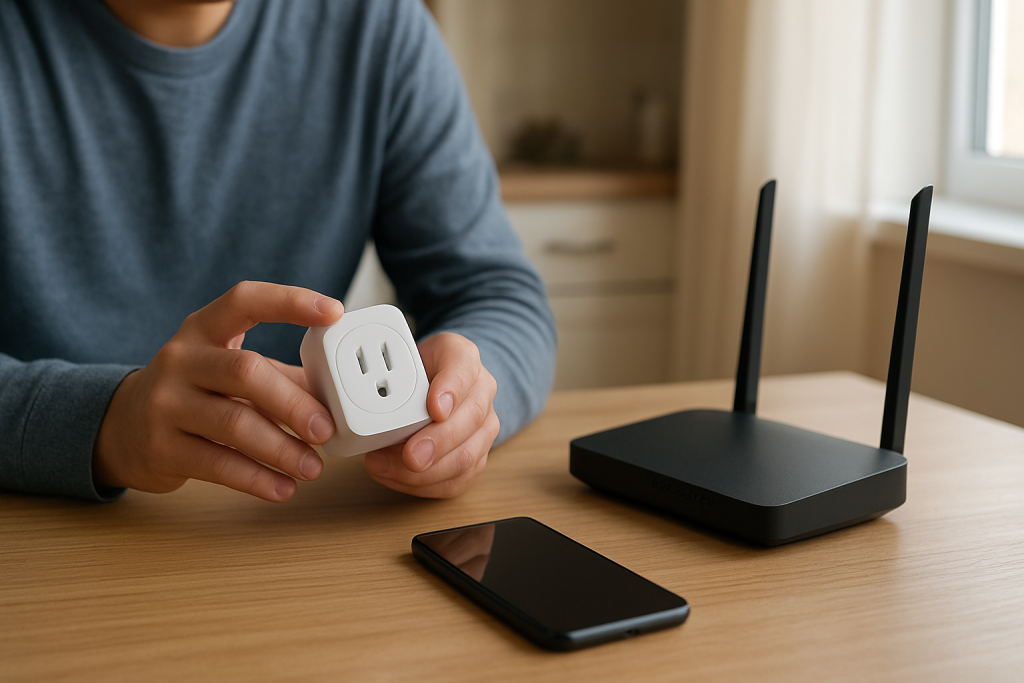
If your smart plug or smart switch is connected to your network (lights on, router shows it online, or it still turns on/off physically) but it’s missing in the app, the usual problem is not the device itself—it’s app sync or device discovery failing. In plain terms: the device is “on the network,” but the app (or its cloud account) isn’t successfully matching that device to your current home, account session, or controller.
This commonly happens after router changes, mesh WiFi roaming, app updates, power outages, or when you have the same device linked to more than one ecosystem (for example, the manufacturer app plus Alexa/Google Home/Apple Home/SmartThings). The device can stay connected while the app’s device list becomes out of date, filtered, or tied to the wrong “Home/Location.”
Do these three checks first: (1) Pull down to refresh the device list and confirm you’re in the correct Home/Location within the app, (2) force-close and reopen the app, then sign out and back in to refresh the cloud session, (3) check whether the plug/switch appears in a different controller (manufacturer app vs Alexa/Google/Apple/SmartThings) to confirm it’s a discovery/sync issue rather than a power or network issue.
Why This Happens
When a smart plug/switch is “connected,” that only confirms it has a network path (WiFi) or hub path (Zigbee/Matter via a controller). The app still has to discover it locally, sync it from the cloud account, and place it into the correct home/room. If any of those steps breaks, the device can remain connected yet appear missing, duplicated, or stuck “offline” in the app.
Common causes tightly tied to app sync/discovery failure include:
1) Cloud/account session mismatch: the app is signed into the wrong account, or the login token expired after an update, so the device exists in the cloud but isn’t being pulled into your current session.
2) Wrong Home/Location/Structure selected: many platforms support multiple homes; a device may be correctly linked but filed under a different home, room, or “household.”
3) Local discovery blocked: some apps use local network discovery to “find” devices even if cloud is working. Guest WiFi, AP/client isolation, VPN, or private-address settings can block discovery without breaking basic connectivity.
4) Matter or hub/controller confusion: Matter devices and Zigbee devices rely on a controller (Apple Home hub, Google Home hub, SmartThings hub, or a bridge). If the controller changed, rebooted, or lost its role, the device can be on the network but missing from the controller’s inventory.
5) Migration after updates: a firmware or app update can require re-authentication or re-granting permissions (local network, Bluetooth, or nearby devices). If those permissions are denied, discovery fails.
Real-world scenario: after a power outage, your router comes back quickly but your mesh nodes or smart home hub takes longer. The plug reconnects to WiFi, but the controller that “owns” it is still booting or has a stale device cache, so the app shows nothing or shows an old entry.
Common user mistake: setting up the plug in the manufacturer app under one email, then trying to control it in Alexa/Google/Apple with a different account or different “Home,” assuming the systems automatically merge.
Overlooked technical cause: your phone is on 5 GHz (or cellular), the plug is on 2.4 GHz, and the router is isolating bands or using a mesh feature that prevents peer discovery—so the plug is connected, but the app can’t discover it locally to complete sync.
Most Likely Causes in Real Homes
1) You’re in the wrong Home/Location/room view in the app. Devices are often “missing” because the app is showing a different structure, especially in shared homes.
2) App session or cloud sync is stale. After an app update or long uptime, the device list can stop refreshing until you re-authenticate.
3) Local network discovery is blocked (guest WiFi, VPN, AP isolation, or missing local-network permission). Connectivity remains, but discovery and pairing views break.
4) Mesh WiFi roaming or band steering causes the plug to connect, but the phone and device can’t reliably see each other for discovery and status updates.
5) Ecosystem/controller mismatch (Matter controller changed, hub offline, or device linked to a different platform). The device exists, but not in the app you’re looking at.
Step-by-Step Fix
Confirm you’re viewing the correct Home/Location and the full device list (not a room-only filter).
If the device appears after switching Home/Location or clearing filters, it means the plug/switch wasn’t missing—your app view was. If it still doesn’t appear, move to the next step and force a cloud refresh.
Force a clean app sync: pull-to-refresh the device list, then force-close the app, reopen it, and sign out/sign in.
If the device reappears after signing back in, the issue was a stale account session or stuck cloud sync. If it doesn’t reappear, the problem is likely discovery/permissions, hub/controller state, or the device being linked under a different account.
Check whether the device shows up in a different place: the manufacturer app vs Alexa vs Google Home vs Apple Home vs SmartThings (whichever you use).
If it appears in one app but not another, that strongly indicates a platform sync problem (skill/integration link, controller mismatch, or the wrong home selected in that platform). If it’s missing everywhere, treat it as a discovery or connectivity-to-controller issue and continue.
Verify phone-to-device local access: put your phone on the same WiFi network as the plug/switch (not cellular), disable VPN temporarily, and ensure the app has local network permissions.
If the device appears only after disabling VPN or granting local network permission, the problem was local discovery being blocked. If nothing changes, the device may be connected but not reachable in the way your app expects (guest network isolation or band isolation), so continue with a controlled network test.
Run a quick isolation test using a phone hotspot (WiFi smart plugs/switches only): temporarily create a 2.4 GHz hotspot (if your phone supports it), then try the device’s “add device” or “recover” flow.
If discovery works on the hotspot, your home network is preventing discovery/sync (common culprits: guest WiFi, AP isolation, mesh “client isolation,” or router security features). If it still fails on a hotspot, the issue is more likely app/account/controller or the device firmware state rather than your router.
For mesh WiFi homes: move the plug/switch closer to the main router (not a distant mesh node) for 10–15 minutes, then refresh the app.
If it reappears or becomes stable near the main router, roaming between nodes or weak signal is causing intermittent reachability that breaks app sync and status reporting. If it stays missing even near the router, focus on controller/account issues next.
Re-sync the ecosystem you’re using: in Alexa/Google Home/SmartThings, trigger a device discovery/scan; in Apple Home, confirm your home hub is online; for Matter, verify you’re using the same controller/home as when it was added.
If discovery finds it, the issue was stale inventory in the ecosystem. If discovery does not find it but the manufacturer app still controls it, the ecosystem link is the problem—relink the integration/skill (next step).
Relink the integration (only if the device works in the manufacturer app but is missing in Alexa/Google/SmartThings): disable and re-enable the integration/skill, or remove and re-add the account link.
If the device appears after relinking, the link token or cloud permission had expired and the ecosystem stopped importing devices. If it still doesn’t appear, check for duplicates, room assignment conflicts, or the device being assigned to a different home within that ecosystem.
Check for automation conflicts that can make a device look “missing” or “wrong”: review schedules, routines, scenes, and power recovery settings in every app that can control the device.
If you find duplicate routines (for example, one in the manufacturer app and one in Alexa/Google/Apple), the plug may toggle unexpectedly or show status mismatches, which can look like sync failure. If removing duplicates doesn’t restore visibility, proceed to firmware and controller checks.
Check for app/firmware updates and complete any pending updates, then power-cycle in the right order: unplug the smart plug (or turn the smart switch off via breaker only if you already use that safely for normal resets), reboot router/mesh, wait for internet to fully return, then power the device back on and refresh the app.
If the device returns after a controlled reboot order, it means the device was reconnecting before the network/controller was ready, leaving it in a partially registered state. If it still won’t reappear, you’re down to reset/re-add or a persistent account/controller issue.
Advanced Troubleshooting
This section is only needed if basic fixes fail.
Account/cloud issue: confirm you’re signed into the same account used during setup, especially in shared households. If family members added the device, it may be owned by their account and only shared to you; missing sharing permissions can make it disappear after an app reinstall. Re-send the share/invite from the owner account and accept it while on the same home/structure.
Network issue (discovery-specific): check whether your phone is on a guest network while the plug/switch is on the main LAN. Guest networks often block device-to-device discovery even though internet still works. Also look for router settings like “AP isolation,” “Wireless isolation,” or “Block LAN access” that prevent local discovery and status updates.
Firmware/software cause: if a firmware update started but didn’t complete, the device can remain connected yet fail to fully register. In the manufacturer app, look for “firmware update available” or “update failed” messages. If the app can’t manage firmware at all, it’s often because the device is no longer properly associated with the account that owns it.
Configuration conflict: groups, scenes, and room assignments can hide devices. Some ecosystems won’t show devices that are unassigned, duplicated, or placed in a different home. Search the app for the device name (including old names) and check for duplicates; delete only duplicates you can confirm are stale.
Ecosystem sync issue (Alexa/Google Home/Apple Home/Matter): Matter devices can only be controlled reliably from the controller/home they were commissioned with unless multi-admin sharing was completed. If you changed phones, moved from one platform to another, or replaced a hub, you may be looking in the wrong controller. Ensure the correct home hub/controller is online and on the same account, then re-run the platform’s sync/discovery.
When to Reset or Replace the Device
A soft restart is simply power-cycling the smart plug (unplug for 10 seconds, plug back in) or toggling the smart switch off/on using normal safe controls. This clears temporary states without removing it from your app account.
A factory reset removes the device from its pairing and forces you to set it up again. After a reset, you may lose room assignment, device name, schedules/timers, automations, and integrations with Alexa/Google/Apple/SmartThings. For smart plugs with energy monitoring, you may also lose historical energy data stored on the device or within the app’s local cache.
Reset is reasonable when: the device is online at the router but cannot be recovered in any app; it never completes discovery; or it repeatedly disappears after successful re-adds (suggesting corrupt pairing data or a persistent controller mismatch).
Replacement becomes reasonable when: the device repeatedly drops offline across multiple networks, consistently fails firmware updates, or the relay behavior is unstable (random clicking, random on/off not explained by automations). Stop using the device immediately and replace it if you notice overheating, a burning smell, discoloration, melting, or visible damage.
How to Prevent This in the Future
Keep the “source of truth” clear: decide which app is primary for setup and firmware (often the manufacturer app) and which ecosystem apps are for voice control. Avoid creating the same schedule in multiple places; duplicate automations are a common cause of status mismatch and confusing behavior.
Maintain stable discovery conditions: keep plugs/switches on the main home network rather than guest WiFi, and avoid VPN on your phone when troubleshooting. If your router supports it, keep 2.4 GHz IoT devices on a consistent network name and avoid frequent WiFi name/password changes that force re-registration.
Mesh WiFi habits help: place mesh nodes so the device isn’t bouncing between distant nodes, and prefer stable signal over “maximum coverage.” If a device is on the edge of coverage, it may stay connected but fail enough packets to break app status updates and discovery.
Use consistent naming and room organization across apps: matching room names and device names reduces “missing device” cases where it’s simply filed somewhere unexpected. After adding devices, confirm they appear in the correct home and room in every ecosystem you use.
After outages or router restarts, use a simple recovery order: let the modem/router/mesh fully come online first, then hubs/controllers, then plugs/switches. This reduces cases where devices reconnect before the controller and fail to sync back into the app list.
Keep apps and firmware current, but expect re-auth prompts after updates. If devices vanish after an update, check permissions (local network/Bluetooth/nearby devices) and re-login before assuming the device failed.
For shared homes, keep sharing tidy: know which account owns each device, remove old household members who still have access, and re-send invites when someone changes phones. Ownership and permissions problems often look like discovery failures.
FAQ
My router shows the smart plug is connected. Doesn’t that prove it should appear in the app?
No. Router connectivity only proves the plug has network access. The app still needs a valid account session and/or local discovery path to match that device to your home. It’s common for the device to be “online” yet missing due to wrong home selection, expired login, blocked local discovery, or an ecosystem/controller mismatch.
Why does the plug work in the manufacturer app but not in Alexa/Google Home/SmartThings?
If it works in the manufacturer app, the device and account are usually fine. The issue is typically the integration link (expired token, permissions changed, or the ecosystem syncing the wrong home). Relinking the integration and re-running device discovery usually fixes it.
Do I need to factory reset every time a device disappears?
No. That’s a common misconception. Most “missing device” cases are app sync, permissions, or home/controller selection problems and can be fixed by refreshing the app session, confirming the correct home, and re-syncing the ecosystem. Reset should be a last step because it removes assignments, schedules, and integrations.
After a power outage, the plug is connected but shows offline or missing. What should I do first?
First refresh the app and confirm your home/location, then reboot the controller side (mesh node/hub/home hub) rather than immediately resetting the plug. Outages often leave controllers and apps with stale device lists even when the plug reconnects quickly.
There’s a strange comfort in realizing the noise isn’t as loud as it felt yesterday. The path forward becomes less dramatic and more like an ordinary day that finally makes sense.
Not everything needs to be reinvented—just treated like it belongs in your real life. When the clunky part fades, you get back the time you didn’t know you were spending.