Smart Bulb Connection Fails at the Final Step: How to Fix It
Quick Answer
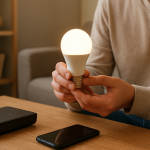
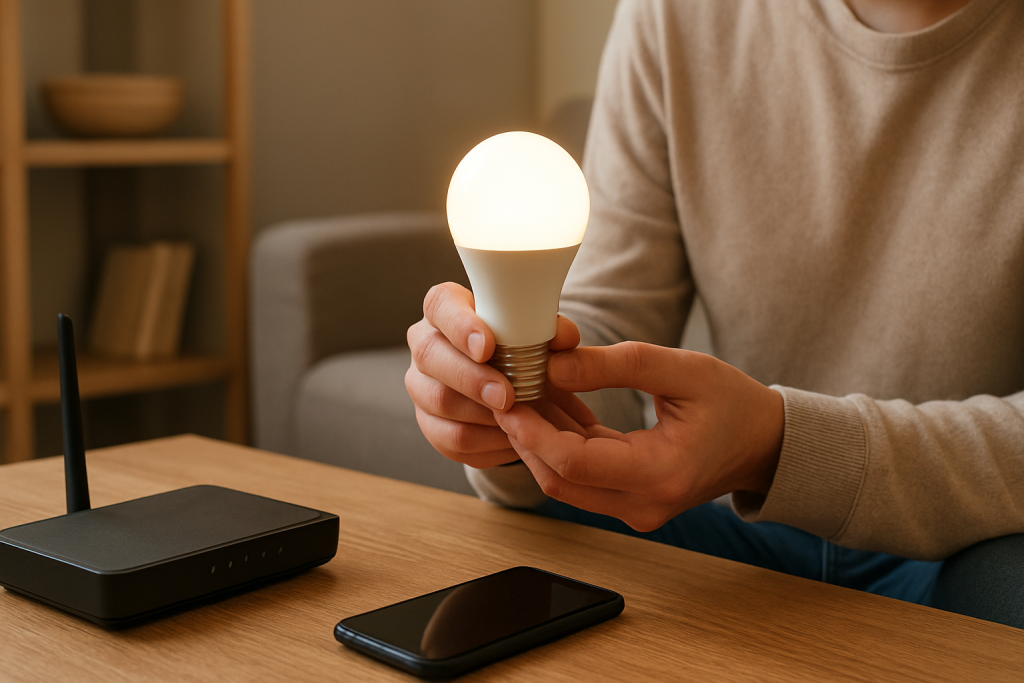
When a smart bulb “almost” connects but fails at the final step, the bulb usually joined your network (or hub) but the app can’t finish the handoff that confirms ownership and saves the device to your account, home, room, or hub. In real homes, this is most often caused by a network isolation rule (guest WiFi, client isolation, VPN, private address settings), a band mismatch during setup (2.4 GHz vs 5 GHz), or a cloud/account sync problem that prevents the final registration.
This final step is where WiFi bulbs (TP-Link, Wiz, Tuya-based bulbs, etc.), hub-based Zigbee systems (Philips Hue and other Zigbee bridges), and Matter devices all do some form of “pair, verify, and register.” If anything blocks local discovery or the cloud confirmation, the app reports a failure even though the bulb is powered and blinking like it’s ready.
Do these three checks immediately: (1) confirm your phone is on the same home network as the bulb/hub (not guest WiFi, not cellular, not VPN), (2) force your phone onto 2.4 GHz WiFi for setup (or stand next to the hub for Zigbee/Matter), and (3) close the app completely, reopen it, and check whether the bulb actually appears in the device list as “offline” or “needs update.” That result tells you whether you have a registration problem or a true connection problem.
Why This Happens
The “final step” is rarely about raw signal strength. It’s usually about the last handshake: the app must discover the device locally, confirm it can control it, then bind it into the correct ecosystem (your account, home, room, hub, or Matter fabric). If that binding step fails, you’ll see messages like “couldn’t add device,” “registration failed,” “unable to save settings,” or “device added but not responding.”
Here are the most common technical causes that specifically break the final handshake:
First, local network isolation blocks discovery. Many routers separate devices on guest networks, enable “AP/client isolation,” or use “privacy” features that prevent phone-to-device communication. The bulb may connect to WiFi, but your phone can’t reach it to complete setup, so the app times out at the end.
Second, band steering and mixed WiFi bands confuse setup. Many WiFi bulbs only support 2.4 GHz. If your phone stays on 5 GHz while the bulb joins 2.4 GHz, some routers treat them like separate networks during onboarding. The app can’t find the bulb at the final step even though both are “on WiFi.”
Third, cloud/account confirmation fails. Some ecosystems require a quick cloud call to attach the bulb to your account and enable remote control. If your internet is unstable, DNS is filtering, a VPN is active, or the service is temporarily having trouble, the app can control the bulb briefly but can’t finalize the registration.
Fourth, the device is added to the “wrong place” inside the app. This is common when you have multiple homes, locations, hubs, or bridges. The final step completes, but the app shows failure because it can’t assign the bulb to the current home/room, or it assigns it somewhere else and you think it failed.
Fifth, an overlooked technical cause: permissions and local network access on the phone. On iOS and some Android versions, the app needs permission for Bluetooth, local network access, and sometimes precise location (for WiFi scanning). Without it, the device can pair but the app can’t discover it reliably at the final step.
Real-world scenario: you try adding a bulb in a bedroom where your mesh system has a node. Your phone is on 5 GHz connected to the mesh node, the bulb joins 2.4 GHz on the main router, and your router’s guest/IoT isolation is enabled. The bulb connects, but the app can’t see it to finish the last “save” step.
Common user mistake: using the guest WiFi (or an “IoT” SSID with isolation) because it has a stronger signal, then wondering why the app can’t complete setup.
Overlooked cause: the bulb is already bound to a different account or stored in the cloud from a previous setup attempt. The app fails at the last step because the server rejects a duplicate ownership claim.
Most Likely Causes in Real Homes
1) Phone and bulb/hub are not on the same local network (guest WiFi, VPN, cellular, or client isolation).
2) 2.4 GHz vs 5 GHz mismatch during onboarding (band steering hides the problem until the final step).
3) Cloud/account sync fails (service hiccup, DNS filtering, VPN, or unstable internet).
4) Mesh behavior during setup (phone and device attach to different nodes/VLANs; multicast discovery doesn’t pass).
5) App permissions or “local network” access blocked, preventing final discovery and save.
Step-by-Step Fix
Confirm the bulb is truly in pairing mode, then do a clean power cycle sequence. Turn the light off for 10 seconds, then on. If the bulb has a known pairing pattern (blinking/pulsing), trigger it again using the manufacturer’s on/off sequence if applicable.
What the result means: If the bulb never enters pairing mode, the app will often fail at the end because it’s actually talking to a previous session or a different device. If it does enter pairing mode, you can trust the bulb is ready for onboarding.
If it fails: Move the bulb to a lamp closer to your router/hub for setup (you can move it back later). If it still won’t enter pairing mode, skip ahead to the reset guidance in the “When to Reset” section.
Make sure your phone is on the correct network path (no guest WiFi, no VPN, no cellular fallback). On your phone, disable VPN, disable “Private Relay” or similar privacy relays if present, and temporarily turn off cellular data. Connect to your main home WiFi (not a guest/IoT network) and stay connected.
What the result means: If setup succeeds after doing this, the final-step failure was caused by local network isolation or a blocked discovery path, not the bulb itself.
If it fails: Continue to the next step and force a 2.4 GHz setup path; many final-step failures are band-related.
Force a 2.4 GHz setup attempt (or stand next to the hub for Zigbee/Matter). If your router has separate WiFi names for 2.4 GHz and 5 GHz, connect your phone to the 2.4 GHz name. If you have one combined name, temporarily disable 5 GHz in the router settings if you can do so safely, or walk far enough away that the phone drops to 2.4 GHz. For Zigbee bulbs via a hub, keep the bulb and hub close; for Matter over Thread/WiFi, keep the phone near the border router or WiFi access point.
What the result means: If the final step completes on 2.4 GHz (or close to the hub), the issue was the onboarding path, not the bulb’s long-term reliability.
If it fails: Proceed to an isolation test using a phone hotspot to separate “bulb problem” from “home network problem.”
Run a hotspot isolation test (WiFi bulbs only). Turn on a mobile hotspot using a simple name and password (no special characters). Connect your phone to that hotspot and try adding the bulb to the hotspot network. Keep the bulb close to the phone.
What the result means: If the bulb completes setup on the hotspot, your home network is blocking the final step (isolation, multicast filtering, DNS filtering, or band steering). If it still fails, the issue is more likely the bulb/app/account side.
If it fails: Continue with app/account checks and permission checks.
Check the app’s device list and status before retrying setup. After a “failed” final step, many apps still create a device entry. Look for the bulb in the device list as “offline,” “unresponsive,” or in a default room. Also check if it landed in a different “Home” or “Location” inside the app.
What the result means: If the bulb appears but is offline, the bulb likely joined the network but local control is blocked (isolation) or it’s on the wrong WiFi. If it appears in the wrong home/room, the setup actually completed but the app view is misleading.
If it fails: Remove that partial device entry (if possible) and try again. If you can’t remove it, log out/in or use the app’s “remove device” flow to clear the cloud record.
Verify phone permissions that affect the final handshake. In your phone settings, ensure the smart lighting app has Bluetooth permission (often required even for WiFi bulbs during onboarding), Local Network access (iOS), and Location permission if the app requests it for WiFi scanning. Then force-close the app and reopen it.
What the result means: If setup works immediately after enabling these, the final step was failing because the app couldn’t discover or confirm the device on the LAN.
If it fails: Continue to router/mesh behavior checks.
Test mesh behavior: set up near the main router, not a satellite node. If you use a mesh system, temporarily power off satellite nodes (or move near the main router) and attempt setup again. The goal is to keep the phone and bulb on the same access point and the same network segment during onboarding.
What the result means: If setup succeeds only when near the main router (or with satellites off), the mesh is interfering with discovery traffic used at the final step.
If it fails: Keep satellites on, but disable any “guest,” “IoT,” “AP isolation,” or “device isolation” features for the network you’re using, then retry.
Check schedules, scenes, and groups that can make the bulb look “failed” right after adding. After setup, a schedule or automation may immediately turn the bulb off, change brightness to 1%, or set a color that looks like a failure. Temporarily disable automations/scenes for that room, and remove the bulb from groups during the first successful add.
What the result means: If the bulb “connects” but behaves strangely right away, the final-step error may be a timing issue where the app loses contact during an automation change and reports failure.
If it fails: Continue to firmware and account sync checks.
Update the app and check for firmware updates (hub and bulb). Update the smart lighting app. For hub-based systems, confirm the hub/bridge firmware is current. For WiFi bulbs, some apps can only update firmware after the bulb is added; if you see the bulb listed as offline, try moving it closer to the router and power cycling it to bring it online long enough to update.
What the result means: If the bulb becomes stable after updates, the final-step failure was caused by a software mismatch that broke registration or post-add configuration.
If it fails: Proceed to Advanced Troubleshooting for account/cloud and configuration conflicts.
Advanced Troubleshooting
This section is only needed if basic fixes fail.
Account or cloud issue: Log out of the lighting app and log back in. If the ecosystem supports multiple homes/locations, confirm you are adding the bulb to the correct home. If you share access with family members, ensure you are using the owner account for onboarding; some ecosystems restrict adding devices to owners/admins only. If the bulb was previously used, remove it from the old account first (or complete a factory reset) or the cloud may reject the final ownership step.
Network issue (only when it matches your symptoms): If the hotspot test worked but home WiFi fails, focus on isolation features. Disable guest network use for setup. Look for settings like “AP isolation,” “client isolation,” “block LAN access,” “mDNS/Multicast filtering,” or “IGMP snooping” options that can disrupt discovery. If you use a separate “IoT” SSID/VLAN, confirm it allows your phone to reach IoT devices during onboarding, or temporarily use the main LAN for setup and then move devices later if your router supports it.
Firmware/software cause: Some bulbs and bridges fail at the final step when time/date is wrong on the router, or when DNS filtering blocks required endpoints. If you run ad-blocking DNS, parental controls, or security filtering, temporarily disable it and retry onboarding. If setup succeeds, re-enable filtering and add an exception for the lighting ecosystem’s domains if your system allows it.
Configuration conflict (groups, scenes, automation, permissions): If the bulb adds but immediately becomes “unresponsive,” remove it from any group/room sync features and test it alone. For hub ecosystems, check whether the bulb is being paired to a different hub/bridge than the one you’re viewing in the app. For Matter, confirm you are adding it to the intended controller/home first; adding to one platform can prevent adding to another unless you use multi-admin sharing correctly.
When to Reset or Replace the Device
Soft restart vs factory reset: A soft restart is simply turning the bulb off for 10–30 seconds and back on, then retrying setup. A factory reset clears the bulb’s stored network credentials and ownership binding. Factory reset is appropriate when the bulb repeatedly fails at the final step across multiple attempts, or when it appears “stuck” in a previous home/account.
What you lose after a reset: You will typically lose the bulb’s saved WiFi credentials, its name, room assignment, schedules stored on the device, and any direct bindings (for example, certain hub-based associations). You will not damage the bulb, but you will need to re-add it and reassign it to rooms/groups/scenes in the app.
Safety note: If the bulb is flickering with a burning smell, the base is unusually hot to the touch, the globe is discolored, or the bulb shuts off and won’t power back on, stop using it and replace it. Do not continue troubleshooting a device that shows signs of overheating or physical damage.
How to Prevent This in the Future
Keep onboarding simple: Add new bulbs while your phone is on your main home WiFi, with VPN off, and within a short distance of the router or hub. After the bulb is stable, then move it to its final fixture and re-enable any special network features.
Maintain stable network behavior: Avoid changing SSID names and passwords frequently. If you use a mesh system, keep firmware updated and avoid enabling isolation features on the network you use for smart home onboarding unless you understand the tradeoffs.
Be deliberate with automations: When adding devices, temporarily disable aggressive schedules (like “turn off all lights at 10 PM”) so a new bulb doesn’t immediately change state and look broken. After the bulb is confirmed stable, add it to groups and scenes.
Plan for power outages: After an outage, give the router and any smart home hubs a few minutes to fully boot before turning lights on and starting setup. Many “final step” failures happen when the network is still settling and devices are reconnecting.
Routine firmware maintenance: Check hub and app updates occasionally. If you have many bulbs, update in small batches so you can spot problems early rather than discovering them during a rushed setup.
FAQ
Why does the app say setup failed, but the bulb stops blinking like it connected?
That usually means the bulb joined WiFi (or paired to the hub), but the app couldn’t complete the final registration step. The most common reasons are phone-to-device communication being blocked (guest WiFi, isolation, VPN) or the bulb being saved to a different home/location in the app. Check the device list for an “offline” entry or look in other rooms/homes before trying again.
Do I need 2.4 GHz WiFi for smart bulbs?
Many WiFi bulbs only support 2.4 GHz, and even dual-band bulbs often set up more reliably when the phone is also on 2.4 GHz during onboarding. A common misconception is that “same WiFi name” guarantees the same network path; during setup, band steering can still separate the phone and bulb enough to break the final discovery step.
My bulb works on a hotspot but not on my home WiFi. What does that prove?
It strongly points to a home network rule blocking the final step: guest network separation, client isolation, multicast/mDNS filtering, or a mesh behavior issue. The bulb is likely fine. Focus on using the main LAN for setup, disabling isolation features temporarily, and setting up near the main router.
Can automations cause a “final step failed” message?
Yes. If an automation immediately changes the bulb’s state during onboarding (turns it off, changes brightness, applies a scene), the app can lose contact briefly and report failure even though the bulb is added. Temporarily disable schedules/scenes for that room, add the bulb, confirm manual control works, then re-enable automations.
Why can’t I add the same bulb to two ecosystems?
WiFi bulbs are usually designed to be owned by one app/account at a time. Matter devices can be shared across ecosystems, but only if you first add them to one controller and then use the platform’s multi-admin sharing process. If you skip sharing and try to “add again,” the final step may fail because the device is already bound to another home or fabric.
It’s a relief to reach the part where the noise fades and the point lands cleanly. After all the build-up, the page finally feels lighter—like unclenching your jaw without realizing it.
What stays isn’t a grand reveal, just a steadier sense of direction. The conversation moves on, and so can everyone’s day, one ordinary moment at a time.