Smart Lights Keep Losing Rooms or Groups: How to Fix It
Quick Answer
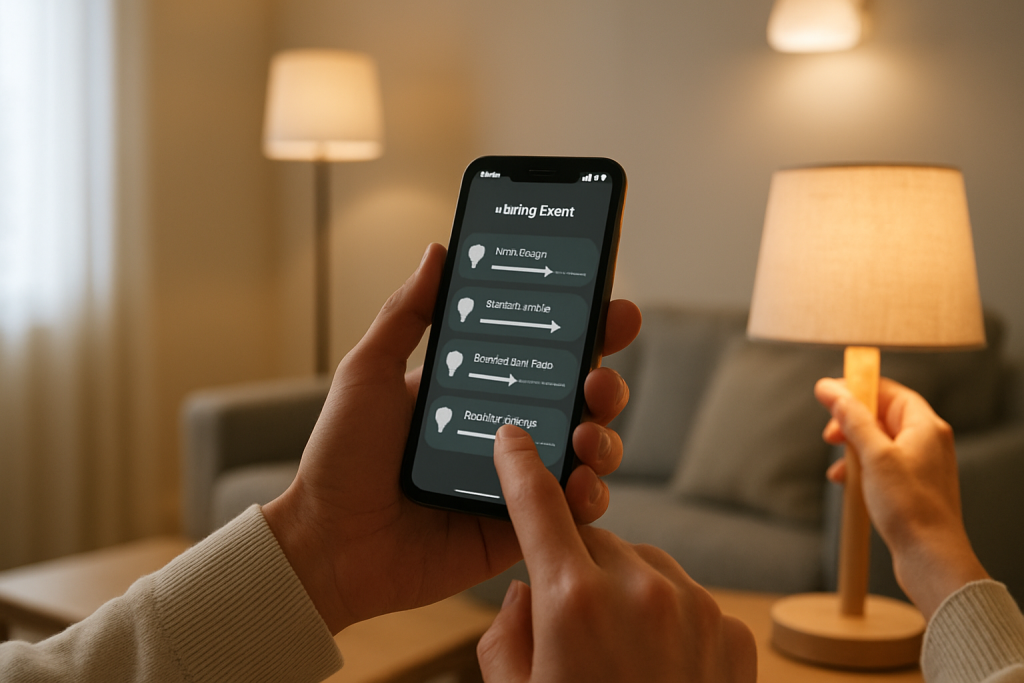
When smart lights “lose” rooms or groups, the most common real-world cause is not the bulb itself. It’s usually a sync problem between the app’s saved configuration (rooms, groups, scenes) and the system that controls the lights (hub, cloud account, or local controller). After an app update, router change, power outage, or a second phone logging in, the app may rebuild its device list and fail to re-attach lights to the correct rooms/groups.
This shows up across major ecosystems: WiFi bulbs (direct to router), Zigbee hub systems (like Hue-style bridges), and newer Matter setups. If the lights still respond individually but groups disappear or become empty, that strongly points to a configuration sync issue rather than a radio-range issue.
Do these three quick diagnostics first: (1) In the app, check whether the lights still exist as individual devices and whether they show “online.” (2) Force a configuration refresh by fully closing the app, reopening it, and confirming you’re signed into the correct account/home. (3) Power-cycle in the correct order: controller/hub first, then router, then lights (or the reverse for some WiFi-only systems), and re-check whether rooms/groups repopulate.
Why This Happens
Rooms and groups are usually not stored “inside” the bulb. They are stored in the controlling system: the app’s home configuration, a hub/bridge, and often a cloud account that syncs your home across phones. When that configuration gets out of sync, the lights may still work, but their organization disappears, duplicates, or resets.
Here are the most common technical causes tied to room/group loss:
1) Home/account mismatch (configuration is in the wrong “home”). Many apps support multiple homes/locations. If you’re signed into a different account, or you’re viewing a different home, the app can look like it “forgot” rooms. If X happens (rooms vanish after switching phones) → it usually means the new phone is signed into a different account or created a new home during setup.
2) Controller change (hub/bridge or Matter controller changed). Zigbee systems and Matter setups rely on a controller (hub/bridge, smart speaker, or dedicated controller). If the app starts controlling through a different controller than before, groups can break. If this test works (individual control still works but groups don’t) → the issue is likely controller-side group definitions, not the bulbs.
3) Cloud sync delay or partial sync after updates. After app updates, OS updates, or temporary cloud outages, the app may show an incomplete configuration. This is especially common when you have multiple phones/tablets controlling the same home and they don’t all update at the same time.
4) Duplicate devices created by re-pairing. A common user mistake is re-adding a “missing” light instead of fixing connectivity first. That often creates a second entry for the same physical bulb. The new entry is not in any room/group, so it looks like the room “lost” the light.
5) Overlooked technical cause: DHCP/IP changes and local discovery failures. Many apps discover devices locally using mDNS/SSDP and then match them to saved IDs. If your router assigns new IPs, or if features like “AP isolation,” “client isolation,” or certain mesh roaming behaviors interfere, the app may temporarily fail to match devices to their saved configuration, showing them as “unassigned” or “default room.”
Real-world scenario: after a power outage, the router comes back slowly, the hub comes back quickly, and a few bulbs power on in a “pairing-ready” state. The app then refreshes and sees devices in an unexpected order. You end up with lights present but no longer grouped, or with “new device” prompts that tempt you into creating duplicates.
Most Likely Causes in Real Homes
1) You’re in the wrong home/location or account. Rooms/groups are tied to the home profile, not the bulbs.
2) App sync glitch after an update. The app shows a partial or older configuration until it fully refreshes.
3) Router/mesh change caused discovery issues. Devices are online, but the app can’t reliably match them to saved groups.
4) Duplicate device entries from re-adding. The “new” copy isn’t assigned to rooms/groups, making it look like the room broke.
5) Controller/hub changed or rebooted into a different state. Groups stored on the controller didn’t load correctly, or the app is now using a different controller.
Step-by-Step Fix
Confirm what exactly is missing: rooms/groups vs. devices. Open the lighting app and look for each light as an individual device. Also check whether the lights respond individually (on/off) from the app.
What the result means: If individual lights still respond but rooms/groups are empty or gone, this is almost always a configuration or sync issue. If the lights are missing entirely or show offline, you likely have a connectivity/controller problem first.
If it fails: If devices are missing/offline, skip ahead to the power-cycle and network checks in steps 4–7 before attempting any re-pairing.
Verify you’re in the correct home/location and account. In the app, find the home selector (often a drop-down or “Home/Location” menu). Confirm the correct home is selected. Then confirm the signed-in account email/username is the one that originally set up the rooms/groups.
What the result means: If you switch homes/accounts and the rooms reappear, nothing is wrong with the lights. You were viewing a different configuration.
If it fails: If there is only one home/account and rooms are still missing, continue to step 3 and force a clean sync.
Force a clean app sync (don’t re-add devices yet). Fully close the app (remove it from recent apps), reopen it, and wait on the main device list for 60–90 seconds. If the app has a manual “refresh” or “sync” option, use it. If you have a second phone/tablet, check whether rooms/groups appear correctly there.
What the result means: If rooms/groups reappear after a minute or appear on another device, the issue was a local app state problem (cached data) rather than the lights.
If it fails: If rooms/groups are still missing everywhere, move to controller/hub and network stability checks.
Check controller status (hub/bridge/Matter controller) and app device status. If you use a hub/bridge, open its status page in the app and confirm it shows “connected” and up to date. For Matter, confirm the controller device (smart speaker, hub, or phone acting as controller) is powered and on the same home network.
What the result means: If the controller is offline or “limited,” groups may disappear because the system can’t load or verify group definitions.
If it fails: If the controller won’t connect, proceed to the power-cycle sequence in step 5.
Power-cycle in a stable order to rebuild the home state. Use this sequence: (1) Turn off the lights at the wall switch only if needed to fully power them down (avoid rapid toggling). (2) Unplug the hub/bridge (if you have one). (3) Reboot the router/mesh main unit. Wait until internet is stable. (4) Plug the hub/bridge back in and wait 3–5 minutes. (5) Power the lights back on and wait another 2 minutes before opening the app.
What the result means: If rooms/groups return after this, the issue was startup order and sync timing (common after outages).
If it fails: Continue to WiFi band/mesh behavior checks and isolation tests.
WiFi band check (WiFi bulbs) and channel stability (Zigbee hubs). For WiFi bulbs, confirm your phone is on the same WiFi network name that the bulbs use, and confirm bulbs are on 2.4 GHz if that’s what they require. For Zigbee hubs, keep the hub away from the router by a few feet (not right next to it) to reduce interference.
What the result means: If bulbs appear only when you’re on a specific band/network name, group loss may be a symptom of devices bouncing between networks or being discovered inconsistently.
If it fails: If you can’t confirm which band/network the bulbs use, do the hotspot isolation test in step 7 to separate “network discovery” from “app configuration.”
Hotspot isolation test (quick way to identify router/mesh involvement). Create a temporary phone hotspot using the same WiFi name and password as your normal network (only if you can safely do so without disrupting other devices). Power off the router briefly, power on one problem bulb, and see if it connects to the hotspot. Then open the app and check whether the bulb shows normally and whether rooms/groups still look wrong.
What the result means: If the bulb behaves normally on the hotspot but not on your router/mesh, the issue is likely router features (client isolation, multicast filtering, or mesh roaming behavior) interfering with discovery and sync.
If it fails: If the bulb won’t connect to the hotspot or still shows the same grouping problem, focus on account/controller sync and duplicate device entries next.
Run a group sync test: create a temporary group and observe persistence. In the app, create a new test room/group (for example “Test Group”), add two lights, and control them together. Then close the app, reopen it, and check whether the test group still exists and still contains the lights.
What the result means: If the test group disappears after reopening, the app is failing to save/sync configuration (account sync, permissions, or cloud issue). If it persists, your system can save groups and the problem is likely limited to certain devices or duplicates.
If it fails: If it won’t save, proceed to step 9 and check app permissions and account sync. If it saves, proceed to step 10 and check duplicates and automations.
Verify app permissions and account sync on your phone. Ensure the app has local network permission (common on newer phone OS versions), Bluetooth permission if required for onboarding, and that background data is allowed. If the app supports it, sign out and sign back in.
What the result means: If enabling local network permission makes devices and groups repopulate, the app was blocked from discovering devices or completing sync.
If it fails: If permissions are correct and sign-in didn’t help, move to duplicate device cleanup and automation checks.
Check for duplicate devices and “default room” leftovers. In the device list, look for the same light name appearing twice, or one copy showing offline while another is online. Also look for an “Unassigned” or “Default” room that contains lights that used to be grouped.
What the result means: Duplicates usually mean the light was re-added at some point. Rooms/groups didn’t “lose” the light; the app is now showing a different instance of it.
If it fails: If you find duplicates, remove the offline/older entry (not the working one), then reassign the working device to the correct room. If you don’t see duplicates, continue to schedules and automations in step 11.
Verify schedules, scenes, and automations that may be rewriting groups. Check for automations that run at specific times (morning/night) or after power restoration. Look for rules that “set scene,” “restore defaults,” or “sync devices,” especially if multiple platforms are connected (for example, a lighting app plus a general smart home app).
What the result means: If rooms/groups look correct until a certain time, then break again, an automation is likely overwriting configuration or moving devices.
If it fails: Disable automations temporarily for 24 hours and see if group stability returns. If it does, re-enable them one by one to identify the rule causing changes.
Update firmware and app versions, then re-check grouping. Update the lighting app, hub/bridge firmware (if applicable), and bulbs (if offered). After updating, repeat the group sync test from step 8.
What the result means: If updates stabilize groups, the issue was a known bug or a compatibility mismatch between app and controller.
If it fails: If everything is updated and groups still won’t persist, proceed to Advanced Troubleshooting before resetting devices.
Advanced Troubleshooting
This section is only needed if basic fixes fail.
Account or cloud issue: If groups disappear on every phone and return randomly, suspect a cloud sync problem. Confirm the account email is consistent across all controllers, and remove any old/unused household accounts that still have access. If the ecosystem supports “home members,” verify permissions; limited-access members may see devices but not the correct room structure.
Network issue (only when symptoms match): If devices show online/offline inconsistently, or groups work only when close to the router, the network may be preventing reliable local discovery. Features that commonly break smart home discovery include client isolation, guest network usage, multicast filtering, and some mesh “optimization” settings. If X happens (devices are online but not grouped, and the app can’t consistently discover them) → it usually means local discovery traffic is being blocked or not forwarded correctly between nodes.
Firmware/software cause: If the problem started immediately after an update, it may be a controller firmware bug affecting group storage. A telltale sign is that groups can be created but won’t persist after a reboot. If this test works (groups persist until the hub restarts) → the issue is likely controller-side configuration storage or database corruption.
Configuration conflict across platforms: If you control the same lights from multiple ecosystems (for example, the manufacturer app plus a general smart home platform plus voice assistants), you can end up with conflicting group concepts. One platform may treat a “room” as a label, while another treats it as a control group. If groups keep reverting, temporarily disconnect one integration (not delete devices) and see if stability returns. If stability improves, reconnect integrations one at a time and avoid creating overlapping groups in multiple apps.
When to Reset or Replace the Device
Soft restart vs. factory reset: A soft restart is simply powering the light off and on once (not rapidly) or rebooting the hub/router. A factory reset wipes the device’s pairing and forces you to add it again. Use factory reset only after you’ve confirmed the issue is not an account/home mismatch and not a controller/network sync problem.
What you lose after a reset: You typically lose the device name, room/group assignments, scenes, schedules tied directly to that device, and sometimes energy/history data. If you reset a hub/bridge, you may lose the entire home configuration, including all rooms, groups, and automations stored on that controller.
When replacement is reasonable: Replace a device only if it repeatedly drops out and reappears as a “new” device even on a stable network and after a clean re-pair, or if it cannot hold a pairing at all. Also stop using the device and power it down if you notice overheating, discoloration, a burning smell, buzzing, or visible damage. Do not continue troubleshooting a device that appears physically unsafe.
How to Prevent This in the Future
Keep the “home” configuration simple and consistent. Use one primary app/controller to define rooms and groups. If you use a second platform, avoid recreating the same group structure in multiple places.
Stabilize the network behaviors that affect discovery and sync. Keep smart devices on the main network (not guest). Avoid enabling client isolation. If you use mesh WiFi, try to keep the hub/controller near the main router node and avoid frequent SSID/password changes.
Manage automations carefully. Document what automations exist and where they live (lighting app vs. general smart home app). If a rule changes scenes at night, make sure it isn’t also “resetting” or reassigning devices.
Plan for power outage recovery. After outages, give the router time to fully come online before power-cycling hubs and lights. If your system has a “power restore behavior” setting, choose a stable option that won’t trigger re-onboarding behaviors.
Maintain firmware without rushing. Keep apps and firmware current, but if everything is stable, avoid updating right before travel or events. After updates, verify that rooms/groups still persist before making major configuration changes.
FAQ
Why do my lights still turn on individually, but the room/group is empty?
That usually means the lights are reachable, but the saved configuration that defines rooms/groups did not load correctly. The problem is typically account/home selection, controller sync, or a cached app state. Focus on verifying the correct home/account and forcing a clean sync before re-pairing anything.
Is this caused by weak WiFi signal?
Not usually. Weak signal more often causes lights to go offline entirely, respond slowly, or fail commands. When the main symptom is “rooms/groups disappeared,” it points more strongly to configuration sync, controller selection, or duplicate device entries. Network issues matter mainly when they prevent reliable local discovery or controller communication.
I re-added a missing bulb and now I have two of the same light. What should I do?
This is a common outcome. Remove the duplicate entry that is offline or unresponsive, keep the entry that actually controls the physical bulb, then assign that working entry back into the correct room/group. After cleanup, avoid re-adding bulbs until you’ve confirmed the controller and network are stable.
Do rooms and groups live in the bulb itself?
No. That’s a common misconception. Rooms/groups are stored in the controlling system: the app’s home configuration, a hub/bridge, and often the cloud account. That is why the organization can disappear even when the bulb still works.
Why does it break again after a reboot or at a certain time of day?
If it breaks after a reboot, suspect the hub/controller failing to reload configuration or a firmware issue. If it breaks at a specific time, suspect an automation, scene, or integration that is rewriting settings. Disable automations temporarily and re-enable them one at a time to find the trigger.
When the problem stops taking up oxygen, everything else feels a little easier to notice—morning light, a clean receipt, the odd quiet win that doesn’t need a speech. The noise recedes, and the page finally reads like a page.
It’s not dramatic, just steadier. The kind of change you feel more than you announce, tucked into ordinary days and carried without much effort.