Smart Lights Not Working for Multiple Users: How to Fix Sharing
Quick Answer
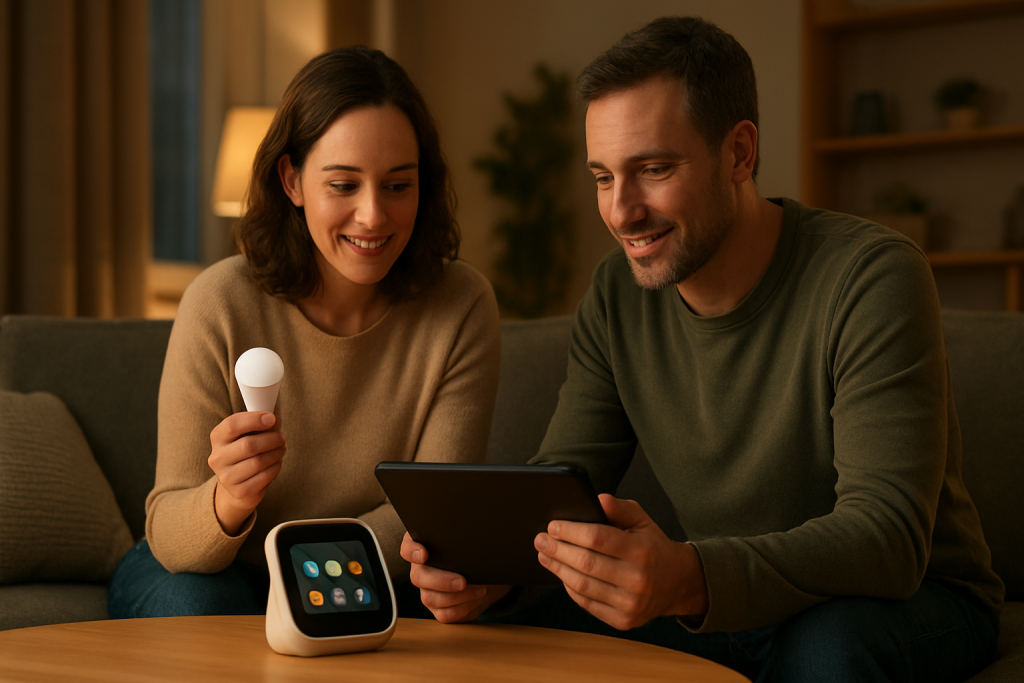
When smart lights work for one person but not for other household members, the most common cause is a sharing or permission mismatch inside the lighting ecosystem. The “owner” account may still control the lights, but invited users are signed into the wrong account, not fully accepted the invite, or are using a different “Home/House/Location” within the app. This is especially common with WiFi bulbs, hub-based systems (Zigbee/Z-Wave), and newer Matter setups where control can exist in more than one app.
Another frequent real-world cause is that the lights are actually online, but the shared users are looking at a different room/group or an out-of-date device list that never finished syncing. If the owner sees the lights as “Online” while others see “Unavailable,” treat this as a sharing sync problem first, not a bulb failure.
Do these three checks immediately: (1) On each phone, confirm the user is signed into the correct account and the correct Home/Location is selected. (2) Verify the invited user has accepted the invite (not just received it) and has the right permission level. (3) In the app, force a refresh/sync and confirm the lights appear in the same room/group for both the owner and the shared user.
Why This Happens
Multi-user smart lighting depends on a “home container” (often called Home, Household, Structure, Location, or Bridge/Home) that stores devices, rooms, and permissions. The owner account typically has full control and can add devices. Shared users are granted access through invitations and role-based permissions. If anything breaks in that chain, the lights can appear missing, offline, or unresponsive for some users even though the hardware is fine.
Common technical causes that directly affect sharing include:
1) Invitation not fully completed. If a user doesn’t accept the invite from the correct email/phone identity, they may be logged in but not actually linked to the home. Some apps show the home name but don’t grant device control until acceptance is complete.
2) Wrong home/location selected. Many apps allow multiple homes (for example, “Home,” “Cabin,” “Office”). If a shared user is viewing the wrong home, they’ll see an empty device list or different rooms. This can happen after app reinstalls, phone upgrades, or when a user is also invited to someone else’s home.
3) Permissions too limited. Some ecosystems allow “Guest” or “Basic” roles that can control existing devices but can’t see certain rooms, scenes, or automations. In some setups, a user can control a light only if it’s assigned to a room they can access.
4) Multi-admin conflicts across apps (especially with Matter). Matter devices can be shared across platforms, but the “fabric” (the secure control domain) and admin roles matter. If one platform is the admin and another is only partially linked, a second user may have limited or unstable control.
5) Cloud/account sync delays or stale app cache. Even when the home is shared correctly, the shared user’s app may be using old data. This often shows up after changing room assignments, renaming devices, or reorganizing groups.
Real-world scenario: One person sets up a Zigbee hub (like a bridge) and adds 12 bulbs. They later invite a spouse. The spouse can see only 3 lights and can’t control the rest. Usually this means the other 9 lights were moved into a room that the spouse’s role can’t access, or the spouse is looking at a second “Home” created automatically during app setup.
Common user mistake: Accepting the invite on one email address, but logging into the app with a different email/phone identity. The app looks “logged in,” but it’s the wrong account, so the home never appears correctly.
Overlooked technical cause: Dual-control through multiple ecosystems. For example, the lights are in the manufacturer app and also imported into another platform. If the shared user only has access in one app, they may think sharing is broken, when they’re simply controlling the wrong integration copy (or the integration is linked to the owner’s account only).
Most Likely Causes in Real Homes
1) Shared user is signed into the wrong account or identity (different email/Apple ID/Google account). This is the top cause when “owner works, others don’t.”
2) Wrong Home/Location selected in the app. The devices exist, but the user is viewing a different container.
3) Invite not accepted or accepted from the wrong inbox. The user appears added but has no device permissions.
4) Rooms/groups not synced or user role restricts visibility. The user can control some lights but not the ones in certain rooms or groups.
5) Matter or multi-app integration conflict. Devices show up in one platform but won’t reliably control for other users.
Step-by-Step Fix
Confirm the owner can control the lights from the primary app and check device status. What to do: On the owner’s phone, open the main lighting app (the one used to set up the bulbs/bridge). Look at each light’s status (Online/Reachable) and try toggling a single light on/off. What the result means: If the owner also can’t control lights or they show Offline, this is not a sharing problem yet; it’s a device/network/hub issue. What to try next if it fails: Power cycle the hub (if present) and one affected bulb using the sequence in step 6, then re-check status before continuing with sharing fixes.
On each shared user’s phone, verify they are signed into the correct account and identity. What to do: In the app’s account/profile area, confirm the email/phone number matches the exact identity that received the invite. If the ecosystem uses a platform account (Apple/Google), confirm that account on the phone matches what the owner invited. What the result means: If the identity is different, the user may be in a separate account with no access to the home. What to try next if it fails: Sign out completely, sign back in with the invited identity, then force-close and reopen the app to refresh the home list.
Check the selected Home/Location/Household on every phone. What to do: In the app, find the home selector (often at the top of the main screen or in settings). Make sure the owner and shared users are viewing the same home name. What the result means: If a shared user is in a different home, they will see missing devices or different rooms. What to try next if it fails: Switch to the correct home. If it doesn’t exist, the invite likely wasn’t accepted correctly; go to step 4.
Re-send the invite and complete acceptance from the shared user’s device. What to do: On the owner account, remove the shared user (if they appear partially added), then send a fresh invitation. On the shared user’s phone, open the invite directly and accept it while already signed into the correct account. What the result means: If the home appears immediately after acceptance, the issue was an incomplete or mismatched invitation. What to try next if it fails: Have the shared user try accepting from a different network (cellular data instead of WiFi) to avoid email/app link handling issues, then continue to step 5.
Verify permissions/roles and room access for the shared user. What to do: In the home’s member settings, check the shared user’s role (Admin/Member/Guest). Ensure they have permission to control devices. Then confirm the lights are assigned to rooms that the user can access. What the result means: If the user can control some lights but not others, it usually means room/group visibility or role restrictions. What to try next if it fails: Temporarily promote the user to a higher permission level (if available) to confirm it’s a role issue. If that fixes it, adjust room assignments or keep the appropriate role.
Run a group sync test (rooms, zones, and scenes). What to do: On the owner’s app, rename one room slightly (for example, “Living Room” to “Living Room 1”), then refresh the shared user’s app and see whether the change appears. Also try editing a group membership (add/remove one light) and check if the shared user sees the update. What the result means: If changes never appear for the shared user, the problem is app sync/cache or account linking, not the bulbs. What to try next if it fails: On the shared user’s phone, force-close the app, clear app cache if the OS allows, and sign out/in. If still stuck, uninstall/reinstall the app and re-accept the home invitation.
Check for schedule/automation conflicts that only affect certain users. What to do: Review automations, scenes, and schedules in the owner account (and any connected platform apps). Look for rules that immediately turn lights back off, change brightness, or switch scenes. Then have the shared user toggle a light while the owner watches the device state in real time. What the result means: If the light changes and then “snaps back,” an automation is overriding manual control. This often feels like “it doesn’t work” for one person, but it’s really timing and rules. What to try next if it fails: Temporarily disable automations and test again. If that fixes it, re-enable rules one by one to find the conflicting automation.
Do a proper power cycle sequence (bulbs, hub, router) to refresh connectivity and cloud sessions. What to do: Turn off the affected light(s) at the switch for 10 seconds, then back on. If you have a hub/bridge, unplug it for 20 seconds and plug it back in. If devices still show inconsistent status across users, reboot the router last. What the result means: If shared users suddenly see devices update or come online, the issue was stale connectivity or a stuck hub session that impacted syncing. What to try next if it fails: Continue to step 9 to isolate whether the problem is tied to the home network or the account/cloud.
Run a WiFi band check for WiFi bulbs (2.4 GHz vs 5 GHz) and confirm the phone is on the same local network when required. What to do: If you use WiFi bulbs, confirm the bulbs are on the expected WiFi network. Some apps require local network access for discovery and control. Ensure the phone has local network permission enabled and is connected to the home WiFi (not a guest network). What the result means: If the owner’s phone works only on WiFi but shared users are on cellular or guest WiFi, they may lose local control or discovery. What to try next if it fails: Put the shared user on the main WiFi (not guest), enable local network permissions for the app, and retest control.
Do a hotspot isolation test to separate “account/sharing” problems from “home network” problems. What to do: Have the shared user temporarily switch their phone to cellular data (WiFi off) and try controlling lights. Alternatively, connect the phone to a personal hotspot briefly and test. What the result means: If control works off the home WiFi, the issue is likely local network isolation (guest network, client isolation, blocked local traffic) or phone permissions on the home WiFi. If control fails everywhere, it points back to account sharing, permissions, or cloud sync. What to try next if it fails: If it works off WiFi, move to network checks in Advanced Troubleshooting. If it fails everywhere, repeat steps 2–6 carefully, then proceed to Advanced Troubleshooting for cloud/account issues.
For Matter setups, confirm the device is shared to the household properly and not “owned” by only one controller. What to do: In the platform that originally commissioned the Matter device, verify that home members are added at the platform level and that the device appears for them. If you also use a manufacturer app, confirm it isn’t the only place where the device is fully controlled. What the result means: If the device works only for the original commissioning user, the Matter admin/fabric sharing is incomplete. What to try next if it fails: Remove and re-add the member to the home, then re-share the Matter device. If the platform supports it, ensure the shared user has full home access rather than guest access.
Advanced Troubleshooting
This section is only needed if basic fixes fail.
Account or cloud issue: If multiple shared users can’t control devices but the owner can, and re-inviting doesn’t help, the home’s cloud record may be stuck. Signs include: device list not updating across phones, room changes not syncing, or invites that never “complete.” Try signing the owner out and back in, then re-check member list. If the ecosystem has a “status” page or outage notice in the app, check it; cloud outages often break sharing first.
Network issue (relevant when control works on cellular but not on home WiFi): Guest WiFi and “client isolation” settings can block local discovery and local control. Also check whether the shared user’s phone is using a VPN or private DNS profile that interferes with local connections. If turning off WiFi makes control work, focus on WiFi segmentation and phone network permissions rather than the bulbs.
Firmware/software cause: Mixed firmware versions can create inconsistent behavior, especially with hubs/bridges and Zigbee devices. Update the hub/bridge firmware first, then update bulbs if the app offers it. Also update the app on every phone. If only one phone has the latest app version, it may display rooms/scenes differently or fail to load newer permission models.
Configuration conflicts (groups, scenes, automations, permissions): If a shared user can control individual bulbs but not groups/rooms, the issue is often a broken group definition or a platform integration mismatch. Rebuild one problematic group: create a new group with a new name, add the same bulbs, and test from the shared user’s phone. If the new group works, the old group configuration was corrupted or not syncing.
Multiple ecosystems controlling the same lights: If lights are linked into more than one platform, a shared user might be controlling a “copy” that isn’t actually connected. Decide which app is the source of truth for sharing. Ensure the shared user is added to that primary home, then re-link integrations after sharing is stable.
When to Reset or Replace the Device
A reset is rarely the first fix for multi-user problems, because sharing issues usually live in accounts, permissions, or home configuration. Start with a soft restart: power cycle the bulb (off 10 seconds, on) and reboot the hub/bridge if you have one. This clears temporary connectivity problems without changing your setup.
Use a factory reset only when a specific light refuses to appear correctly for anyone, won’t stay online, or cannot be controlled reliably even by the owner after network and hub restarts. A factory reset typically removes the bulb from rooms, groups, scenes, and automations. You will need to re-add it and then reassign it to rooms and groups, and you may need to rebuild scenes that included it.
If a bulb, plug, or hub is overheating, smells like hot plastic, flickers unusually, or shows physical damage, stop using it and replace it. Do not attempt to open devices or repair them.
How to Prevent This in the Future
Keep one “source of truth” for sharing. Decide which app/ecosystem is the primary place where household members are added. Add members there first, then connect other platforms afterward.
Standardize accounts and invitations. Keep a written note of which email/phone identity each person uses for the smart home. When inviting, confirm the invite is accepted from the same identity used to sign in.
Be consistent with rooms and groups. Avoid frequently renaming rooms and moving devices between homes. When you do reorganize, open the app on each household phone afterward so it can sync while you’re present to confirm it worked.
Plan for power outages. After an outage, give the router and hub time to fully boot before testing control. If lights appear missing for shared users right after an outage, wait a few minutes and then refresh the app before changing settings.
Maintain firmware and app updates. Update hubs/bridges first, then bulbs, then apps on all phones. Mismatched versions can cause inconsistent sharing screens and permissions.
Keep the network simple where it matters. Put smart lights and household phones on the main WiFi rather than guest WiFi. If you use a mesh system, avoid frequently changing SSID names, and keep the hub/bridge reasonably central so it stays stable.
FAQ
Why do the lights work for the owner but show “offline” for everyone else?
If the owner can control the lights, the devices are usually online. “Offline” for other users commonly means the shared users are in the wrong home/location, the invite didn’t fully attach to their account, or their app hasn’t synced the latest device list. Confirm account identity, home selection, and permissions before assuming a bulb problem.
Do all users need to be on the same WiFi network?
Not always. Many ecosystems allow cloud control from anywhere, but some features (like local discovery, fast local control, or initial device visibility) can depend on being on the home network and having local network permission enabled. If control works on cellular but not on home WiFi, suspect guest WiFi isolation or blocked local access.
Misconception: “If sharing is set up, every app will automatically show the same rooms and scenes.” Is that true?
No. Sharing is usually specific to a home within a specific ecosystem. If you imported lights into another platform or app, that platform may have its own home membership and its own room/scene structure. Make sure the shared user is added in the system that actually owns the devices and automations.
Why can a shared user control individual bulbs but not rooms/groups?
This often points to a group sync or permission issue. The bulbs are visible, but the group definition didn’t sync to the shared user, or their role can’t access that room. Rebuild one group and test, and confirm the user’s role allows room/group control.
Should I factory reset all bulbs to fix multi-user control?
Usually no. Factory resets are disruptive and typically don’t fix account-level sharing problems. Reset only the specific device that is unstable for everyone (including the owner) after power cycling and hub/router restarts, and be prepared to reassign it to rooms, groups, and scenes afterward.
Relief isn’t flashy, but it does settle in—like the last thread finally getting tucked away. The noise fades, and what’s left feels almost ordinary, which is exactly how it should be.
There’s a strange comfort in that, too: not everything has to be a grand project to matter. The rest can just keep moving, quietly, without the same old friction.