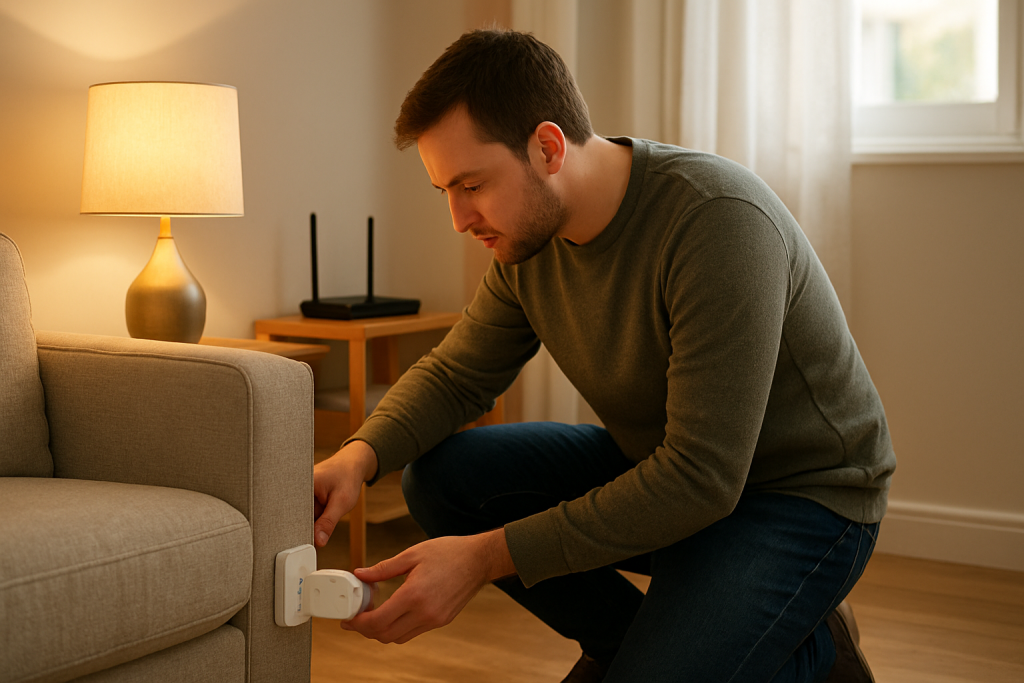
Smart Plug Schedule Works Sometimes? What Causes It
Quick Answer
When a smart plug or smart switch schedule works only sometimes, the most common cause is an intermittent sync problem: the schedule exists in one place (device app, hub, or voice assistant), but it doesn’t reliably reach the device at the moment it needs to run. The result looks random, but it’s usually a timing or “who’s in charge” conflict.
This is especially common in homes using multiple ecosystems at once (manufacturer app plus Alexa/Google Home/Apple Home, or a Zigbee/Matter bridge plus an assistant). Small delays after router restarts, brief cloud outages, or competing automations can cause a schedule to fire late, not at all, or be immediately overwritten by another rule.
Do these three actions first: (1) pick one “source of truth” app for scheduling and temporarily disable schedules in the other apps, (2) confirm the home time zone and device time are correct in every platform you use, and (3) check the device event history/activity log (in the device app, hub app, or assistant routines) to see which system actually sent the last on/off command.
Why This Happens
Schedules aren’t just a simple timer inside the plug. Depending on your setup, the schedule may run in the manufacturer’s cloud, inside a hub (Zigbee hub, Matter controller, SmartThings), inside a voice assistant routine (Alexa/Google Home), or inside Apple Home automations. If those layers don’t agree on time, ownership, or device state, you get intermittent behavior: the schedule “runs,” but the plug doesn’t change, or it changes and then changes back.
Here are the tightly related root causes that create most “works sometimes” schedule problems:
First, sync delays between apps and clouds. A schedule can be edited in one app but not fully updated everywhere before the next run. If the plug briefly loses cloud connection (even for a minute), it may miss the command window, then reconnect after the schedule time has passed.
Second, automation conflicts. Two different rules can target the same plug: a schedule in the plug’s app, a routine in Alexa, a “good night” scene in Apple Home, or a SmartThings automation. If one turns it on and another turns it off a minute later, it looks like the schedule “failed,” but it actually got overridden.
Third, time and location mismatches. A plug might run a schedule based on device time, hub time, or cloud time. A wrong time zone, a moved home address, daylight saving time changes, or a phone that’s set differently can shift schedules or make sunrise/sunset automations inconsistent.
Real-world scenario: after a brief power outage, the router and mesh nodes reboot, the plug reconnects to WiFi, and the cloud session re-registers. During that recovery window, the 7:00 PM schedule command is sent, but the plug is still reconnecting, so it never receives it (or receives it late).
Common user mistake: leaving duplicate schedules active in more than one place (for example, a Kasa/Tapo schedule plus an Alexa routine plus an Apple Home automation for the same plug), then adjusting only one of them and assuming the others update automatically.
Overlooked technical cause: router/mesh “roaming” and band steering. A WiFi smart plug may hop between access points or get nudged between 2.4 GHz and 5 GHz naming schemes (even if it only supports 2.4 GHz). That brief disconnect is enough to miss a time-sensitive schedule command, even though manual control later works.
Most Likely Causes in Real Homes
Ordered by probability:
1) Duplicate automations across platforms: the plug’s own schedule competes with Alexa/Google Home/Apple Home/SmartThings routines and scenes, producing “on then off” or “off then on” behavior.
2) Cloud-to-device sync delay during reconnects: after router restarts, ISP hiccups, or brief WiFi drops, the schedule command is sent while the device is temporarily unavailable.
3) Time zone/DST mismatch between phone, hub, and assistant: schedules run at the wrong time or sunrise/sunset automations drift, especially after travel or address changes.
4) Ecosystem sync/desync (Matter/bridges/hubs): the controller that “owns” the automation loses authority briefly, or the device shows duplicated entries, so the wrong instance gets controlled.
5) Mesh WiFi roaming or weak 2.4 GHz signal at the outlet: the device is “online most of the day,” but has short dropouts around the schedule time that you don’t notice.
Step-by-Step Fix
Check the command source using history/logs: open the manufacturer app (or hub app like SmartThings/Home app) and look for an event history or recent activity; also check Alexa/Google Home routine activity if you use them. If you see “command received” at the scheduled time but the plug didn’t change, that usually means a connectivity gap or the command went to a duplicate device entry. If there’s no record of a command, move next to isolating which system is supposed to run the schedule.
Choose one scheduler and disable the others temporarily: keep the schedule in only one place (either the device app, or your hub/app, or your voice assistant) and turn off all other schedules/routines/scenes for that plug for 24 hours. If the schedule becomes reliable, the issue is almost certainly a conflict/override rather than a “bad plug.” If it still fails with only one scheduler, go next to time and sync checks.
Verify time zone and location everywhere you schedule: confirm your phone time zone, then check the home location/time zone in Alexa, Google Home, Apple Home, SmartThings, and any manufacturer app you use. If schedules are off by exactly an hour or only sunrise/sunset is unreliable, that points strongly to DST/location mismatch. If everything matches and times are still missed, continue to the reconnect/sync tests.
Test for a “reconnect window” problem: note the next scheduled time, then 10–15 minutes before it, open the device app and confirm the plug shows online and responds to a manual on/off. If it’s slow to respond or shows offline briefly, the schedule is likely missing during those dropouts. If manual control is solid right before the scheduled time but the schedule still fails, go next to identifying duplicate device entries and ecosystem sync issues.
Check for duplicate devices, groups, and scenes controlling the same outlet: in Alexa/Google Home/Apple Home/SmartThings, look for two tiles with the same name (often created after re-pairing, Matter migration, or bridge re-link). Also check if the plug is in a group/room where a scheduled group action runs. If removing/renaming duplicates fixes it, the schedule was firing on the wrong instance or being overwritten by a group rule. If you find no duplicates, proceed to the network-specific schedule reliability test.
Stabilize the connection around the device without “generic WiFi” guessing: if it’s a WiFi plug, confirm it’s on 2.4 GHz (many plugs can’t use 5 GHz). If your router uses a single combined network name, temporarily connect it to a dedicated 2.4 GHz SSID (if available) or disable band steering during setup only. If it’s on a mesh system, test by plugging it closer to the main router for one day (or near the same mesh node consistently). If the schedule becomes reliable when closer, the cause is short disconnects/roaming; if it still fails, continue to platform relink and firmware checks.
Refresh account links and permissions that deliver schedules: if you schedule through Alexa/Google Home, disable and re-enable the skill/service link (or reconnect the account) so token/auth issues don’t block routine execution. In shared homes, confirm the primary account owns the routine and the device, and that household members have proper access. If relinking fixes it, the problem was cloud sync/auth; if not, move to updates and a controlled reboot order.
Update firmware/apps, then do a controlled reboot sequence: update the manufacturer app, hub firmware (if Zigbee/Matter bridge), and device firmware if available. Then reboot in this order: router/modem first, wait for stable internet, then mesh nodes/hub, then the smart plug (unplug/replug). If schedules start working after a clean boot order, the issue was a stale session or delayed re-registration; if failures continue, you’re likely dealing with a deeper ecosystem sync conflict or a device that can’t stay reliably connected.
Advanced Troubleshooting
This section is only needed if basic fixes fail.
Account/cloud issue: if schedules fail only when controlled from a specific platform (for example, Alexa routines fail but the manufacturer app schedule works), the problem is usually cloud sync or authorization. Re-link the integration, then recreate the routine from scratch (don’t just edit an old one). If you see “device unresponsive” only in the assistant, but the device app works, focus on the assistant link rather than the plug.
Network issue tied to sync delays: some routers change IP addresses aggressively after restarts. If the plug often appears offline after a reboot, the schedule may be missing during DHCP reassignment. If your router supports it, use an IP reservation for the plug to reduce “online/offline” flapping. If you can’t do that, the practical workaround is to avoid scheduling actions within the first 10–15 minutes after a typical router reboot window.
Firmware/software cause: after major app updates or a migration to Matter, old schedules may not translate cleanly. If a schedule was created before the migration (or before you re-added the device), delete and recreate it rather than editing. If the plug supports energy monitoring, heavy reporting can sometimes coincide with brief slowdowns; if schedules fail only during high-load periods, reduce extra polling widgets or third-party dashboards that refresh constantly.
Configuration conflicts: scenes, “away mode,” vacation/random features, or power-recovery settings can mimic schedule failure. If the plug turns on unexpectedly, check for “random” or “security” modes in any app, and check whether “power on state after outage” is set to “on” or “last state,” which can override what you expect after a short power blip.
Ecosystem sync issue (Alexa/Google Home/Apple Home/Matter): if you control the same plug through multiple controllers (for example, Apple Home plus Alexa via Matter), decide which controller owns automations. Multiple controllers can coexist, but automations should not duplicate. If you see the device twice in one ecosystem after a Matter re-add, remove the stale entry and re-run device discovery so routines target the correct device.
When to Reset or Replace the Device
A soft restart is simply power-cycling the smart plug (unplug, wait about 10 seconds, plug back in) or rebooting the hub/router in a controlled order. This clears temporary sessions and often fixes missed schedules caused by delayed reconnects.
A factory reset is appropriate when the device keeps showing as a duplicate, won’t hold schedules after you recreate them, or stays intermittently offline even when placed close to the router/hub. Expect to lose pairings, schedules, automations, room assignments, and any energy history stored in the app (for energy-monitoring plugs). You’ll need to re-add the device and rebuild routines.
Replacement becomes reasonable if the device repeatedly fails firmware updates, cannot stay reliably connected in a known-good location, or shows unstable relay behavior (clicking, toggling without any logs/commands, or failing to switch under normal loads). Stop using the device and replace it immediately if you notice overheating, a burning smell, discoloration, cracking, or any visible damage.
How to Prevent This in the Future
Keep a single “automation owner” per device: decide whether schedules live in the manufacturer app, your hub (Zigbee/Matter/SmartThings), Apple Home, or your voice assistant. Avoid duplicating the same on/off schedule in multiple places.
Organize names and rooms consistently across apps: mismatched rooms and similar names make it easy to schedule the wrong device instance, especially after re-pairing or migrations. Use unique names for plugs, and avoid having two devices with the same display name.
Reduce sync surprises after outages: when power returns, give the network a few minutes to stabilize before relying on schedule-critical actions. If you frequently have brief outages, consider adjusting schedules to include a follow-up action (for example, a second “on” command 2–3 minutes later) in the same system, not across multiple systems.
Maintain stable connectivity where it matters: keep WiFi plugs on 2.4 GHz with steady coverage at the outlet, and avoid placing them where they constantly roam between mesh nodes. For hub-based devices, keep the hub centrally located and avoid moving it often.
Update intentionally: after app, hub, or firmware updates, verify that schedules still exist and run once before you rely on them (especially for sunrise/sunset routines). Recreate schedules that were carried over from older configurations instead of repeatedly editing them.
Keep sharing and permissions clean: in shared homes, make sure the person who owns the device also owns the automation, and avoid creating separate, overlapping routines from different household accounts.
FAQ
Why does the schedule fail, but manual control always works?
Manual control usually happens when you’re actively in the app and the device is already “awake” and connected. Schedules are time-sensitive and may be issued during a brief disconnect or a cloud/auth sync delay. If the logs show no command at the scheduled time, the scheduler (app/assistant/hub) didn’t send it; if the command exists but the device didn’t respond, it likely wasn’t reachable at that moment.
Is this a WiFi strength problem?
Sometimes, but not in the simple “more bars” sense. The common schedule pattern is short dropouts or roaming/band-steering events that happen occasionally, often after router/mesh changes or at busy times. A plug can look “mostly online” and still miss a schedule if it disconnects for 30–60 seconds at the wrong time.
If I use Matter, do schedules run locally and avoid cloud delays?
Not always. Matter can support local control, but your automations still depend on the controller (Apple Home hub, Google Home hub, Alexa device with Matter controller, SmartThings hub) being online and in sync. Also, if you create automations in multiple controllers at once, you can still get conflicts and overrides even when commands are local.
Common misconception: “If I change a schedule in one app, all other apps update automatically.” Is that true?
No. Integrations often sync device state, but schedules and routines are usually stored inside the platform where you created them. If you made a schedule in the manufacturer app and a similar routine in Alexa, editing one does not reliably edit the other, and both may keep running until you disable or delete the duplicate.
By now, the path is familiar and the stakes feel less dramatic than they did at first glance. The noise drops away, and what’s left is the part you can actually live with.
It’s a kind of relief, really—like finding the missing button on a shirt you’ve been wearing for way too long. Nothing magical, just the world making a little more sense again.