Smart Devices Wont Connect When WPA3 Is Enabled: What to Do
Quick Answer
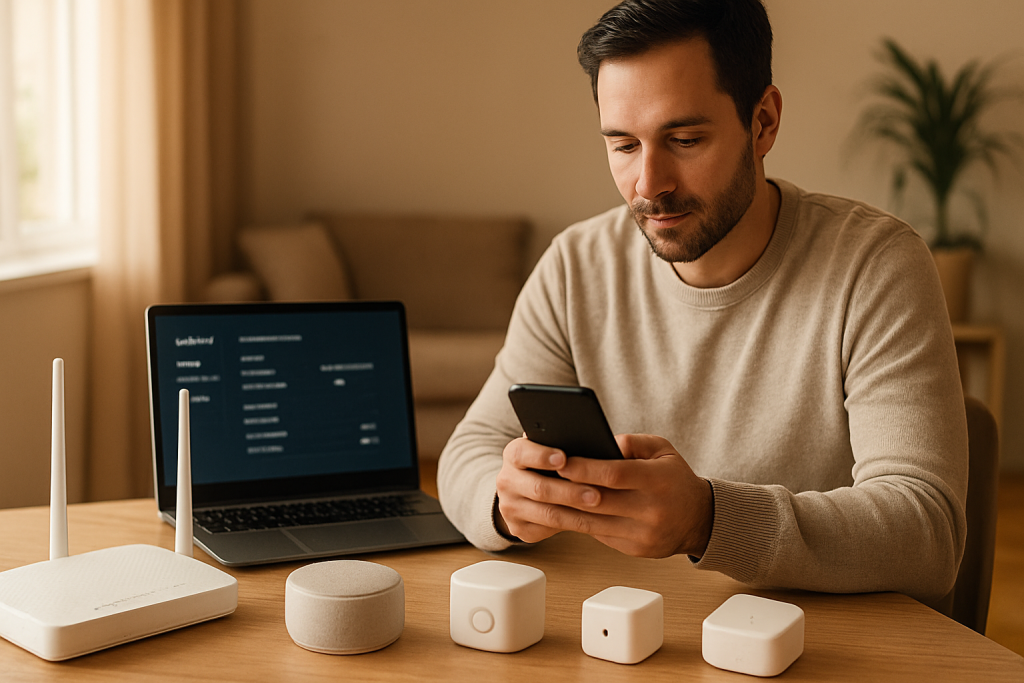
If your smart device stops connecting right after you enable WPA3 on your router, the most likely cause is simple: the device’s Wi‑Fi chipset or firmware does not fully support WPA3 (or the specific WPA3 mode your router is using). Many smart plugs, bulbs, cameras, and older streaming devices are designed around 2.4GHz Wi‑Fi with WPA2, and they can fail silently when WPA3 is enforced.
Fix it by switching your router’s security to “WPA2/WPA3 mixed mode” (also called WPA3 Transition Mode) or temporarily back to WPA2-Personal. Then reconnect the device using its app. If it connects on WPA2 but not on WPA3, you’ve confirmed a WPA3 compatibility issue; keep the device on a WPA2-only IoT network or update firmware if available.
Why This Happens
WPA3 is a newer Wi‑Fi security standard that improves protection against password guessing and strengthens encryption. The problem is that many smart devices—especially budget IoT gear—use older Wi‑Fi modules and simplified network stacks. They may advertise partial support, but fail during the WPA3 handshake (often SAE, Simultaneous Authentication of Equals) or during protected management frame requirements.
Compatibility problems show up in a few common ways: the device sees the network but fails to join; it joins briefly then drops; or the app says “wrong password” even when the password is correct. This is especially common on 2.4GHz-only devices that were designed when WPA2 was the default and have not received meaningful Wi‑Fi firmware updates.
Router configuration can also amplify the issue. Some routers enable WPA3-only by default when you toggle WPA3, disable legacy rates, or require Protected Management Frames (PMF) as “Required” instead of “Capable.” A device that can handle WPA2 but not WPA3/PMF may never complete association.
Real-world scenario: in an apartment with many neighboring networks, you might enable WPA3 for better security. Your phone and laptop connect fine, but a smart bulb in a back bedroom (behind thick walls) fails repeatedly. The bulb’s radio is weak, it only uses 2.4GHz, and it can’t negotiate WPA3. The crowded 2.4GHz band and lower signal strength make the handshake even less reliable, so it looks like “bad Wi‑Fi,” but the root cause is WPA3 compatibility.
A common user mistake is trying to “force” the device to connect by repeatedly entering the password or resetting the device without changing the router’s WPA3 setting. Another overlooked technical cause is band steering with a single SSID: the phone used for setup may jump to 5GHz while the smart device can only use 2.4GHz, and the router’s WPA3 behavior may differ per band or per SSID, causing pairing to fail.
Finally, even when WPA3 isn’t the direct blocker, enabling it can coincide with changes that affect connectivity: DHCP lease changes, an IP conflict (two devices trying to use the same address), or a router firmware bug introduced in a recent update. These are less common than pure WPA3 incompatibility, but they can look similar.
Step-by-Step Fix
Confirm the symptom is tied to WPA3. If the device worked before and stopped right after enabling WPA3, that timing strongly indicates compatibility. If possible, temporarily switch the router back to WPA2-Personal and try connecting the device again. If it connects immediately on WPA2, you have a clear WPA3 compatibility issue.
Change the router to WPA2/WPA3 mixed mode (Transition Mode). In your router’s Wi‑Fi security settings, look for:
“WPA2/WPA3-Personal,” “WPA3 Transition,” or “WPA2 + WPA3.” Apply the change and reconnect the smart device. Mixed mode allows newer devices to use WPA3 while older devices fall back to WPA2.
Set Protected Management Frames (PMF) to “Capable,” not “Required.” Many routers expose PMF settings under advanced Wi‑Fi security. WPA3 often pushes PMF, but some IoT devices fail if PMF is required. Set PMF to “Optional/Capable” and try again. If the router only offers PMF “Required” when WPA3 is enabled, use mixed mode or WPA2 for the IoT network.
Ensure you’re using WPA2/WPA3-Personal (not Enterprise) and AES. Smart home devices almost always require Personal mode (pre-shared key). Avoid WPA3-Enterprise unless you run a RADIUS server. Also avoid legacy WPA/WEP and avoid TKIP. Use AES (often shown as “AES” or “CCMP”).
Split 2.4GHz and 5GHz into separate network names (SSIDs) during setup. Many smart devices only support 2.4GHz. If your router uses one SSID for both bands, temporarily create separate names like “HomeWiFi-2G” and “HomeWiFi-5G.” Connect your phone to the 2.4GHz SSID during pairing so the app passes the correct network to the device. After setup, you can keep them split or re-enable band steering if everything remains stable.
Move the device closer to the router for onboarding. WPA3 handshakes can be less forgiving on weak signals. For initial setup, bring the smart device within the same room as the router (or bring the router closer if it’s a plug-in device). After it’s connected and updated, you can move it back. Also reduce interference by keeping it away from microwaves, cordless phone bases, and dense metal objects.
Update firmware on both the router and the smart device. Router vendors frequently patch WPA3 interoperability bugs. Update the router firmware, then check the smart device’s app for a device firmware update. If the device is already failing to join, you may need to connect it on WPA2 first to allow it to download updates.
Forget and re-add the network cleanly. In the smart device app, remove the device (or reset it) and re-add it. On your phone, “forget” the Wi‑Fi network and reconnect. Cached credentials or an app stuck on the wrong SSID can cause repeated failures that look like a security mismatch.
Check DHCP behavior and eliminate IP conflicts. Most smart devices use DHCP to automatically get an IP address. If your DHCP pool is exhausted or an IP conflict exists, the device may connect to Wi‑Fi but appear “offline.” In the router, confirm DHCP is enabled and there are free addresses (for example, 192.168.1.100–192.168.1.250). If you’ve assigned static IPs, ensure no two devices share the same address. Rebooting the router can clear stale leases, but fixing the pool size or static assignments is the real solution.
Advanced Troubleshooting
Create a dedicated IoT SSID with WPA2. The most reliable approach is to run two networks: a primary SSID using WPA3 (or WPA2/WPA3 mixed mode) for phones and computers, and a separate IoT SSID locked to WPA2-Personal for smart devices. Many mesh systems and modern routers support an “IoT network” feature that does exactly this. It keeps compatibility high without forcing your entire home back to WPA2.
Check router logs for WPA3/SAE failures. If your router provides wireless logs, look for repeated authentication failures, SAE timeouts, or “association rejected” messages tied to the device’s MAC address. This is a practical testing method that avoids guesswork: if you see SAE-related failures when WPA3 is enabled, it strongly supports the compatibility diagnosis.
Adjust Wi‑Fi channel and channel width (especially on 2.4GHz). In crowded areas (apartments, condos), 2.4GHz interference can cause retries and handshake failures. Set the 2.4GHz channel manually to 1, 6, or 11 and use 20MHz width for stability. On 5GHz, avoid DFS channels if you notice frequent drops, because some clients handle DFS poorly. While this doesn’t “fix WPA3 support,” it can make borderline devices stable enough to complete setup in mixed mode.
Disable “Fast Roaming,” “802.11r,” or aggressive band steering temporarily. Some mesh systems enable fast roaming features that confuse low-power IoT clients. If your device connects and then drops, try disabling 802.11r/k/v (names vary by brand) and test again. This is an overlooked cause because it often changes alongside security settings during router reconfiguration.
Verify the router isn’t set to WPA3-only on one band. Some routers let you set security separately for 2.4GHz and 5GHz. It’s possible to have WPA2/WPA3 mixed on 5GHz but WPA3-only on 2.4GHz (or vice versa), which is disastrous for 2.4GHz-only smart devices. Ensure the 2.4GHz SSID is compatible.
Watch for ISP modem-router combo limitations. ISP gateways sometimes expose a WPA3 toggle but implement it poorly, or they hide key options like PMF. If you’re using an ISP modem-router combo, test by disabling WPA3 there and using WPA3 on a separate router or mesh system in bridge mode. This isolates whether the gateway firmware is the source of instability.
When to Reset or Replace the Device
Reset the device if it previously connected to a different router or security mode and won’t accept new settings. A factory reset clears stored Wi‑Fi profiles that can conflict with the current network. Reset is also appropriate if the device is stuck in a loop (blinking pairing mode but never completing setup) after you’ve already switched the router to WPA2/WPA3 mixed mode and confirmed the password is correct.
Replace the device if it cannot connect even on WPA2-Personal with strong signal and correct 2.4GHz settings, or if the manufacturer no longer provides firmware updates and the device is known to be incompatible with modern networks. If the device only works when security is reduced in unsafe ways (such as legacy WPA or WEP), replacement is the safer long-term choice.
Consider replacement sooner for devices that must be reliable (door locks, security cameras). If a camera drops whenever you re-enable WPA3 or when the router updates, the time you spend babysitting it often costs more than upgrading to a model with documented WPA3 and modern Wi‑Fi support.
How to Prevent This in the Future
Plan for mixed environments. In most homes, the best balance is WPA3 (or WPA2/WPA3 mixed) for computers and phones, plus a WPA2-only IoT SSID for smart devices. This avoids constant troubleshooting while still improving security where it matters most.
Keep firmware current. Schedule router firmware checks monthly, and periodically open your smart home apps to allow device firmware updates. WPA3 interoperability issues are frequently fixed in software, but only if updates are applied.
Use stable 2.4GHz settings for IoT. Many smart devices are 2.4GHz-only and prefer simple configurations: 20MHz channel width, channels 1/6/11, and a clear SSID/password without unusual characters. Also place the router to reduce dead zones—central location, elevated, away from thick walls and large appliances—because weak signal makes onboarding and reauthentication less reliable.
Avoid configuration changes during onboarding. A common mistake is enabling WPA3, renaming the SSID, turning on band steering, and changing channels all at once. Make one change at a time and test. If something breaks, you’ll know exactly which setting caused it.
Document your network layout. Note which SSID is for 2.4GHz IoT, which is for main devices, and any reserved IP addresses. This reduces the chance of DHCP/IP conflicts later, especially as you add more smart devices over time.
FAQ
Does WPA3 work on 2.4GHz, or is it only for 5GHz?
WPA3 can be used on both 2.4GHz and 5GHz. The issue is not the band itself, but whether the device supports WPA3 (and related requirements like PMF). Many smart devices use 2.4GHz only and simply don’t have WPA3-capable hardware or firmware.
My phone connects with WPA3, so why won’t my smart plug connect?
Phones are updated frequently and typically have newer Wi‑Fi chipsets that fully support WPA3/SAE. Smart plugs and bulbs often use low-cost Wi‑Fi modules with limited update support. If the plug connects on WPA2 but fails on WPA3, it’s a strong sign the plug isn’t WPA3-compatible.
Is WPA2/WPA3 mixed mode secure enough?
For most homes, mixed mode is a practical compromise. WPA3-capable devices will still use WPA3, while older devices fall back to WPA2. If you want tighter control, use a separate WPA2-only IoT SSID and keep your main SSID on WPA3 to limit WPA2 usage to devices that truly need it.
Why does the app say “wrong password” when the password is correct?
This often happens when the device fails the WPA3 handshake or PMF requirement and reports a generic error. It can also happen if your phone is on the 5GHz band while the device requires 2.4GHz, or if the router is using a security mode the device can’t interpret. Switching to WPA2/WPA3 mixed mode and pairing while your phone is connected to the 2.4GHz SSID usually resolves it.
Could DHCP cause the device to look offline even if Wi‑Fi is connected?
Yes. If the router’s DHCP server can’t hand out an IP address, or if two devices end up with the same IP (an IP conflict), the smart device may connect to Wi‑Fi but fail to reach the internet or your phone. Ensuring DHCP is enabled, expanding the DHCP pool, and avoiding duplicate static IP assignments can fix “connected but offline” behavior.
That tight, nagging feeling doesn’t disappear all at once, but it loosens. The point isn’t to chase perfection—it’s to live a little more freely inside the problem’s shadow.
What’s left is mostly ordinary life, now with less friction. And somehow, that feels like a win you don’t have to announce.