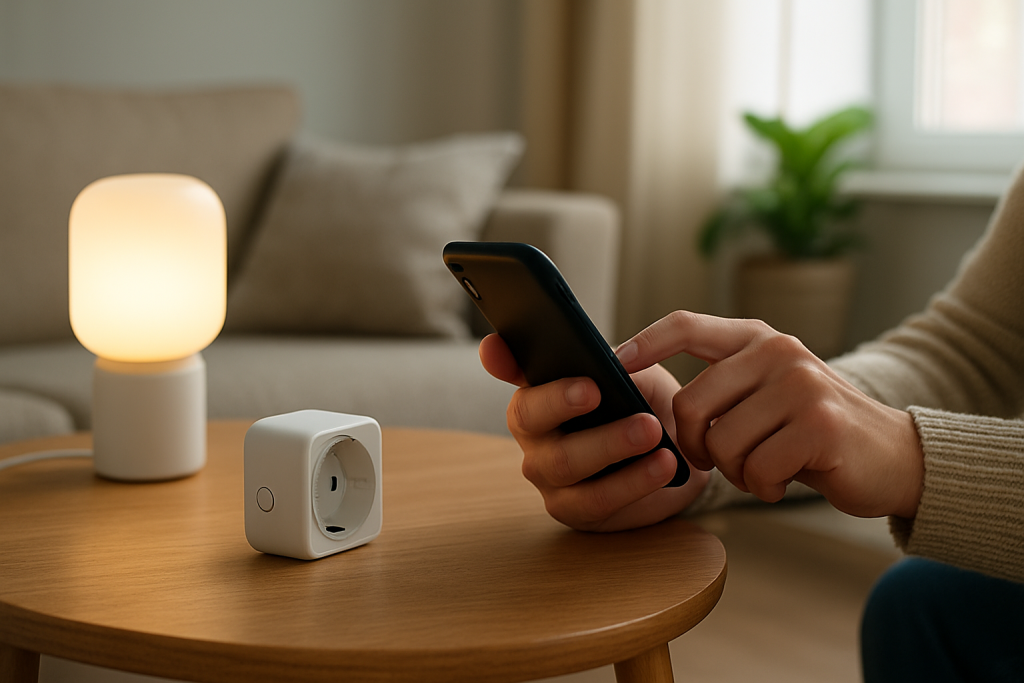
Works on Hotspot but Not Home WiFi: Why This Happens to Smart Devices
Quick Answer
If your smart device works on a phone hotspot but fails on your home WiFi, the most common reason is a router security mismatch. Many smart devices (especially older plugs, bulbs, cameras, and appliances) only support specific WiFi security modes and encryption types, and they can fail silently when your router is set to a newer or mixed security configuration.
A hotspot often “just works” because it typically uses a simple, compatible setup (usually WPA2-Personal on 2.4GHz), while home routers may use WPA3, WPA2/WPA3 mixed mode, enterprise-style options, advanced encryption, band steering, or other security features that some smart devices can’t handle reliably.
Why This Happens
When a device connects to WiFi, it doesn’t just “see the network name and join.” It must successfully complete a security handshake with the router, agree on an encryption method, obtain an IP address from DHCP, and then reach the internet (often to contact a cloud service). A failure at any of these stages can look like “it won’t connect,” but hotspot success strongly suggests the device itself is functional and the home network is where the mismatch occurs.
Router security mismatch (the dominant cause)
Smart devices frequently have limited WiFi chipsets and older firmware. Common incompatibilities include:
WPA3-only networks: Many smart devices do not support WPA3 at all. If your router is set to WPA3-Personal only, the device may never complete the handshake.
WPA2/WPA3 mixed mode quirks: “Transition mode” is meant to help older devices connect, but some IoT devices mis-handle the negotiation and fail intermittently. This can create a frustrating pattern where the device connects once, then refuses after a reboot.
Enterprise/802.1X settings: Some routers expose “WPA2-Enterprise” or RADIUS options. Smart devices almost never support enterprise authentication.
Encryption and compatibility toggles: Settings like “PMF/802.11w required,” “Protected Management Frames required,” or certain “enhanced security” toggles can block older clients. Similarly, forcing “AES only” is usually correct today, but a few legacy devices expect WPA2 with specific compatibility behavior and may fail if the router is locked down too aggressively.
2.4GHz vs 5GHz differences (and why hotspots hide the issue)
Many smart devices are 2.4GHz-only. A phone hotspot may broadcast a single band with simple security, while your home router may:
Use the same network name (SSID) for both 2.4GHz and 5GHz and “steer” devices automatically. Some IoT devices get confused during setup, especially if the phone running the setup app is on 5GHz while the device only supports 2.4GHz.
Use a 5GHz-only SSID for convenience, leaving the 2.4GHz band disabled or hidden, which makes 2.4GHz-only devices fail.
Real-world scenario: apartment interference plus a security setting
In a dense apartment building, your router may be configured with “smart” features: band steering, WPA2/WPA3 mixed mode, and automatic channel selection. Your phone hotspot works because it’s close range and simple. At home, the smart plug sits behind a refrigerator and thick wall; the signal is weaker and more prone to retries. Under weak signal conditions, security handshakes and key exchanges are more likely to fail if the router is using stricter settings (like PMF required) or if the device firmware is fragile. The result: it looks like a signal problem, but the root cause is still a security/compatibility mismatch that only shows up when conditions aren’t perfect.
Common user mistake
A frequent mistake is copying a complex WiFi password with special characters that the device can’t parse correctly (or entering it incorrectly during setup), then assuming the router is at fault. Another common mistake is trying to onboard a 2.4GHz-only device while the phone is connected to 5GHz on a single-SSID network, causing the app to send the wrong network details or fail to discover the device.
An overlooked technical cause: DHCP/IP conflicts
Even if security is compatible, the device still needs an IP address from your router’s DHCP server. If DHCP is misconfigured, the address pool is exhausted, or another device is using the same IP (an IP conflict), the smart device may connect to WiFi but show “offline” in the app. Hotspots rarely have complicated DHCP rules, so they can appear more reliable.
Firmware and software causes
Router firmware updates can change default security behavior (for example, enabling WPA3 or requiring PMF). Likewise, smart device firmware may lag behind and fail to connect after a router update. On ISP modem-router combo units, firmware updates can be pushed automatically, sometimes changing WiFi security modes without obvious notification.
Step-by-Step Fix
Confirm the device’s WiFi requirements. Check the device manual or support page for supported bands (2.4GHz vs 5GHz) and security modes (WPA2-Personal is the most common requirement). If the device is 2.4GHz-only, plan to connect it to a 2.4GHz SSID.
Set your router to a compatible security mode (start with WPA2-Personal). In your router’s WiFi security settings, select WPA2-Personal (sometimes shown as “WPA2-PSK”) with AES. Avoid WPA3-only for initial testing. If you currently use WPA2/WPA3 mixed mode, temporarily switch to WPA2-only to test whether the device can connect reliably.
Ensure 2.4GHz is enabled and easy to join. If your router uses one SSID for both bands, consider temporarily splitting them into two SSIDs (for example, “HomeWiFi-2.4” and “HomeWiFi-5”). Connect your phone to the 2.4GHz SSID during setup, then onboard the device to that same SSID.
Turn off “PMF required” or strict management frame settings (if present). Look for “Protected Management Frames (PMF),” “802.11w,” or “Management Frame Protection.” Set it to “Optional” rather than “Required” while testing. Some IoT clients cannot complete the handshake when PMF is required.
Remove special characters from the WiFi name/password temporarily. As a controlled test, create a temporary 2.4GHz guest SSID with a simple name and password using letters and numbers only. If the device connects to the simple SSID but not the main SSID, you’ve narrowed the issue to compatibility or entry/parsing problems.
Reboot in the right order. Power off the smart device. Reboot the router. Wait until WiFi is fully up. Then power on the smart device and try onboarding again. This clears stale association entries and can resolve router-side state issues after security changes.
Check DHCP and avoid IP conflicts. In the router’s LAN/DHCP settings, confirm DHCP is enabled and the address pool is large enough (for example, 192.168.1.100–192.168.1.250). If you have many devices, expand the pool. If the router shows the smart device connected but the app shows it offline, reserve an IP for the device (DHCP reservation) to prevent conflicts and improve stability.
Update firmware on both router and device. Update the router firmware (from the router admin page or ISP app). Then update the smart device firmware from its app if possible (some devices only update after they connect, so you may need the temporary SSID method first). Firmware updates often fix WPA3 transition bugs and connectivity stability issues.
Test placement and interference during setup. Move the device within 6–10 feet of the router for onboarding. After it’s connected and updated, move it to its intended location. Thick walls, metal appliances, aquariums, and electrical panels can weaken 2.4GHz signals. Nearby networks in apartments can also cause interference, especially on crowded 2.4GHz channels.
Advanced Troubleshooting
Use a practical testing method: isolate the variable
The fastest way to prove a router security mismatch is to create a dedicated 2.4GHz guest network with WPA2-Personal (AES) and a simple password, then connect the device to that guest network. If it connects there but not to your main SSID, the device is rejecting something about your main WiFi configuration (often WPA3, PMF required, band steering behavior, or an SSID/password compatibility issue).
Check router logs and client details
Many routers show a reason code when a client fails to connect (authentication failed, association rejected, handshake timeout). Look under WiFi logs, system logs, or “wireless clients.” If you see repeated authentication failures right after the device tries to join, focus on security settings first rather than signal strength.
Look for router configuration issues that break IoT onboarding
Client isolation / AP isolation: If enabled on the SSID, your phone may not be able to discover the device during setup, even if the device connects to WiFi. Disable isolation on the onboarding SSID or use a standard home SSID for setup.
MAC filtering: If MAC address filtering is enabled (allow-list mode), the device will be blocked until you add its MAC address.
Guest network limitations: Some routers prevent guest clients from reaching local devices or certain ports. That can break discovery or cloud registration. Use guest mode only as a test, then migrate to the main network once you confirm the correct security settings.
ISP modem-router combo pitfalls
ISP gateway devices often have simplified interfaces that still apply advanced security defaults in the background. After an ISP firmware push, WPA3 or PMF settings may change. If your smart devices started failing “all of a sudden,” check whether the gateway enabled WPA3, changed the SSID behavior, or merged/split bands automatically.
Channel width and compatibility
Some IoT devices behave poorly on 2.4GHz when the router is set to 40MHz channel width in crowded environments. If you have persistent dropouts after connecting, set 2.4GHz to 20MHz for stability. This is not primarily a security fix, but it can reduce retries that make fragile security handshakes fail during onboarding.
DNS and “connected but offline” symptoms
If the device connects to WiFi but shows offline, it may be failing DNS resolution or being blocked by a router security feature (such as a firewall rule, parental controls, or an “IoT protection” filter). As a test, temporarily disable custom DNS filtering and check whether the device comes online. If it does, add an exception or use a less restrictive profile for that device.
When to Reset or Replace the Device
Reset the device when you have confirmed the router is broadcasting a compatible 2.4GHz WPA2-Personal network and the device still won’t onboard. A factory reset clears stored SSIDs, cached credentials, and corrupted network states that can persist across power cycles.
Replace the device if it consistently fails on multiple known-good WPA2 networks (for example, your home router set to WPA2-only and a friend’s router set to WPA2-only), or if it only works on a hotspot and never on any router despite resets. That pattern can indicate a failing WiFi radio, outdated hardware that cannot handle modern router security requirements, or firmware that is no longer maintained.
Also consider replacement if the device requires insecure settings you are not comfortable using (such as WEP or open networks). It is not worth weakening your home network to keep a single device online.
How to Prevent This in the Future
Keep your smart home stable by designing WiFi for compatibility first, then layering on security in a controlled way. The goal is to avoid security “surprises” that break IoT devices after updates.
Use a dedicated 2.4GHz IoT SSID with WPA2-Personal (AES) and a straightforward password. If your router supports it, keep your primary devices (phones, laptops) on a separate SSID that can use WPA3, while the IoT SSID stays on WPA2 for broad compatibility.
Limit band steering issues by naming bands clearly or ensuring your router’s “smart connect” feature is proven stable with IoT devices. During onboarding, connect your phone to the same band the device will use (usually 2.4GHz).
Maintain router firmware, but after updates, re-check WiFi security settings to confirm WPA3-only or PMF-required modes were not enabled automatically. If you use an ISP modem-router combo, consider putting it in bridge mode and using your own router for consistent control.
Reduce interference by placing the router centrally, away from thick walls and large metal objects. In apartments, choose less congested 2.4GHz channels when possible and keep 2.4GHz at 20MHz for reliability. Finally, prevent DHCP issues by keeping a healthy DHCP pool size and using DHCP reservations for always-on smart devices such as hubs, cameras, and thermostats.
FAQ
Why does my smart device connect to my phone hotspot but not my home WiFi?
Hotspots typically use a simple, highly compatible setup (often 2.4GHz with WPA2-Personal). Home routers may use WPA3, WPA2/WPA3 mixed mode, PMF required, band steering, or other security features that some smart devices can’t negotiate correctly.
Should I disable WPA3 on my router?
For troubleshooting, yes—temporarily switch to WPA2-Personal (AES) to confirm a security mismatch. For long-term use, consider running WPA3 on your main SSID and a separate WPA2-only SSID for IoT devices, so you don’t have to weaken security for everything.
My device is 2.4GHz-only. Can I keep one WiFi name for both 2.4GHz and 5GHz?
You can, but onboarding is often easier if you split SSIDs so you can force the phone and device onto 2.4GHz during setup. After the device is stable, you can decide whether to keep the bands split or re-enable a combined SSID if your router handles IoT clients reliably.
What does DHCP have to do with a device being “offline”?
DHCP is the router feature that hands out IP addresses. If the device connects to WiFi but can’t get a valid IP (or another device is using the same IP), it may appear connected locally yet fail to reach the internet or cloud service. Expanding the DHCP pool and using a DHCP reservation can prevent conflicts.
What’s one quick test to prove it’s my router and not the device?
Create a temporary 2.4GHz SSID using WPA2-Personal (AES) and a simple password, then try onboarding the device next to the router. If it connects to that test network but not your normal SSID, the issue is almost certainly a router configuration or security mismatch rather than a defective device.
That tension doesn’t have to linger. The moment the pieces click, everything feels a little less fraught—like you finally found the missing sock and didn’t even realize you’d been hunting for it.
Fewer questions, fewer pauses, more room for the day to actually happen. Not dramatic, not cinematic—just cleaner, steadier, and oddly satisfying.