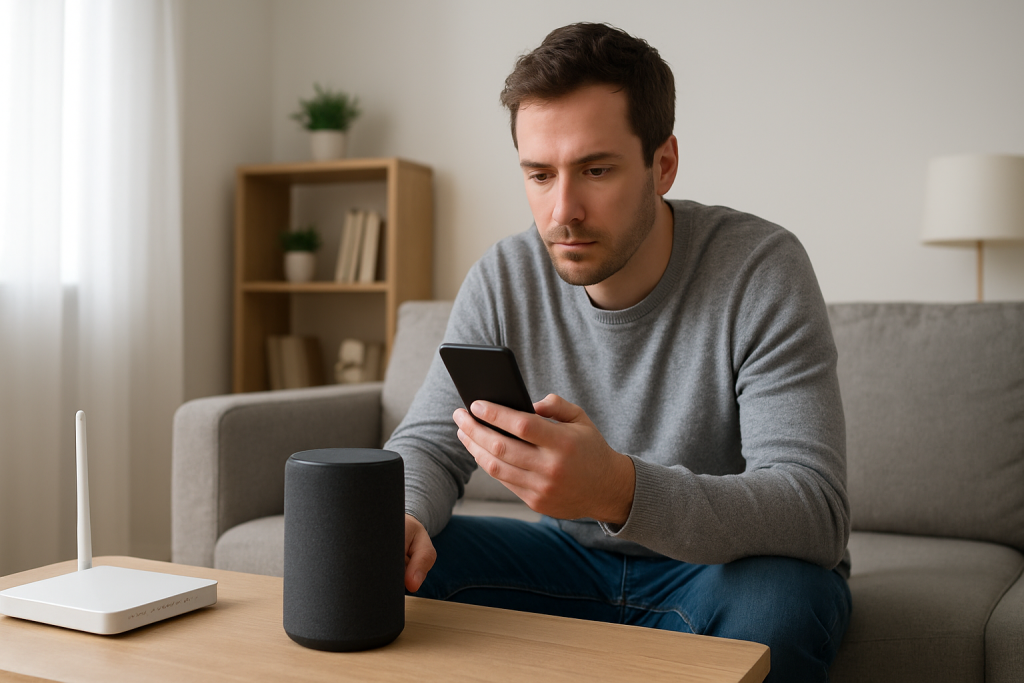
Alexa Routines Not Running on Schedule: How to Fix It
Quick Answer
When Alexa Routines don’t run on schedule, the most common cause isn’t the clock or your Echo device—it’s that the Routine’s trigger conditions or permissions aren’t evaluating the way you think. “Home/Away,” sensor states, Do Not Disturb, Quiet Hours, and location permissions can prevent a Routine from firing even though it looks enabled.
Start by checking the Routine’s trigger details (time, days, location, and any “only when” conditions), then confirm the Alexa app has the right permissions (location, notifications) and that the correct household profile is running the Routine. Finally, verify the devices involved (sensors, lights, plugs) are online and reporting current status in the Alexa app.
Why This Happens
Scheduled Routines feel simple: “At 7:00 AM, do X.” But many Routines are not truly “time-only.” They often include hidden or forgotten conditions such as “only when someone is home,” “only when motion is detected,” “don’t run during Quiet Hours,” or “run on this Echo device only.” If any condition can’t be confirmed, Alexa may skip the Routine rather than partially run it.
Here are the most common, tightly related causes tied to trigger evaluation and permissions:
1) Home/Away status isn’t updating correctly. If a Routine is set to run “when you arrive” or “only when you’re home,” Alexa relies on location services. If the phone that provides location is off, has battery optimization enabled, or location permission is denied, Alexa may think you’re away and skip the Routine.
2) Quiet Hours or Do Not Disturb blocks the action. Some actions (announcements, volume changes, certain notifications) can be suppressed. The Routine may still “run” but appear like it didn’t because you expected an audible confirmation.
3) Sensor triggers aren’t reporting reliably to Alexa. Motion sensors, contact sensors, and temperature sensors can show stale status if the hub, skill, or device integration isn’t updating. If the trigger condition is “motion detected” but Alexa never receives the event, the Routine won’t fire.
4) The wrong device or profile is associated with the Routine. In households with multiple profiles, a Routine created under one profile may not behave as expected when you test under another. Also, some actions are tied to a specific Echo device (for example, “play music on Living Room Echo”). If that device is offline, the Routine may fail or stop.
5) Permissions changed after an app update or phone change. A new phone, OS update, or reinstall of the Alexa app can reset location permissions, background activity rights, or notification permissions. The Routine still shows enabled, but the trigger can’t be validated.
6) Overlooked technical cause: time zone or daylight savings mismatch at the account/device level. If your Amazon account region, Alexa device time zone, or phone time zone is inconsistent, scheduled triggers can drift or run at unexpected times, making it look like they didn’t run.
Real-world scenario: After a power outage, your router comes back online, but your phone reconnects with location services restricted (common after OS updates or battery-saving modes). Your “When I get home, turn on lights” Routine stops working. The lights and Echo are fine; the arrival trigger never evaluates as “arrived,” so nothing happens.
Common user mistake: Adding a condition like “Only when motion is detected” or “Only when I’m home,” then later forgetting it exists. The Routine looks like a simple schedule, but it’s actually conditional.
Step-by-Step Fix
Open the Routine and confirm it’s truly time-based (and enabled).
What to do: In the Alexa app, go to More > Routines. Open the Routine that missed its schedule. Confirm it is Enabled. Check the When this happens trigger: time, days selected, and whether it’s tied to a specific schedule type (sunrise/sunset vs clock time).
What the result means: If days aren’t selected or the time is wrong, the Routine won’t run. If it’s set to sunrise/sunset, it will shift over the year and may appear “off.”
If it fails: Correct the schedule, save, then run a quick test by setting it to 2–3 minutes from now. If it still doesn’t run, continue to the next step.
Check for “hidden” conditions: Home/Away, Quiet Hours, and device-specific restrictions.
What to do: In the same Routine, look for any options like People, Location, Only when, Do Not Disturb, or selections that target a specific Echo device. Also check if the Routine’s actions depend on announcements or audio that could be muted.
What the result means: If the Routine is conditional, it will not run unless the condition evaluates as true at the trigger moment. If the Routine “runs” but you hear nothing, DND/Quiet Hours or volume settings may be masking the result.
If it fails: Temporarily remove conditions (or duplicate the Routine and remove conditions in the copy). Test the simplified Routine. If the simplified one works, the issue is the condition evaluation, not the schedule.
Verify location permissions and background activity (for Home/Away or arrival/leave triggers).
What to do: On the phone that should drive presence, confirm the Alexa app has Location permission set to “Always” (or the closest equivalent that allows background location). Ensure Precise Location is enabled if available. Disable battery optimization for the Alexa app so it can update location in the background.
What the result means: If permissions were off, Alexa may never update your presence state, so “home/away” conditions won’t match reality.
If it fails: If you have multiple household members, confirm which phone/profile is used for presence. As a test, change the Routine to a pure time trigger (no location) and see if it runs. If time works but presence doesn’t, the problem is permission/location related.
Confirm the devices involved are online and reporting current status in the Alexa app.
What to do: In the Alexa app, open Devices. Find the sensor, light, plug, or thermostat used by the Routine. Check whether it shows as unresponsive or has stale readings. For sensors, open the device details and confirm recent activity is visible.
What the result means: If a device is unresponsive or not updating, Alexa can’t evaluate triggers like “motion detected” or “door opened,” and actions may fail even if the Routine starts.
If it fails: Disable and re-enable the device integration (for example, disable/enable the skill if the device comes through a skill) and refresh device discovery. If the sensor still doesn’t update, focus on the integration/hub path in Advanced Troubleshooting.
Run a controlled test Routine to separate “trigger” problems from “action” problems.
What to do: Create a temporary Routine: When = “2 minutes from now,” Action = “Turn on a light” or “Send a notification to my phone” (something easy to confirm). Avoid voice announcements for this test.
What the result means: If the test Routine runs, scheduling works and the issue is likely your original Routine’s conditions, device targeting, or permissions. If the test Routine doesn’t run, the issue may be account sync, device connectivity, or a broader app/service problem.
If it fails: Move to account/cloud checks next, then network checks only as needed.
Check the Alexa app’s device status and account profile consistency.
What to do: Confirm you’re signed into the correct Amazon account in the Alexa app, and that the Routine appears under that same account. If you use Amazon Household, switch profiles in the Alexa app and confirm the Routine isn’t duplicated or split across profiles. Also confirm the Echo device you expect to run the action is registered to the same account.
What the result means: If the Routine exists under one profile but you’re testing under another, you can get inconsistent results—especially with location and personalized features.
If it fails: Recreate the Routine under the intended profile/account and keep it simple first (time + one action). Add conditions back only after it proves reliable.
Advanced Troubleshooting
Account and cloud sync issues (Routine looks correct but doesn’t execute)
If a Routine saves but doesn’t reliably execute, it can be a cloud sync problem between your account, the Alexa service, and the device. This is more likely after changing your Amazon password, enabling extra sign-in verification, migrating to a new phone, or removing/re-adding devices.
What to try: sign out of the Alexa app and sign back in, then confirm the Routine still appears and is enabled. If you recently changed your Amazon account security settings, review any prompts in the Alexa app that request permission re-approval. If a skill is involved (for example, a sensor or smart home platform), open that skill in the Alexa app and check whether it shows “re-link account” or similar wording.
Network-related issues that affect trigger evaluation (only when relevant)
Even when Wi-Fi is “working,” routines can fail if the Echo or a hub is intermittently offline at the moment the trigger fires. This matters most for sensor-based triggers and device state conditions, because Alexa needs timely updates.
What to try: in your router’s connected client list, confirm the Echo device and any hub used by sensors are consistently connected (not frequently disconnecting). If you use a mesh system, temporarily place the Echo closer to the main node and retest the Routine. If the Routine becomes reliable, the issue is not the schedule—it’s that the device or hub isn’t consistently reachable to evaluate triggers and run actions.
Firmware/software causes (app updates, device updates, time zone)
Alexa devices and the Alexa app update in the background. After updates, permissions can reset (especially location), and time zone settings can become inconsistent if your phone’s region/time zone changed.
What to try: confirm the Echo device time zone matches your location in the Alexa app device settings. If a Routine triggers at the wrong time (not just “not at all”), time zone mismatch is a prime suspect. Also ensure the Alexa app is updated and that the phone OS hasn’t restricted background location since the last update.
Configuration conflicts: overlapping routines, Quiet Hours, and “only when” logic
Two routines can conflict in ways that look like a missed schedule. Example: one Routine turns a light on at 7:00 PM, another turns it off at 7:00 PM based on a sensor or “Away” state. If the “off” Routine runs last, you’ll conclude the “on” Routine didn’t run.
What to try: temporarily disable other routines that touch the same devices. Then test again. Also review any Quiet Hours/Do Not Disturb settings and any “only when” conditions. If a Routine depends on a sensor state (for example, “if door is closed”), remember that a stale sensor state can cause the condition to evaluate incorrectly.
When to Reset or Replace the Device
Try a soft restart first when: the Echo shows as offline in the Alexa app, routines fail across multiple schedules, or the device is slow to respond to voice commands. A restart clears temporary software issues and forces a fresh connection to the Alexa service. After the restart, retest with a simple time-based Routine.
Consider a factory reset when: the Echo repeatedly drops from the account, won’t stay registered, shows persistent incorrect time zone after you correct it, or routines fail even with a brand-new simple Routine and verified permissions. Factory reset removes the device from your account and clears Wi-Fi settings, device-specific preferences, and local configurations. You will need to set it up again in the Alexa app and reassign it to groups and routines.
Replace or seek service when: the device overheats, emits a burning smell, has a swollen power adapter, or behaves erratically even immediately after factory reset and fresh setup. Safety note: unplug the device if you suspect overheating or electrical damage, and do not attempt to open the device or repair internal components.
How to Prevent This in the Future
Keep routines reliable by making trigger logic obvious and minimizing fragile conditions.
1) Prefer time-based triggers for critical tasks. If you must use Home/Away or sensors, keep the Routine simple and avoid stacking multiple “only when” conditions until the basic behavior is proven.
2) Lock down location reliability. Ensure the Alexa app has consistent location permission on the phone that drives presence, and avoid aggressive battery-saving modes that stop background updates. If multiple people affect presence, confirm which devices are allowed to update it.
3) Use a confirmation method that survives Quiet Hours. For troubleshooting, use phone notifications or a visible device action (like turning on a light) rather than relying on announcements that may be suppressed.
4) Keep device naming and targeting clean. If a Routine targets “Bedroom Echo,” don’t rename devices frequently. After renaming, revisit routines to confirm they still point to the intended device.
5) Review routines after account or phone changes. New phone, OS update, password change, or reinstall are the moments when permissions and linked accounts most often break. A quick check of location permission and linked skills can prevent weeks of intermittent failures.
6) If you use mesh Wi-Fi, place the Echo and any sensor hub where they get stable coverage. Routine triggers that depend on real-time sensor events need consistent connectivity to report state changes promptly.
FAQ
My Routine is enabled. Why does it still not run on schedule?
Enabled only means it’s allowed to run. If the Routine includes conditions (Home/Away, sensor state, Quiet Hours, or device targeting) and those conditions aren’t met or can’t be confirmed at the trigger moment, Alexa may skip it. Duplicate the Routine, remove conditions, and test again to confirm.
Does Do Not Disturb stop routines from running?
It can stop you from noticing them. Many routines still execute device actions, but audible announcements and some notifications may be suppressed. For testing, use an action you can see (turn a light on) or a phone notification instead of an announcement.
Common misconception: “If my Echo hears me, routines must work too.” Is that true?
No. Voice commands can work even when routine triggers fail, because scheduled and conditional routines depend on cloud evaluation, permissions (like location), and device state reporting. A Routine can fail because a sensor state is stale or presence can’t be verified, even while voice control seems normal.
My “arrive home” routine stopped working after I got a new phone. What should I check?
Check Alexa app location permission on the new phone, enable precise location if available, and allow background activity so location updates continue when the app isn’t open. Also confirm you’re signed into the same Amazon account/profile that owns the routine.
Why do sensor-based routines work sometimes and fail other times?
Intermittent failures usually mean the sensor event isn’t consistently reaching Alexa, or the sensor state is delayed. Confirm the sensor shows current status in the Alexa app, check the linked account/skill is still authorized, and make sure any hub involved stays online. If the sensor status is stale, the trigger condition may never evaluate as true.
What lingers isn’t confusion so much as the strangest feeling of recognition. The world didn’t change overnight—just the way you notice it.
Now the rest feels less like a chore and more like closing a door that’s been creaking for too long. Nothing dramatic, just a cleaner, calmer read on the whole thing.