Smart Lights Schedule Works Sometimes but Not Always: What to Check
Quick Answer
When a smart light schedule works only sometimes, the most common real-world cause is that the schedule is being evaluated in more than one place (app, hub, voice assistant, or cloud), and those “sources of truth” are not staying in sync. You end up with a schedule that looks correct in one app, but the device is actually following a different schedule, a scene, or a hub rule that occasionally overrides it.
This shows up across WiFi bulbs, Zigbee hubs (including Hue-style bridges), Thread/Matter setups, and mixed ecosystems where the same lights are linked to multiple apps (manufacturer app plus Apple Home/Google Home/Alexa). The schedule may fire late, not at all, or only for some bulbs in a group.
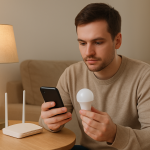
Do these three checks right away: (1) pick one light that failed and check its status in the controlling app at the exact scheduled time (online/offline, last seen, and which controller is listed); (2) confirm the schedule is not duplicated in another app or assistant (two schedules can “fight”); (3) run a quick power cycle sequence (router/hub first, then lights) to force a clean reconnect before the next scheduled event.
Why This Happens
Schedules are simple on the surface (“turn on at 7:00 PM”), but in many homes they are executed by a controller that may be local (a hub/bridge) or cloud-based (a vendor server or voice assistant). If the controller can’t reliably reach the light at the moment the schedule triggers, or if another controller issues a conflicting command, the result is a schedule that works sometimes but not always.
Common technical causes closely tied to this “who is actually running the schedule?” problem include:
1) Multiple controllers issuing commands: the manufacturer app, a hub (Zigbee/Thread), and a voice assistant can all run automations. If two rules trigger near the same time, the last command wins, making it look like the schedule “didn’t run.”
2) Cloud dependency and account sync delays: some schedules are stored in the cloud and pushed down to devices. If the account is logged out, the home is set to the wrong location, or the cloud is having a partial outage, schedules may skip or run late even though manual control still works.
3) Hub or bridge not reachable at trigger time: Zigbee bridges, Matter controllers, and some WiFi lighting “hubs” must be online for schedules to fire. If the hub reboots overnight, changes IP addresses, or loses internet (for cloud-run schedules), automations can become intermittent.
4) Group/scene behavior overriding per-bulb schedules: a schedule may target a group, but one bulb is not actually in that group anymore (or is in multiple groups). Scenes can also set brightness/color and inadvertently turn a light “off” by setting brightness to 0 or applying a different state immediately after the schedule triggers.
5) Time, timezone, and daylight saving mismatches: if a controller uses a different timezone than your phone, or the home location is wrong, schedules can fire at unexpected times. This is especially easy to miss when “sunset/sunrise” automations are involved.
Real-world scenario: a homeowner sets a “Porch On at Sunset” schedule in the bulb maker’s app, then later adds the same bulbs to a voice assistant and enables a “Good Evening” routine that also controls the porch. Most days it looks fine, but on some days the assistant routine runs slightly later and turns the porch back off (or changes it to a dim scene), making it seem like the schedule failed.
Common user mistake: creating a schedule in one app, then recreating it in another app “just to be safe.” This usually makes reliability worse, not better, because you’ve created a race condition.
Overlooked technical cause: a controller choosing the wrong “home” or “location.” Many apps support multiple homes. If your schedule was created while the app was pointed at “Home,” but you’re now viewing “House” (or vice versa), the schedule you’re editing may not be the one that actually runs.
Most Likely Causes in Real Homes
1) Duplicate schedules or routines across apps: two automations target the same lights, causing intermittent overrides.
2) The schedule runs on a cloud service that is occasionally unavailable or your account is not fully synced/logged in.
3) One light in a group is intermittently offline at trigger time, so the group schedule “partially” works.
4) Hub/bridge/controller restarts or changes network identity (IP address), breaking automation execution until it stabilizes.
5) Timezone, daylight saving, or sunrise/sunset location settings are wrong on the controller that runs the schedule.
Step-by-Step Fix
Identify which system is actually running the schedule. Open the app where the schedule was created and confirm it’s enabled, assigned to the correct home/location, and targeting the correct device or group. Also check any connected platforms (voice assistants, Apple Home, Google Home, Alexa, SmartThings-style hubs) for a similar automation.
What the result means: If you find two schedules/routines that do the same thing (or opposite things) around the same time, that usually explains “sometimes” behavior.
If it fails: Temporarily disable all but one schedule (choose one controller to be the single source of truth), then test for 24 hours before re-enabling anything else.
Check device status at the exact moment the schedule should run. A few minutes before the scheduled time, open the controlling app and look for “Online/Offline,” “Last seen,” or “Unreachable.” If it’s a hub-based system, check the hub/bridge status too.
What the result means: If the light shows offline/unreachable at trigger time, the schedule may be firing correctly but the command can’t reach the device. If the light is online but doesn’t change, the issue is more likely a conflicting automation, a scene, or a controller problem.
If it fails: Proceed to the power cycle sequence and then isolate whether the issue is one device or the whole system.
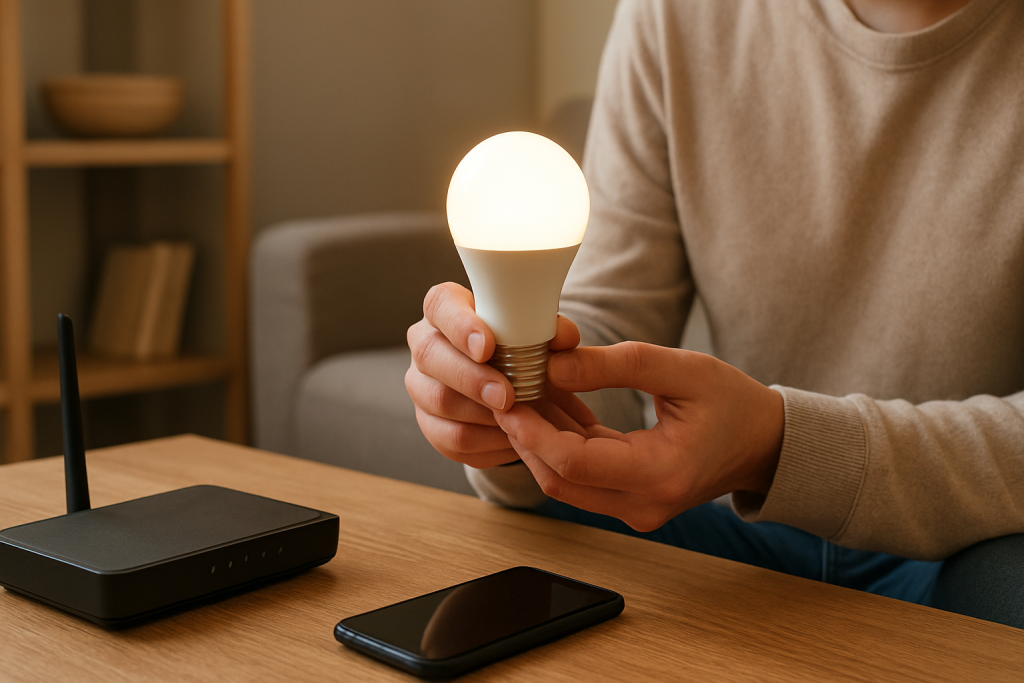
Do a clean power cycle in the correct order. Turn off the light(s) using the app (not the wall switch), then reboot the controller chain: (1) router, (2) any smart home hub/bridge/Matter controller, (3) wait for internet to stabilize, then (4) power cycle the light by toggling it off/on from the app. If a bulb is truly stuck, you can turn the wall switch off for 10 seconds and back on, but avoid repeated rapid toggling.
What the result means: If schedules start working right after this, it suggests the controller or device was in a stale state (lost session, bad route, or partial disconnect).
If it fails: Move to network band and mesh behavior checks to find why the device drops off at trigger time.
Verify WiFi band and mesh behavior (WiFi bulbs and WiFi bridges). In your router app, confirm the bulb/bridge is connected to the expected network. Many smart lights are 2.4 GHz only. If your router uses a single combined name for 2.4/5 GHz, the phone may be on 5 GHz while the bulb is on 2.4 GHz, which can confuse setup and control in some apps. Also check if the device is hopping between mesh nodes.
What the result means: If the bulb or bridge frequently changes access points or shows weak signal, intermittent schedule failures often happen at the moment the device is roaming or reconnecting.
If it fails: Temporarily place the device/controller closer to the router or a stable mesh node, then retest the schedule. If that helps, the long-term fix is placement and mesh tuning, not more schedules.
Run a “hotspot isolation test” to separate device issues from home network issues. Temporarily create a phone hotspot (with a simple name and password) and connect one problem WiFi bulb to it (only if the bulb supports changing WiFi without a full reset, or if you are comfortable re-adding it). Then create a simple schedule on that same platform.
What the result means: If the schedule is reliable on the hotspot, your home network (router/mesh behavior, DHCP changes, or interference) is the likely cause. If it still fails, the issue is more likely the account/controller/app side or the bulb itself.
If it fails: Reconnect the bulb back to your home network and continue with schedule and group verification to rule out configuration conflicts.
Confirm schedule details: time, timezone, sunrise/sunset, and days selected. Check the schedule start time, selected days, and whether it’s tied to sunrise/sunset. Verify the home address/location used for sunrise/sunset automations. Confirm the controller’s timezone matches your phone.
What the result means: If the schedule fires at the “wrong” time, this is usually a timezone/location problem rather than connectivity.
If it fails: Change the schedule to a fixed time (not sunrise/sunset) for one day as a test. If fixed time works reliably, the issue is specifically location/time calculation.
Test group synchronization versus individual control. Create a temporary schedule that targets one bulb only (not a room/group). Then create another that targets the group. Observe which one fails.
What the result means: If individual schedules work but group schedules fail, the problem is usually group membership, a stale device list, or one bulb in the group dropping offline and causing inconsistent results. If group works but individual fails, there may be a scene or automation overriding the single device.
If it fails: Remove the problematic bulb from the group and re-add it, then re-test. Also check for duplicate devices (same bulb appearing twice) in the app.
Check for scene, routine, or “adaptive lighting” conflicts. Look for features that automatically adjust brightness/color temperature during the day, motion-triggered lighting, “away mode,” or bedtime routines. These can trigger near the same time as your schedule and overwrite the state.
What the result means: If disabling one feature makes the schedule reliable, you’ve found a configuration conflict rather than a connectivity issue.
If it fails: Rebuild the automation so only one rule controls that light during the problematic time window (for example, a single routine that sets both on/off and brightness/color).
Confirm account and permission consistency across household members. If multiple people manage the home, make sure the schedule is created under the correct account/home and that all controllers (phones, tablets, smart speakers) are signed in and authorized. If the platform supports “home owners” and “members,” confirm the schedule creator still has owner-level permissions.
What the result means: If schedules disappear, revert, or only run when one person’s phone is home, it often points to account/home mismatch or a controller role issue.
If it fails: Sign out/in on the controlling app, then reboot the hub/controller and check whether the schedule list refreshes correctly.
Advanced Troubleshooting
This section is only needed if basic fixes fail.
Account or cloud issue: If manual control works but schedules fail across multiple devices at the same time, check the platform’s service status (if available) and confirm your app is not stuck in a logged-out or “limited mode” state. A subtle sign is when schedules appear to save but don’t actually execute. Signing out and back in, then confirming the correct home/location is selected, often resolves silent sync problems.
Network issue (only when it matches the symptoms): If failures happen after router reboots, power outages, or overnight, look for IP address changes and unstable connectivity. Some bridges/controllers behave poorly if their IP changes frequently. If your router supports it, reserving an IP for the hub/bridge can stabilize schedule execution. If you notice the hub is on WiFi and frequently roams, moving it to a more stable location (or using a more stable connection method supported by the device) can reduce missed triggers.
Firmware/software cause: Intermittent schedule bugs are often fixed in firmware updates for bulbs, bridges, and controllers, as well as app updates. Update the lighting devices, hub/bridge, and the controlling app. If the issue started immediately after an update, try recreating the schedule from scratch rather than editing an old one (old schedules can carry corrupted or outdated parameters).
Configuration conflict (groups, scenes, automations, permissions): Mixed ecosystems are the biggest risk. If the same lights are exposed to multiple platforms (for example, a hub exposes lights to a voice assistant, and the manufacturer app also controls them), decide which platform owns schedules. Keep schedules in one place, and use the others for manual control only. If you need cross-platform control, prefer one “master” automation that sets the final desired state, and remove overlapping rules that trigger within a few minutes of each other.
When to Reset or Replace the Device
Soft restart vs factory reset: A soft restart is simply power-cycling the controller chain and the light so it reconnects cleanly. A factory reset wipes the light’s pairing and configuration so it can be added again from scratch. Try a soft restart first; it fixes many intermittent schedule issues without losing settings.
What you lose after a factory reset: You typically lose the bulb’s pairing to the hub/app, its name, room assignment, group membership, and any device-specific settings. You may also need to rebuild scenes and automations that referenced that device. Plan to reset one device at a time so you can confirm the fix before resetting others.
Safety note: If a bulb, switch, or bridge is unusually hot, smells like burning, flickers rapidly, or shows visible damage, stop using it and replace it. Intermittent schedules are not worth troubleshooting if there are signs of overheating or hardware failure.
How to Prevent This in the Future
Keep one automation “owner” per light. Decide whether schedules live in the manufacturer app, a hub, or a voice assistant, and avoid duplicating the same schedule elsewhere. This single habit prevents most “works sometimes” behavior caused by conflicts.
Stabilize controller placement. Put hubs/bridges/controllers in a central, open location, not inside cabinets or behind TVs. For mesh networks, avoid placing the controller where it frequently roams between nodes.
Manage groups and scenes deliberately. Periodically confirm group membership and remove duplicate devices. If you often change rooms or rename devices, re-check automations afterward; old references can silently break or target the wrong group.
Plan for power outages. After an outage, verify the hub/controller is online and that the lights show reachable before the next scheduled event. If your lights have a “power-on behavior” setting, choose a behavior that won’t conflict with schedules (for example, restore last state rather than forcing full brightness at 3 AM).
Maintain firmware and app updates. Update bulbs, hubs, and controllers a few times per year. If you update, watch the next day’s schedule run; if it misbehaves, recreate the schedule instead of repeatedly editing the same one.
FAQ
Why does the schedule work when I test it, but fail overnight?
If it works during a manual test but fails overnight, it often means the controller (hub/bridge/cloud account) isn’t consistently available at the trigger time. Overnight is when routers reboot, internet connections renegotiate, and mesh systems steer devices. Check whether the hub/bridge or the specific bulb shows “offline” or “last seen” gaps around the failure time, and make sure schedules aren’t duplicated in another platform that runs at night (bedtime routines, away mode, or adaptive lighting).
My app shows the schedule is enabled. Doesn’t that prove it should run?
No. “Enabled” only means the rule exists in that app. The schedule can still fail if it’s stored under a different home/location than the one you’re viewing, if another controller is overriding it, or if the controller that executes it can’t reach the device at the moment it triggers. The most useful check is device status at the scheduled time and confirming there is only one place where that schedule exists.
Do Zigbee/Thread/Matter lights avoid these issues compared to WiFi bulbs?
They can be more consistent, but they are not immune. Hub-based systems reduce dependence on the internet for local schedules, but they still rely on the hub/controller being stable and on the mesh being healthy. If one device is a weak link in the mesh, group schedules can become inconsistent. The same “multiple controllers” problem also applies when the hub exposes devices to multiple apps that can each run automations.
Why do only some bulbs in a room follow the schedule?
This usually points to group membership or reachability. One bulb may be offline at trigger time, accidentally removed from the group, duplicated in the app, or controlled by a different automation (for example, a scene that targets only that bulb). Test an individual schedule on the problem bulb; if it fails individually, focus on connectivity. If it works individually but not in the group, rebuild the group and re-check for conflicts.
Misconception: “If I create the same schedule in two apps, it will be more reliable.” Is that true?
No. Duplicating schedules usually makes results less reliable because the two apps may trigger at slightly different times or apply different scenes/brightness levels. The light will follow whichever command arrives last, which can look like random failures. For consistent behavior, keep one schedule in one place and disable overlapping routines elsewhere.
After a while, the noise fades and what’s left feels oddly simple—like closing a tab you didn’t realize had been open all week. Not dramatic, not flashy, just cleaner and calmer.
There’s a kind of relief in that. The work can be ordinary, but the outcome lands with a quiet confidence that keeps showing up in everyday moments.