WiFi Keeps Disconnecting Randomly: The Most Reliable Fixes
Quick Answer
Random WiFi dropouts are often caused by unstable router firmware: the router “looks” connected, but its wireless driver crashes, reboots, or mishandles roaming and band steering. This is especially common after an automatic update, after changing advanced WiFi settings, or on ISP-provided modem-router combos with heavily customized firmware.
The most reliable fix is to stabilize the router software first: update to a known-good firmware version (or roll back if the newest release is buggy), then reset and reconfigure WiFi with conservative settings. After firmware stability is confirmed, address interference, band selection (2.4GHz vs 5GHz), and DHCP/IP conflicts that can mimic WiFi disconnects.
Why This Happens
When WiFi disconnects “randomly,” the instinct is to blame signal strength. Signal does matter, but many homes have strong signal and still see dropouts across phones, laptops, and smart devices. A frequent root cause is router firmware instability: the router’s operating system and wireless drivers manage authentication, encryption, channel selection, beamforming, and client compatibility. If that software is buggy, the router may silently restart the WiFi radio, drop clients during key renegotiation, or fail under load.
Firmware issues often show up as patterns: disconnects at the same time each day (scheduled maintenance, memory leaks, ISP provisioning), dropouts when multiple smart devices wake up at once, or frequent reconnects when moving between rooms (roaming/band steering bugs). In homes with many IoT devices, the router’s client-handling code is constantly busy, and borderline firmware can become unstable.
A real-world scenario: in an apartment building with dozens of neighboring networks, your router may auto-switch channels to avoid congestion. Some firmware versions handle this poorly, causing brief outages that knock smart plugs, cameras, and speakers offline. Another common scenario is an ISP modem-router combo that receives automatic updates overnight; after the update, 5GHz looks fast but drops repeatedly, while 2.4GHz stays connected.
There are also secondary contributors that amplify firmware problems:
2.4GHz vs 5GHz behavior: 2.4GHz travels farther and penetrates thick walls better, but it’s crowded and more prone to interference from neighbors, Bluetooth, microwaves, and baby monitors. 5GHz is faster and cleaner but has shorter range; clients at the edge of coverage may “flap” between connected and disconnected, especially if band steering is aggressive.
Router configuration issues: Features like Smart Connect/band steering, WPA3-only mode, DFS channels, and overly wide channel widths (80/160 MHz) can trigger compatibility problems or instability in certain firmware builds.
Overlooked technical cause: DHCP/IP conflicts. Even if WiFi is fine, devices can appear to “drop” when they can’t keep a valid IP address. If two devices end up with the same IP (often due to manual/static IP settings or a misconfigured range), one gets kicked off the network intermittently.
Common user mistake: Changing multiple settings at once (channels, security mode, DNS, QoS, band steering) and then trying to troubleshoot. This makes it hard to identify the single change that triggered the instability, and it can leave the router in an edge-case configuration that firmware handles poorly.
Step-by-Step Fix
Confirm it’s the WiFi link, not the internet. When a disconnect happens, check whether devices lose WiFi entirely or stay connected but show “No internet.” A practical test: on a laptop, run a continuous ping to the router’s gateway IP (often 192.168.0.1 or 192.168.1.1). If pings to the router drop, it’s WiFi/router stability. If pings to the router stay solid but pings to a public IP (like 1.1.1.1) fail, it’s likely ISP/WAN.
Check router uptime and logs for reboots or WiFi driver crashes. Log in to the router admin page and look for “System Uptime,” “System Log,” “Kernel log,” or “Wireless log.” Frequent short uptimes or repeated messages about “radio restart,” “deauth,” “WPA rekey,” or “watchdog reboot” strongly point to firmware instability.
Update firmware carefully (or roll back if the problem started after an update). Use the router’s official firmware page or app. If the router is ISP-provided, check for updates through the ISP portal/app. If disconnects began immediately after a firmware update, search the release notes and consider rolling back to the prior stable version if the router supports it. Avoid beta firmware while troubleshooting.
Back up settings, then factory reset the router and reconfigure from scratch. Firmware updates can leave old settings in place that conflict with new code. A factory reset clears corrupted configuration. After resetting, configure only essentials first: SSID, password, and basic ISP settings. Do not restore an old backup yet; restoring can reintroduce the problematic configuration.
Set conservative WiFi settings to maximize stability. In the WiFi settings, apply these stability-first choices:
Use WPA2-Personal (AES) or WPA2/WPA3 mixed mode if you have modern devices; avoid WPA3-only until stability is confirmed.
Set 2.4GHz channel width to 20 MHz. For 5GHz, use 40 or 80 MHz depending on congestion, but reduce width if dropouts persist.
Manually select a clean channel instead of “Auto” if your router keeps channel-hopping. For 2.4GHz, prefer channels 1, 6, or 11.
Temporarily disable advanced features like band steering/Smart Connect, airtime fairness, and “eco” WiFi scheduling to see if stability improves.
Split SSIDs for 2.4GHz and 5GHz during troubleshooting. Name them differently (for example, HomeWiFi-2G and HomeWiFi-5G). This prevents devices from bouncing between bands due to steering bugs. Many smart devices are 2.4GHz-only and become unreliable when the router tries to unify bands under one name.
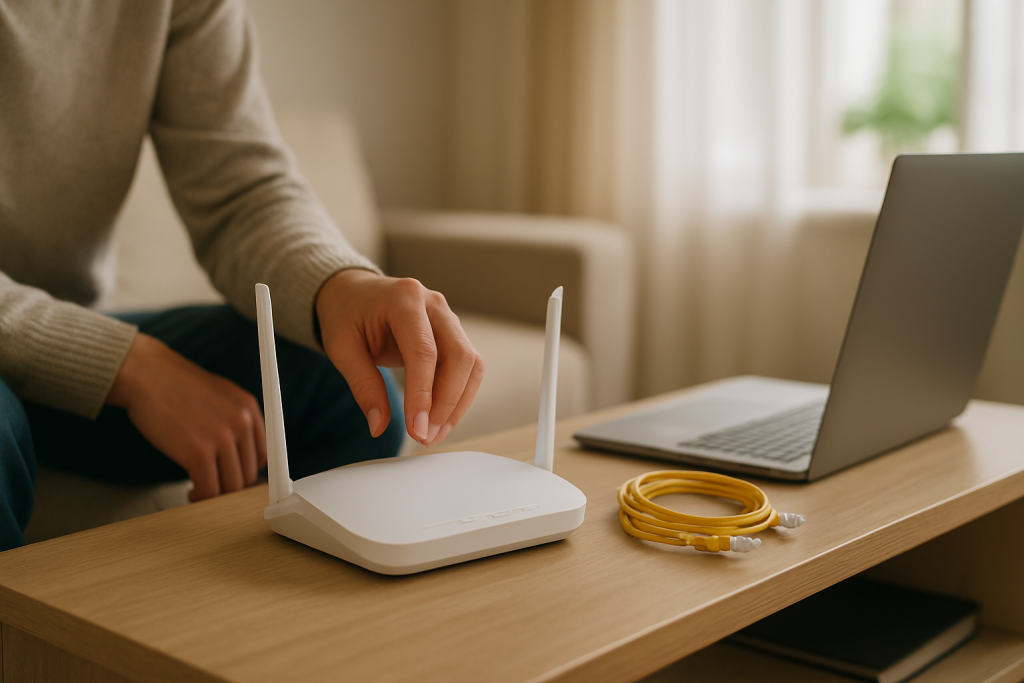
Address placement and interference (especially in apartments or thick-wall homes). Place the router centrally, elevated, and away from TVs, microwaves, cordless phone bases, and metal cabinets. In an apartment, neighboring routers can saturate the 2.4GHz band; if your smart devices are close enough, consider moving them to 5GHz-capable models or adding an access point closer to the problem area.
Check DHCP settings and eliminate IP conflicts. Ensure DHCP is enabled on only one device (usually the router). If you have an ISP modem-router combo plus your own router, confirm you’re not running two routers handing out addresses unless you intentionally set up bridge mode. If you assigned static IPs to devices, make sure they’re outside the DHCP pool or reserved properly. IP conflicts can look like random disconnects when one device “steals” another’s address.
Test stability with a controlled load. After changes, run a 30–60 minute test: stream video on one device, make a video call on another, and keep a continuous ping running. If disconnects stop, add devices back gradually (especially smart cameras and hubs) to identify whether a specific client triggers the router’s instability.
Advanced Troubleshooting
If the basic steps improved things but you still see periodic dropouts, focus on firmware-adjacent features and edge cases that commonly destabilize home routers.
Disable DFS channels on 5GHz
Some routers use DFS (Dynamic Frequency Selection) channels that must vacate the channel when radar is detected. In certain areas, this can cause sudden channel changes that disconnect clients. If your firmware handles DFS poorly, you’ll see frequent 5GHz drops. Set 5GHz to a non-DFS channel range and retest.
Turn off “Smart” features that change behavior automatically
Band steering, automatic channel optimization, and “AI WiFi” features can be helpful, but they also increase complexity and can expose firmware bugs. Disable them temporarily. If stability returns, re-enable one feature at a time to find the trigger.
Check for double NAT and modem-router combo issues
With an ISP gateway plus your own router, you can end up with two layers of routing (double NAT). While double NAT doesn’t always cause WiFi disconnects, it often causes devices to appear offline, especially smart home hubs that rely on local discovery. If you use your own router, put the ISP gateway into bridge mode (or set your router to access point mode) so only one device handles routing and DHCP.
Look for overheating or power instability
Firmware instability can be worsened by heat: the router’s CPU or WiFi chipset throttles or crashes and the radio resets. Ensure vents are clear and the router isn’t stacked on other equipment. Also check the power adapter; a failing adapter can cause random reboots that look like WiFi disconnects.
Isolate a problematic client device
One misbehaving device can trigger router bugs (for example, an older WiFi chipset repeatedly failing authentication or spamming reconnect attempts). Temporarily turn off all smart devices (or unplug smart hubs) and test with just a phone and laptop. If stable, reintroduce devices in batches. Pay attention to older 2.4GHz-only devices and bargain smart plugs, which can be unusually chatty.
Use a second access point or mesh node (without changing the router)
If firmware is stable but coverage is marginal, add an access point closer to the weak area rather than pushing the router to maximum transmit power. In a home with thick walls, 5GHz may drop simply due to physics. Keep 2.4GHz for distant smart devices and reserve 5GHz for nearby high-bandwidth devices.
When to Reset or Replace the Device
Reset is appropriate when you suspect corrupted settings, a bad update, or too many changes over time. Replace is appropriate when the hardware or vendor support can’t deliver stable firmware.
Consider a factory reset (again) if:
You updated firmware but restored an old configuration backup and the problem returned, or you see odd behavior like settings not saving, SSIDs reappearing, or logs filling with repeated WiFi service restarts.
Consider replacing the router if:
The router reboots randomly even after a reset and conservative settings, it hasn’t received firmware updates in years, or the vendor’s recent firmware releases are widely reported as unstable for your model. Also replace if your home now has many smart devices and the router is an older entry-level unit with limited memory; firmware can become unstable under higher client counts.
If you use an ISP modem-router combo and can’t control firmware versions, replacement often means putting the ISP device into bridge mode and using your own router with a better update track record.
How to Prevent This in the Future
Keep router firmware stable by treating updates like a controlled change, not a background event. If your router supports it, disable automatic firmware updates and update manually when you have time to test. If you prefer automatic updates, at least note the date/time so you can correlate new issues with a firmware change.
Use stability-first WiFi settings as your baseline: separate SSIDs if you have many smart devices, WPA2/WPA3 mixed (not WPA3-only), 2.4GHz at 20 MHz, and avoid DFS if you’ve seen 5GHz drops. Keep the router in a cool, open location and avoid stacking it with other hot electronics.
Prevent IP conflicts by using DHCP reservations for devices that need consistent addresses (smart hubs, printers, NAS) instead of manual static IPs. If you add a second router or mesh system, decide clearly which device is the router (DHCP/NAT) and which is just providing WiFi (access point mode).
Finally, document changes. A simple note like “Changed 5GHz channel to 36” or “Disabled band steering” makes it much easier to undo the one setting that triggers instability, especially after a firmware update changes how features behave.
FAQ
Why do my smart home devices disconnect more than my phone or laptop?
Many smart devices use 2.4GHz only, have weaker antennas, and are less tolerant of router features like band steering, WPA3-only security, or aggressive power-saving. If your router firmware is unstable, these devices also reconnect more often, which can make the problem look worse on smart devices even though the router is the root cause.
Should I use 2.4GHz or 5GHz to stop random disconnects?
Use 2.4GHz for longer range and better wall penetration, especially for smart devices far from the router. Use 5GHz for nearby devices that need speed. If devices are on the edge of coverage, 5GHz can drop more often. During troubleshooting, split SSIDs so you can force a device onto the band that behaves most reliably.
Can a firmware update really cause WiFi to drop even if the signal is strong?
Yes. Firmware controls the WiFi radio driver, authentication, and client management. A buggy release can cause the radio to restart, mishandle encryption key renegotiation, or crash under load. If problems began after an update, rolling back (if possible) or resetting and reconfiguring without restoring old settings is often the fastest path to stability.
What is a DHCP or IP conflict, and how does it look like a WiFi problem?
DHCP is the service that hands out local IP addresses to devices. If two devices end up with the same IP address, one may lose connectivity intermittently, apps may say the device is “offline,” or connections may drop and reconnect. Fix it by ensuring only one router runs DHCP and by using DHCP reservations instead of manual static IPs within the active DHCP range.
How can I tell if my router is rebooting when WiFi disconnects?
Check the router’s uptime in the admin interface right after a dropout. If uptime is only a few minutes, the router rebooted. You can also review system logs for watchdog resets or power events. If reboots persist after a firmware update and factory reset, suspect overheating, a failing power adapter, or failing router hardware.
What changes, really, is the noise. The worry stops taking up space in the day, and the whole thing feels less like a mystery and more like something that has already been dealt with.
There’s a small, almost boring satisfaction in that. The problem doesn’t vanish with fireworks, but it does lose its grip, and your attention gets to move on.