Why Smart Home Devices Go Offline After a Router Firmware Update
Quick Answer
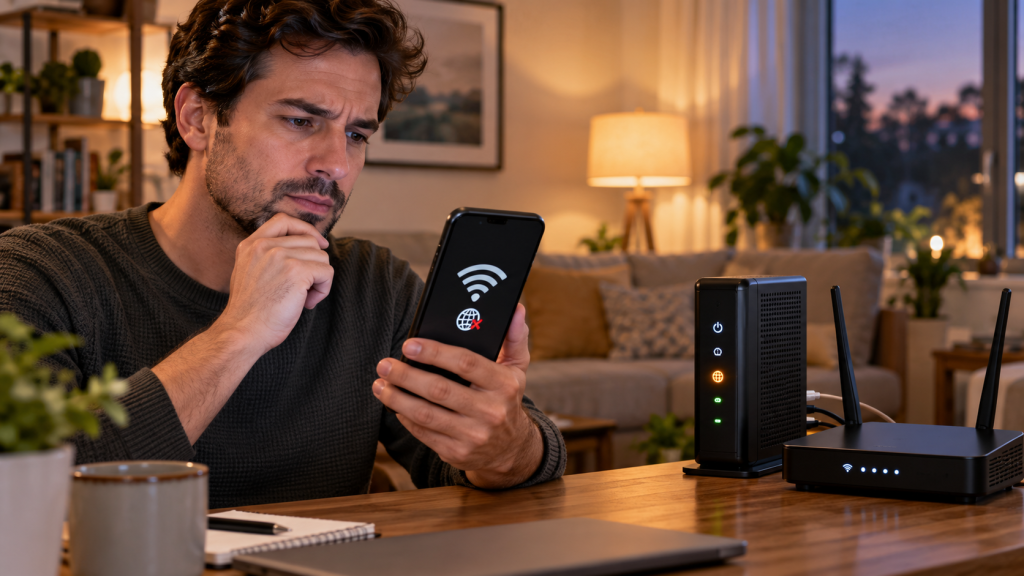
After a router firmware update, many routers silently revert parts of their configuration to defaults. Even if your Wi‑Fi name and password look unchanged, the update may reset settings that smart home devices depend on—especially 2.4 GHz options, security modes, DHCP behavior, or band steering rules.
Most smart devices are picky about Wi‑Fi details. A firmware “reset change” can make the network technically different enough that devices drop offline and won’t rejoin until the router settings are corrected or the devices are re-paired.
Why This Happens
Router firmware updates don’t just patch security holes. They can also change how the router stores and applies settings. Some updates migrate settings imperfectly, and others intentionally reset certain options to defaults to avoid compatibility problems. Unfortunately, those defaults are often unfriendly to older or low-power IoT devices.
Firmware updates can partially reset Wi‑Fi behavior
A common pattern is: the SSID (network name) and password remain the same, but the radio settings change. For example, the update may re-enable “Smart Connect” (band steering), switch the security mode to WPA3 or WPA2/WPA3 mixed, change the 2.4 GHz channel width to 40 MHz, or turn on features like 802.11ax (Wi‑Fi 6) compatibility modes. Many smart plugs, bulbs, and sensors only support 2.4 GHz, and some struggle with newer security handshakes or aggressive roaming features.
DHCP and IP addressing can shift
Firmware can reset the router’s DHCP server settings (the service that hands out local IP addresses). If the DHCP pool changes, or if the router forgets reserved IPs, a device may end up with a new address. That’s usually fine, but some hubs, apps, or local integrations expect a device at a specific IP. In rarer cases, you can get an IP conflict—two devices accidentally using the same address—leading to random offline behavior.
Guest network, isolation, and firewall defaults may return
Another overlooked cause is network isolation settings. After an update, the router may re-enable “AP isolation,” “client isolation,” or stricter firewall defaults on certain SSIDs. If your phone is on one band/SSID and the smart device is on another (or on a guest network), discovery and control can fail even though both are “connected” to Wi‑Fi.
Real-world scenario: apartment interference plus a reset setting
In an apartment building with dozens of nearby networks, a firmware update that resets the 2.4 GHz channel to “Auto” and enables 40 MHz channel width can be enough to push borderline devices over the edge. The router may pick a congested channel, and a smart lock at the far end of the unit—behind thick walls or a metal door—starts dropping offline right after the update. It feels like the update “broke” the lock, but the real change is the router’s radio behavior.
Common user mistake: reconnecting the phone to 5 GHz and assuming the device will follow
Many people troubleshoot by rejoining Wi‑Fi on their phone, but the smart device is still trying to join 2.4 GHz. If the router update changed the 2.4 GHz SSID (for example, by merging bands under one name or renaming one band), the phone may look fine while the device can’t authenticate.
Step-by-Step Fix
Confirm what actually changed after the update. Log into the router’s admin page and check: Wi‑Fi network names (2.4 GHz and 5 GHz), security mode (WPA2 vs WPA3), and whether band steering/Smart Connect is enabled. If your router shows a “settings were reset” notice or a configuration migration log, read it. This is the fastest way to confirm a firmware reset change is the trigger.
Make 2.4 GHz IoT-friendly again. For troubleshooting, temporarily set the 2.4 GHz band to WPA2-Personal (AES) only (avoid WPA2/WPA3 mixed if you can). Set 2.4 GHz channel width to 20 MHz, and pick a fixed channel (1, 6, or 11) instead of Auto. Many smart devices are most stable with these conservative settings.
Separate 2.4 GHz and 5 GHz SSIDs (at least temporarily). If the firmware update re-enabled a single combined SSID, split them so you can intentionally connect devices to 2.4 GHz. Name them clearly (example: HomeWiFi_2G and HomeWiFi_5G). During setup, connect your phone to the 2.4 GHz SSID so the app provisions the device correctly.
Reboot in the right order to clear stale sessions. Power off the modem (or ISP gateway), router, and the affected smart devices. Power on the modem/gateway first and wait until it’s fully online. Then power on the router. Finally, power on hubs and smart devices. This helps after firmware updates because devices may hold onto old DHCP leases or the router may need to rebuild its wireless tables.
Check DHCP settings and address conflicts. In the router, confirm DHCP is enabled and the address pool is reasonable (for example, 192.168.1.100–192.168.1.250). If you previously used DHCP reservations for hubs, cameras, or bridges, verify they still exist. If a device shows “connected” but is unreachable, look for duplicate IPs in the client list. If you find conflicts, reboot the conflicting devices and consider reserving an IP for the hub/bridge.
Confirm the device isn’t on a guest network or isolated SSID. After updates, some routers re-enable guest network isolation or change rules. Make sure smart devices are on the main LAN SSID, not the guest SSID. Also check settings like “Wireless Isolation,” “AP Isolation,” or “Block LAN access” on guest Wi‑Fi. Your phone and the device need to be able to see each other for setup and local control.
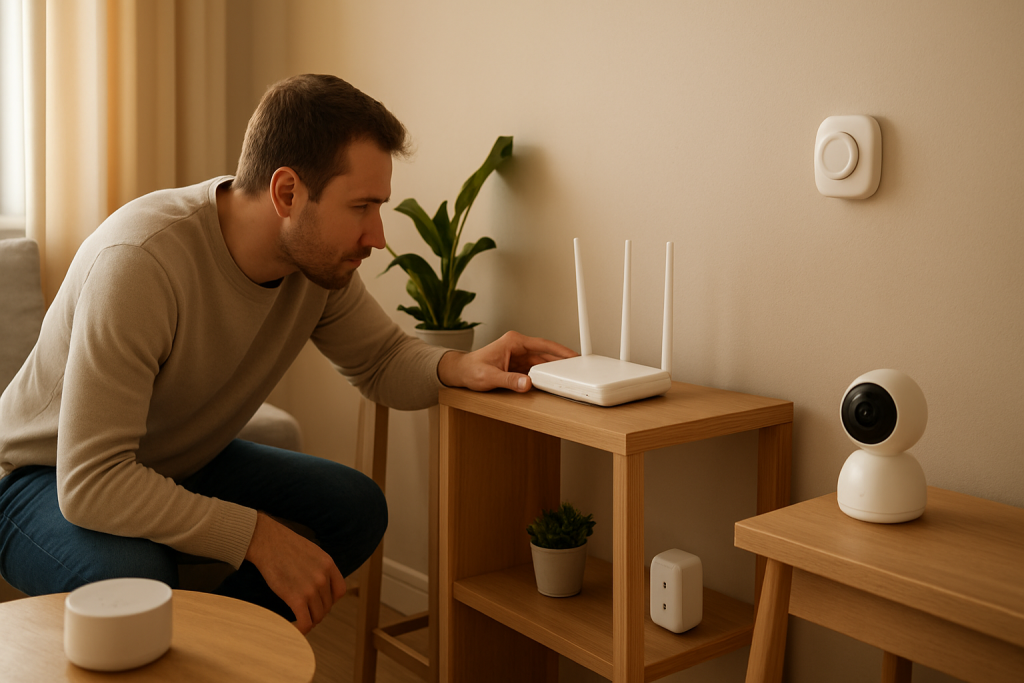
Use a practical test: move the device closer and watch RSSI/signal quality. For a quick signal test, temporarily plug the smart device (or its hub) within 10–15 feet of the router and try reconnecting. If it comes online quickly up close but fails in its normal location, the firmware update likely changed transmit power, channel selection, or roaming behavior. At that point, the fix is usually a better 2.4 GHz channel, 20 MHz width, or improved coverage (mesh node placement, not just “more bars”).
Re-pair only the devices that still won’t rejoin. If the router settings are corrected and a device still won’t connect, remove it from the app (if required), factory reset it, and add it again while your phone is on the 2.4 GHz SSID. This clears cached credentials that may no longer match the router’s updated security handshake.
Advanced Troubleshooting
Look for router features that break older IoT clients
Firmware updates frequently enable features that are great for laptops but rough on smart home gear. If devices keep dropping, review these settings and test with them off:
WPA3 or WPA2/WPA3 mixed mode: Some devices can’t complete the handshake reliably. Use WPA2-AES on 2.4 GHz for stability.
802.11ax (Wi‑Fi 6) on 2.4 GHz: Many routers allow Wi‑Fi 6 on 2.4. Some IoT clients behave better if you disable ax on 2.4 (leave it on for 5 GHz if desired).
Protected Management Frames (PMF/802.11w): “Required” can block older devices. Set to “Capable” or disable for the IoT SSID if your router allows it.
Band steering / Smart Connect: Helpful for phones, but can cause 2.4-only devices to fail during provisioning or to flap offline. Splitting SSIDs is a reliable workaround.
Check DNS and time settings (overlooked but real)
An overlooked technical cause after firmware updates is DNS or NTP (time) changes. If the router resets DNS to the ISP default or to an unreachable custom server, cloud-connected devices may show as offline even though they’re connected to Wi‑Fi. Likewise, if the router’s time is wrong (NTP disabled or blocked), certificates can fail and devices may refuse secure connections. Verify the router has correct time and uses working DNS servers.
ISP modem-router combos and double NAT
If you use an ISP gateway (modem-router combo) plus your own router, a firmware update on either device can change the operating mode. For example, the gateway might revert from bridge mode to router mode, creating double NAT and a new subnet. Some hubs and device discovery methods don’t like that change. If you suddenly see your router’s WAN IP as something like 192.168.x.x instead of a public IP, confirm whether the gateway is back in router mode and restore bridge mode (or put your router in AP mode, depending on your setup).
Validate with a simple network test
If you can, use your router’s client list to confirm the device has an IP address. Then from a phone connected to the same Wi‑Fi, try a basic ping using a network utility app (or check whether the device responds in the manufacturer’s app quickly on local Wi‑Fi). If the device has an IP but is intermittently unreachable, that points toward Wi‑Fi stability, interference, or IP conflicts—not incorrect credentials.
When to Reset or Replace the Device
Resetting the device is appropriate when the router settings are known-good (2.4 GHz WPA2-AES, stable channel, DHCP working) and the device still refuses to authenticate or keeps rejoining with the wrong credentials. Devices that store Wi‑Fi details can get “stuck” after the router changes security mode or band steering behavior during a firmware update.
Replacement is the last step, but it’s reasonable if the device is very old (early Wi‑Fi chips with limited security support) or if it repeatedly drops offline even on a stable 2.4 GHz network with strong signal. Cameras and doorbells are especially sensitive; if you’ve confirmed strong RSSI near the router and the device still can’t maintain a connection after a full reset, the Wi‑Fi radio in the device may be failing.
Before replacing anything, consider whether the device is located at the edge of coverage. A firmware update that changes channel selection can expose a weak spot. If moving the device a few feet or adding a mesh node stabilizes it, the device is likely fine.
How to Prevent This in the Future
Save a backup of your router configuration before applying firmware updates. Many routers allow you to export settings to a file. If the update resets key options, you can restore quickly (but be cautious: restoring an old backup to new firmware can reintroduce incompatible settings on some models).
Create an “IoT” 2.4 GHz SSID with conservative settings: WPA2-AES, 20 MHz channel width, and no band steering. Keeping smart devices on a dedicated SSID also makes it easier to see what’s connected and prevents accidental changes when you optimize your main network for speed.
Document critical settings like DHCP reservations, custom DNS, and whether the ISP gateway is in bridge mode. Firmware updates are when these details get lost, and they’re hard to remember later.
Schedule updates when you can troubleshoot (not right before leaving town). After the update, verify that 2.4 GHz settings didn’t revert and that your smart hubs are online. If your router supports it, disable automatic firmware updates and apply them manually during a maintenance window.
Improve coverage where smart devices live rather than cranking settings. In homes with thick plaster walls, brick, or a router tucked in a media cabinet, 2.4 GHz may still struggle at the edges. A better router location, a mesh node placed halfway to the problem area, or moving a hub away from interference sources (microwaves, cordless phone bases, baby monitors) can prevent “offline” events after any network change.
FAQ
Why did only my smart devices go offline, but phones and laptops are fine?
Phones and laptops usually support both 2.4 GHz and 5 GHz, newer security modes, and roaming features. Many smart devices are 2.4 GHz-only and have simpler Wi‑Fi chipsets, so a firmware update that resets 2.4 GHz channel width, security mode, or band steering can affect them first while everything else appears normal.
Do I need to rename my Wi‑Fi network to fix this?
Usually no. Renaming the SSID can force everything to reconnect, but it also creates extra work. It’s better to restore compatible 2.4 GHz settings (WPA2-AES, 20 MHz, stable channel) and split SSIDs if band steering is causing problems. Rename only if you suspect the router is advertising a “same name, different network” situation due to a reset or mesh reconfiguration.
What does DHCP have to do with devices showing offline?
DHCP assigns local IP addresses. After a firmware update, the router may reset DHCP reservations or change the address range. If a hub or device gets a new IP, an app or local integration might still be trying the old address. In some cases, two devices can end up with the same IP (an IP conflict), causing intermittent connectivity and “offline” status even though Wi‑Fi looks connected.
Should I use 2.4 GHz or 5 GHz for smart home devices?
Most smart home devices should be on 2.4 GHz because it travels farther and penetrates walls better. 5 GHz is faster but shorter range and often less reliable through thick walls. After a firmware update, ensure the 2.4 GHz band remains configured for compatibility; many offline issues trace back to 2.4 GHz settings being reset to performance-oriented defaults.
If I factory reset the router, will that fix it?
A router factory reset can fix problems caused by a bad firmware migration, but it also wipes everything and can reintroduce the same defaults that broke compatibility in the first place. Try correcting the specific reset settings first. If you do reset the router, plan to reconfigure 2.4 GHz for IoT compatibility and rebuild DHCP reservations and any bridge/AP mode settings carefully.
It’s a rare thing when a problem stops taking up mental space. The arguments get quieter, the margins widen, and you can finally look at the day without squinting at every little snag.
Maybe the best part is how ordinary it feels afterward. No fireworks—just a smoother rhythm, and the sense that you’re done circling the same block.