DNS Problems at Home: Why Smart Devices Go Offline and How to Fix It
Quick Answer
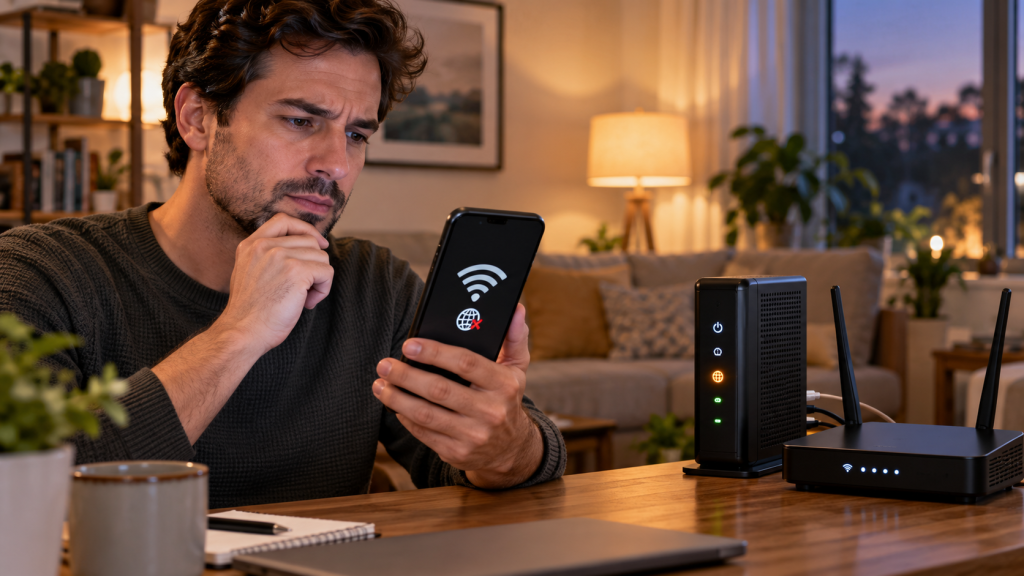
When smart devices randomly go offline but your Wi-Fi looks “connected,” the most common cause is DNS trouble—often triggered by an ISP DNS outage, an ISP modem-router combo using unstable DNS forwarding, or a router DNS misconfiguration. Your devices can still join Wi-Fi and get an IP address, but they can’t translate service names (like api.vendor.com) into IP addresses, so apps show devices as offline.
Fix it by setting reliable DNS servers on your router (or on the ISP gateway if that’s what you use), rebooting the modem and router in the correct order, and confirming devices are getting the updated DNS via DHCP. If problems persist, test DNS directly from a phone or computer and check for firmware bugs, IPv6/DNS conflicts, or DHCP/IP conflicts.
Why This Happens
Smart devices depend on DNS more than most people realize. A smart plug, thermostat, camera, or speaker usually talks to a cloud service even when you’re controlling it locally through an app. If DNS fails, the device can’t find the cloud endpoints it needs to authenticate, sync status, or receive commands. The Wi-Fi icon may still look fine because Wi-Fi association is separate from successful DNS resolution.
The dominant root cause in many homes is ISP-related DNS behavior. Some ISPs provide DNS servers that occasionally time out, apply aggressive filtering, or become overloaded during peak hours. Another common ISP scenario is the modem-router combo unit (gateway) that “forwards” DNS requests to the ISP. If the gateway’s DNS proxy is buggy, it can intermittently stop answering even while the internet link remains up.
A real-world example: in an apartment with thick concrete walls, you place the ISP modem-router combo in a bedroom where the coax line enters. Your phone on 5GHz near the bedroom works fine, but smart plugs on 2.4GHz in the kitchen show offline at random. It’s tempting to blame Wi-Fi range, and signal can be part of it, but the pattern often points to DNS: devices reconnect to Wi-Fi after brief drops, then fail to re-resolve cloud hostnames because the ISP DNS proxy is stalling. The result looks like “Wi-Fi instability,” even though the underlying failure is name resolution.
One common user mistake is setting a “custom DNS” on a single device (like a phone) and assuming it fixes the whole network. That may make the phone faster, but your smart devices still use whatever DNS the router hands out via DHCP. Another mistake is copying DNS settings into the wrong place on the router—setting DNS for the router’s own WAN interface but leaving the DHCP “LAN DNS” field blank or set to the gateway, so clients keep using the problematic proxy.
An overlooked technical cause is IPv6 DNS (often delivered via DHCPv6 or Router Advertisements). Some routers advertise an IPv6 DNS server from the ISP that is unreliable, while you set stable IPv4 DNS manually. Devices that prefer IPv6 will still break. Another overlooked cause is DNS caching bugs: a router or gateway may cache a bad response or stop refreshing records, causing repeated failures until reboot.
Finally, DNS issues can be amplified by DHCP problems. DHCP is the service that gives devices an IP address, gateway, and DNS servers. If the DHCP lease is short or the router is overloaded, devices may renew frequently and occasionally receive incomplete or incorrect DNS info. IP conflicts (two devices trying to use the same IP) can also look like DNS trouble because packets don’t reliably reach the DNS server.
Step-by-Step Fix
Confirm it’s DNS (quick test). On a phone or computer connected to the same Wi-Fi as the failing smart devices, open a browser and try to visit a site by name (for example, example.com). If it fails, try visiting a site by IP address (for example, 1.1.1.1). If the IP works but names fail, that strongly indicates DNS trouble. If both fail, you may have a broader internet or Wi-Fi issue.
Practical testing method: if you can, run a DNS lookup from a computer (such as using a built-in network diagnostic tool) and note whether lookups time out or return slowly. Slow, intermittent DNS is enough to make smart devices appear offline.
Reboot in the right order to clear stale DNS and renew WAN settings. Power off the modem (or ISP gateway) and the router (if separate). Wait 60 seconds. Power on the modem/gateway first and wait until it is fully online. Then power on the router and wait for Wi-Fi to stabilize. This forces a clean WAN session and often clears a stuck DNS forwarder in ISP gateways.
Set reliable DNS on the router (preferred fix). Log into your router’s admin page and set DNS servers to a known reliable provider rather than “Automatic/ISP.” Use two servers for redundancy. Save settings and reboot the router.
Important: set DNS in the correct place. Many routers have (a) WAN/Internet DNS and (b) LAN/DHCP DNS handed to clients. Ensure your DHCP/LAN settings distribute the same reliable DNS to devices, not the router’s own IP if the router’s DNS proxy is unstable. If your router offers “DNS Relay/Proxy,” try disabling it so clients query the DNS servers directly.
Renew DHCP leases so devices actually receive the new DNS. After changing DNS, restart a few smart devices (or power-cycle them). For devices that don’t have a reboot option, unplug for 15 seconds. This forces them to request fresh DHCP info. If you have many devices, rebooting the router after DNS changes can also push clients to renew.
If you assigned static IPs to devices, verify you didn’t also hardcode old DNS servers on those devices. Static IP plus outdated DNS is a classic “it only fails for some devices” symptom.
Check Wi-Fi band and signal basics (because DNS failures can be triggered by weak links). Many smart devices are 2.4GHz-only. If your router uses band steering with a single SSID for 2.4GHz and 5GHz, some devices struggle during onboarding or roaming and may drop long enough to miss DNS retries. If you can, temporarily enable a dedicated 2.4GHz SSID and connect smart devices to it.
Also consider distance and interference: microwaves, Bluetooth devices, neighboring apartment routers, and thick walls can cause brief packet loss. DNS is sensitive to packet loss because it relies on quick request/response exchanges. If your router is far from the devices, move it to a more central location or add a mesh node closer to the smart devices.
Update router/gateway firmware. ISP gateways and consumer routers occasionally ship with DNS forwarding bugs, DHCP issues, or IPv6 problems that show up under load (many smart devices plus phones plus streaming). Update firmware from the router’s admin interface, or ask your ISP to push an update to their gateway. After updating, reboot again.
Advanced Troubleshooting
If the basic steps improved things but devices still go offline, focus on isolating whether the failure is ISP DNS, router DNS proxying, IPv6 behavior, or DHCP/IP conflicts.
Test alternate DNS without changing the whole network
To confirm the ISP DNS is the culprit, temporarily set DNS on a single test device (like a laptop) to a reliable public DNS and compare behavior. If name lookups become instant and stable while other devices still struggle, your router is likely handing out problematic DNS via DHCP or proxying DNS poorly. This test helps you avoid chasing Wi-Fi issues that are only symptoms.
Check for IPv6 DNS conflicts
If your router has IPv6 enabled, devices may prefer IPv6 DNS even when you set IPv4 DNS manually. Look for settings like “IPv6 DNS,” “DHCPv6,” or “RDNSS.” If the ISP-provided IPv6 DNS is unreliable, disable IPv6 temporarily as a test or set explicit IPv6 DNS servers if your router supports it. If disabling IPv6 stabilizes smart devices, re-enable it only after configuring consistent IPv6 DNS.
Inspect router DNS features that can break smart devices
Some router features interfere with DNS in ways that look like random device dropouts:
DNS filtering/parental controls: These can block vendor domains used by cameras and hubs.
“Secure DNS” or “DNS over HTTPS” on the router: If implemented poorly, it can add latency or fail under load.
VPN client on the router: A VPN can change DNS paths and cause timeouts, especially if the VPN provider’s DNS is slow.
As a test, disable these features briefly and see whether devices stay online.
Look for DHCP exhaustion or IP conflicts
DHCP issues can masquerade as DNS issues. If your DHCP pool is too small (for example, only 20 addresses) and you have many devices, new devices may not get valid network settings, including DNS. Expand the DHCP range and increase lease time. Also check for IP conflicts: if you manually assigned a static IP that overlaps the DHCP pool, two devices can fight for the same address, causing intermittent connectivity and failed DNS queries.
ISP modem-router combos often struggle with many simultaneous clients. When their CPU is overloaded, DNS proxying and DHCP responses are among the first things to degrade. If you must use the ISP gateway, consider putting it in bridge mode and using your own router for Wi-Fi, DHCP, and DNS. This directly addresses the dominant failure pattern: unstable ISP DNS forwarding and gateway software limitations.
When to Reset or Replace the Device
Resetting a smart device is reasonable when it is the only device failing after you’ve stabilized DNS at the router. If multiple brands of smart devices go offline together, it’s almost never a single device problem—focus on DNS/router/ISP first.
Reset or re-pair a device if:
It holds on to old Wi-Fi credentials or old DNS info after you changed network settings, it repeatedly fails onboarding even on a stable 2.4GHz SSID, or it shows a firmware update pending but cannot complete it. After resetting, connect it close to the router to reduce packet loss during setup.
Replace the device (or consider a different ecosystem) if:
It frequently drops even on a known-good network, it can’t handle modern Wi-Fi security settings (for example, it fails with WPA3-only networks), or the manufacturer no longer provides firmware updates. Lack of updates matters because cloud endpoints and certificate requirements change; outdated firmware can appear as “offline” even when DNS is fine.
How to Prevent This in the Future
Make DNS reliability a deliberate part of your home network design. Use stable DNS servers configured at the router and ensure DHCP distributes them correctly. Avoid relying on an ISP gateway’s DNS proxy if it has a history of flakiness; bridge it and use a quality router.
Keep firmware current on the router and any mesh nodes. If your home has thick walls or long distances, place the router centrally or add mesh access points so 2.4GHz smart devices aren’t operating at the edge of coverage. Even though 2.4GHz travels farther than 5GHz, interference is higher, and repeated packet loss can cause DNS timeouts that look like cloud outages.
Minimize complexity: avoid stacking multiple “smart” network features at once (parental controls plus VPN plus DNS filtering) until the network is stable. If you need those features, enable them one at a time and monitor whether smart devices remain online. Finally, keep your DHCP pool large enough for all devices, and reserve IPs for critical hubs to reduce conflicts.
FAQ
Why do my smart devices say “offline” but my phone still has internet?
Your phone may be using cached DNS results, a different DNS setting, or a stronger 5GHz connection near the router. Smart devices often rely on fresh DNS lookups to reach cloud services; if the router or ISP DNS is timing out, they can appear offline even while general browsing still works.
Should I set DNS on each smart device individually?
Usually no. Most smart devices don’t expose DNS settings, and managing them individually is fragile. Set DNS on the router so DHCP hands the correct DNS to everything. If a device uses a static IP, verify it isn’t stuck on old DNS values.
Is this a 2.4GHz vs 5GHz problem or a DNS problem?
It can be both, but DNS is often the root cause when multiple devices drop at once. 2.4GHz is more prone to interference in apartments, which can cause packet loss and make DNS time out more often. Stabilize DNS first, then improve 2.4GHz coverage and reduce interference if dropouts continue.
What router setting most commonly breaks DNS for smart devices?
DNS proxy/relay features and misconfigured DHCP DNS settings are frequent culprits. If the router hands out its own IP as the DNS server and its DNS forwarder is unstable, smart devices will fail lookups. Also watch for parental controls or DNS filtering that blocks vendor domains.
Could an IP conflict or DHCP issue really look like DNS failure?
Yes. If a device has the wrong gateway/DNS due to a DHCP glitch, or if two devices share the same IP, traffic to the DNS server can be disrupted. The symptom is often “offline” devices and apps that can’t discover or control them reliably, even though Wi-Fi appears connected.
Now the topic feels less like a maze and more like a set of doors you can actually choose. The noise fades; what’s left is a cleaner line between problem and action, without drama.
It’s funny how quickly your day improves once the fog lifts. Not everything becomes exciting, but it stops getting in the way, and that counts.