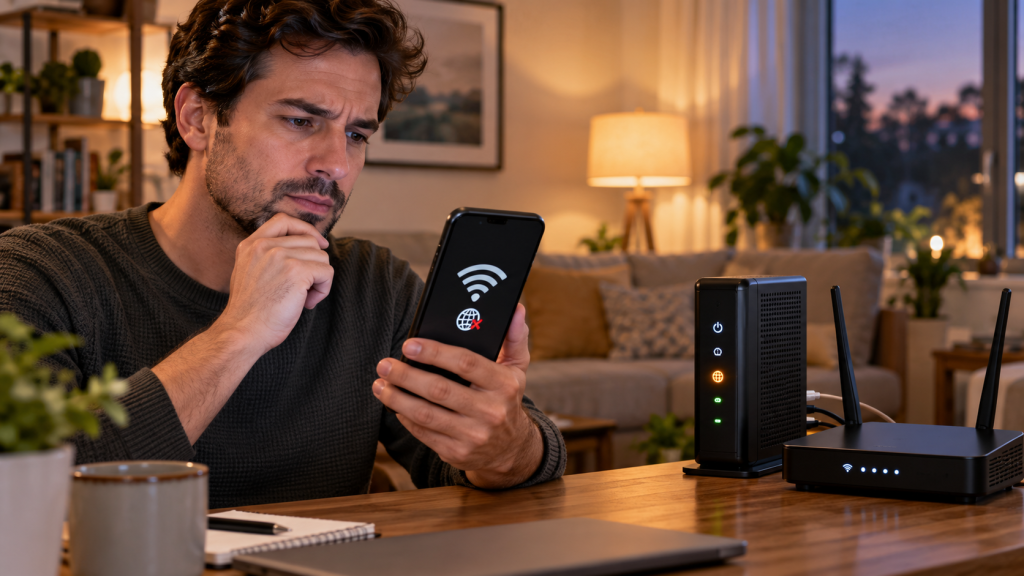
Connected to WiFi but Websites Won’t Load on One Device: What It Means
Quick Answer
If one device shows it’s connected to WiFi but websites won’t load while other devices work, the most common meaning is that the device has network access to the router but not functional internet routing. In many homes, the top cause is an IP address conflict: your device and another device are trying to use the same local IP address, so traffic gets misdirected or dropped.
An IP conflict can look “random” because WiFi stays connected and signal bars look fine, yet DNS lookups fail, pages time out, and apps act offline. The fix is usually to force the device to obtain a fresh IP from DHCP, remove any static IP settings, and ensure the router’s DHCP pool and reservations aren’t overlapping.
Why This Happens
When your device connects to WiFi, it completes the wireless link to the router (or access point). That step alone doesn’t guarantee that the device has a valid local IP configuration or a clean path to the internet. To load websites, the device must have a unique IP address on your home network, a correct gateway (the router’s IP), and working DNS servers.
IP address conflict (dominant cause) happens when two devices end up using the same local IP address (for example, both claiming 192.168.1.50). Your router and other devices may still be fine, but the affected device’s packets can collide with the other device’s packets. Symptoms often include:
Websites timing out, “No internet” messages, captive portal prompts that never finish, or only some apps working. You may also see the issue come and go as the other device sleeps/wakes or reconnects.
Common ways IP conflicts occur at home include:
1) A device was manually set to a static IP that later got handed out by DHCP to another device. 2) The router’s DHCP range overlaps with reserved addresses. 3) An ISP modem-router combo was replaced and the new unit uses a different LAN range, but a device kept an old static configuration. 4) A second router or mesh node is accidentally running its own DHCP server, handing out duplicate addresses (an overlooked technical cause).
Other contributors can make the situation look like WiFi is to blame even when the real issue is addressing. In an apartment with thick walls and multiple neighboring networks, 2.4GHz interference may cause retries and slowdowns, while 5GHz may have weaker range through walls. However, if only one device fails consistently while others work in the same spot, addressing/DNS configuration problems are far more likely than pure signal strength.
A common user mistake is tapping “Advanced” in WiFi settings and entering a manual IP, gateway, or DNS to “speed things up,” then forgetting about it. Months later, after a router update or a new smart TV joins the network, that manual IP collides with a DHCP-assigned IP and websites stop loading on the original device.
Router configuration issues can also trigger this: a too-small DHCP pool, conflicting DHCP reservations, or “AP isolation/guest mode” settings that block certain traffic. Firmware or software issues matter too: an outdated router firmware can mishandle DHCP renewals; a device OS update can retain a broken network profile or VPN setting that makes it appear connected but unable to browse.
Step-by-Step Fix
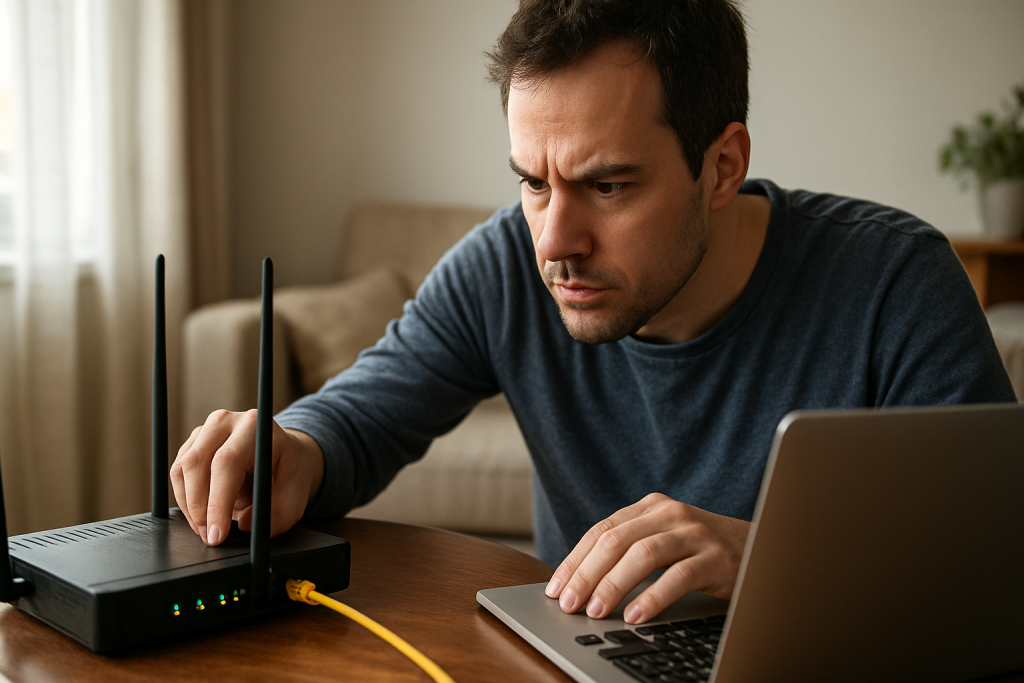
Confirm it’s only one device and capture a quick comparison. On another device connected to the same WiFi, load two or three websites and run a speed test. On the problem device, try loading a simple site (for example, a major news site) and note whether you get “DNS error,” “server not found,” or a timeout. This establishes whether the internet connection is generally healthy.
Toggle WiFi off/on, then “Forget” and rejoin the network. This forces a fresh association and often triggers a new DHCP request. After reconnecting, wait 30 seconds and try websites again.
Force a new IP lease (the key step for IP conflicts). Restart the device. If it’s a phone/tablet, also toggle Airplane Mode on for 10 seconds, then off. If it’s a laptop, disable and re-enable the WiFi adapter. The goal is to make the device request a new IP from DHCP rather than continuing to use the conflicting one.
Check the device’s IP settings: ensure DHCP/Automatic is enabled. On the device’s WiFi network details, verify:
IP assignment is set to DHCP/Automatic (not Static/Manual). Gateway/router address is present. DNS is Automatic unless you intentionally use a trusted DNS provider. If you see a manually entered IP (especially something like 192.168.0.x when your router is 192.168.1.x), switch back to Automatic and reconnect.
Look for the conflict in the router’s client list. Log into the router (or ISP modem-router combo) and open the connected devices/DHCP clients page. If you see two entries with the same IP or a device repeatedly appearing/disappearing, that’s a strong sign of conflict. Also check for DHCP reservations: make sure each reserved IP is unique and outside (or properly managed within) the DHCP pool based on your router’s guidance.
Fix the DHCP pool and reservations to prevent repeats. Practical approach for most homes:
Set a DHCP range large enough for all devices (including smart plugs, cameras, and speakers). If you use reservations, pick a block (for example, 192.168.1.2–192.168.1.49) for reserved/static-like addresses and a separate block (for example, 192.168.1.50–192.168.1.250) for DHCP. Do not manually assign an IP inside the DHCP range unless you also reserve it in the router for that device’s MAC address.
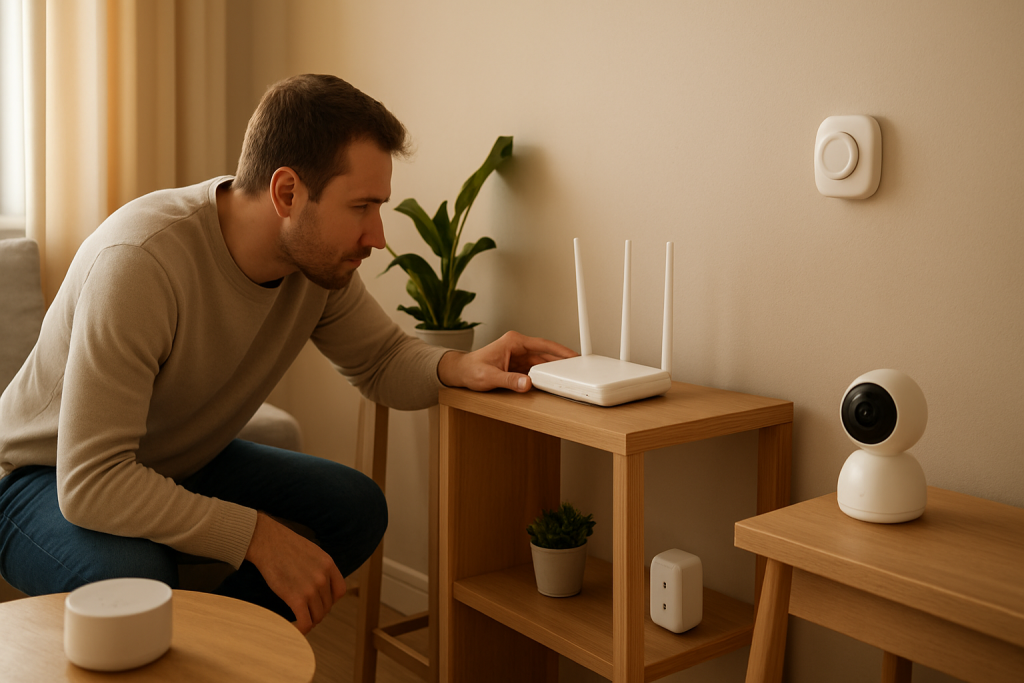
Disable any “extra DHCP server” on the network. If you have a second router, old WiFi extender with Ethernet, or a mesh node in router mode, it may be running DHCP. Only one device should hand out IP addresses on a typical home network. Put secondary routers into Access Point mode, or disable DHCP on them. This overlooked cause frequently appears after people upgrade to a new ISP gateway but keep an old router connected “for better WiFi.”
Test with a practical method: ping the router and a public IP. If your device supports it (or you can use a network utility app):
Ping your router’s gateway IP (often 192.168.0.1 or 192.168.1.1). If that fails, you likely have a local IP/gateway issue or WiFi link problem. If the router ping works, ping a public IP like 1.1.1.1. If that works but websites don’t, DNS is the issue (which can still be tied to a bad network profile or manual DNS entry). If both pings fail intermittently, an IP conflict is still a prime suspect because replies may be going to the other device using the same IP.
Switch bands (2.4GHz vs 5GHz) only after addressing checks. If your router has separate SSIDs, connect the device to the other band. Use 2.4GHz for better range through thick walls; use 5GHz for less interference and higher throughput at shorter distances. This won’t cure an IP conflict, but it can rule out a band-specific driver issue or weak 5GHz signal causing repeated reconnects that complicate DHCP renewals.
Restart the router and modem (in the right order). Power off the modem and router for 30 seconds. Power on the modem first, wait until it’s fully online, then power on the router. This clears stale DHCP states and can resolve a router firmware hiccup that is failing to renew leases properly.
Advanced Troubleshooting
If the steps above didn’t stabilize browsing on the one device, focus on confirming (or disproving) the IP conflict and then isolating device-specific software causes.
Identify an IP conflict with repeatable evidence
Open the device’s network details and write down its IP address, subnet mask, and gateway. Then check the router’s client list for that same IP. If you see a different device mapped to the same IP, you’ve found the conflict. If the router UI doesn’t show it clearly, disconnect the suspected “other device” (power off a smart TV, printer, or old phone) and see if the problem device immediately starts loading websites without changing anything else.
Check for VPN, private DNS, or security apps intercepting traffic
A device can be “connected” but unable to browse if a VPN is connected to a dead endpoint or if “Private DNS” is set to a hostname that no longer resolves. Temporarily disable VPN and any filtering/security apps. Then retest. This is especially common after an OS update or when switching from cellular to WiFi frequently.
Inspect router features that can affect only one device
Look for MAC-based controls: parental controls, access control lists, device pause/schedules, or profile-based filtering. A misapplied rule can allow WiFi association but block DNS or web ports. Also check whether the device accidentally joined a guest network SSID; guest networks can restrict LAN access, which can break devices that rely on local DNS, local gateways, or internal services.
Firmware and driver considerations
Update router firmware to the latest stable release from the manufacturer or ISP. On the device, update the OS and WiFi drivers (for laptops). Some router firmware versions have DHCP bugs that show up only with certain clients, causing repeated lease conflicts or incorrect gateway assignment.
In a small apartment with thick concrete walls, many people use an ISP modem-router combo plus an old router as an “extra WiFi booster.” If the old router is connected by Ethernet and still running DHCP, smart devices on 2.4GHz may get addresses from one router while phones on 5GHz get addresses from the other. The result can be duplicate IPs or mismatched gateways, where one device shows connected but cannot load websites reliably. Converting the old router to Access Point mode and keeping only one DHCP server typically resolves the instability.
When to Reset or Replace the Device
Reset the device’s network settings when you’ve confirmed the router and other devices are healthy, but the problem device keeps reusing a bad configuration. This is appropriate when the device repeatedly shows a manual IP/DNS you didn’t set, keeps reconnecting with the same conflicting IP, or fails basic tests even after forgetting the network.
Consider replacing the device (or its WiFi adapter) if:
The device cannot maintain a stable IP lease on any network (not just your home), it drops WiFi constantly even near the router, or it fails after a full OS update and network reset. For older smart devices, limited WiFi chipsets can struggle in crowded 2.4GHz environments, and a newer model with better radios can reduce disconnects that trigger frequent DHCP renewals and conflict-like symptoms.
How to Prevent This in the Future
Keep your home network’s IP addressing simple and consistent. Use DHCP for most devices, and use DHCP reservations (not manual static IPs on the device) for items that need stable addresses, such as printers, cameras, and home hubs.
Maintain a clean router configuration: one DHCP server, a sufficiently large DHCP pool, and non-overlapping reservations. If you add a second router or mesh system, ensure it’s in Access Point/bridge mode unless you intentionally run a separate network.
Update router firmware periodically and reboot only when needed (frequent power cycling can increase lease churn). For WiFi stability, place the router away from microwaves, cordless phone bases, and dense metal objects, and consider 5GHz for nearby high-bandwidth devices while keeping 2.4GHz for distant smart devices that need range. Distance and interference won’t directly cause an IP conflict, but unstable connections can trigger repeated reconnects and DHCP renewals that make conflicts more likely to surface.
Finally, document any manual changes you make (DNS, static IPs, parental controls). The most preventable “one device can’t load websites” situation is a forgotten manual IP setting that later collides with DHCP.
FAQ
How do I know if it’s an IP address conflict?
Look at the device’s current IP address and compare it to the router’s connected-device list. If two devices show the same IP, or if the problem disappears when you power off another device, that strongly indicates a conflict. Intermittent timeouts with WiFi staying connected are also typical of conflicts.
Why do other devices work fine if there’s an IP conflict?
An IP conflict usually affects only the devices sharing the duplicate address. Everyone else has unique IPs and continues working normally. That’s why the internet can seem “fine” while one phone, laptop, or smart device can’t load websites.
Should I set a static IP on the device to fix it?
Usually no. Setting a manual static IP is a common mistake that causes conflicts later. A better approach is to leave the device on DHCP/Automatic and, if you need a consistent address, create a DHCP reservation in the router for that device.
Can 2.4GHz vs 5GHz cause “connected but no websites”?
Band choice typically affects speed and reliability, not basic routing. However, a weak 5GHz signal through thick walls can cause frequent disconnects and reconnects, which can expose DHCP/lease problems. If addressing is correct, switching to 2.4GHz for range or moving closer to the router can improve stability.
What if pinging a public IP works but websites still won’t load?
That points to a DNS problem rather than a full internet outage. Check for manual DNS or “Private DNS” settings on the device, disable VPN temporarily, and consider setting the router’s DNS to a reliable provider. DNS issues can coexist with IP conflicts, but a successful public-IP ping usually means routing is working and name resolution is the missing piece.
By the time you reach this point, the noise has already thinned out. The tension isn’t in figuring things out anymore—it’s in noticing what changes when the obvious finally gets treated like it matters.
There’s a strange kind of relief in that. Not loud, not dramatic—just the everyday feeling that your time, attention, and patience can move on to bigger things.